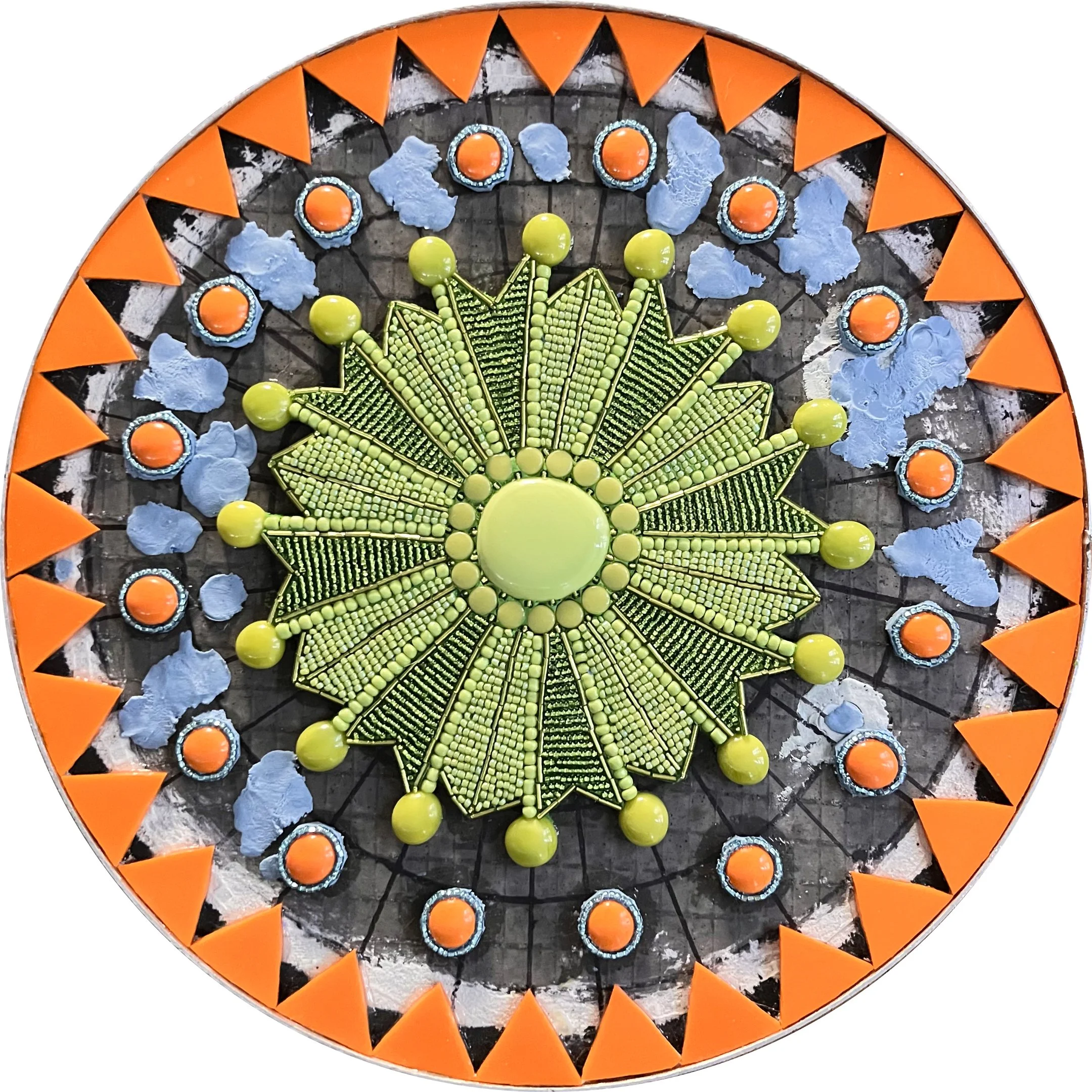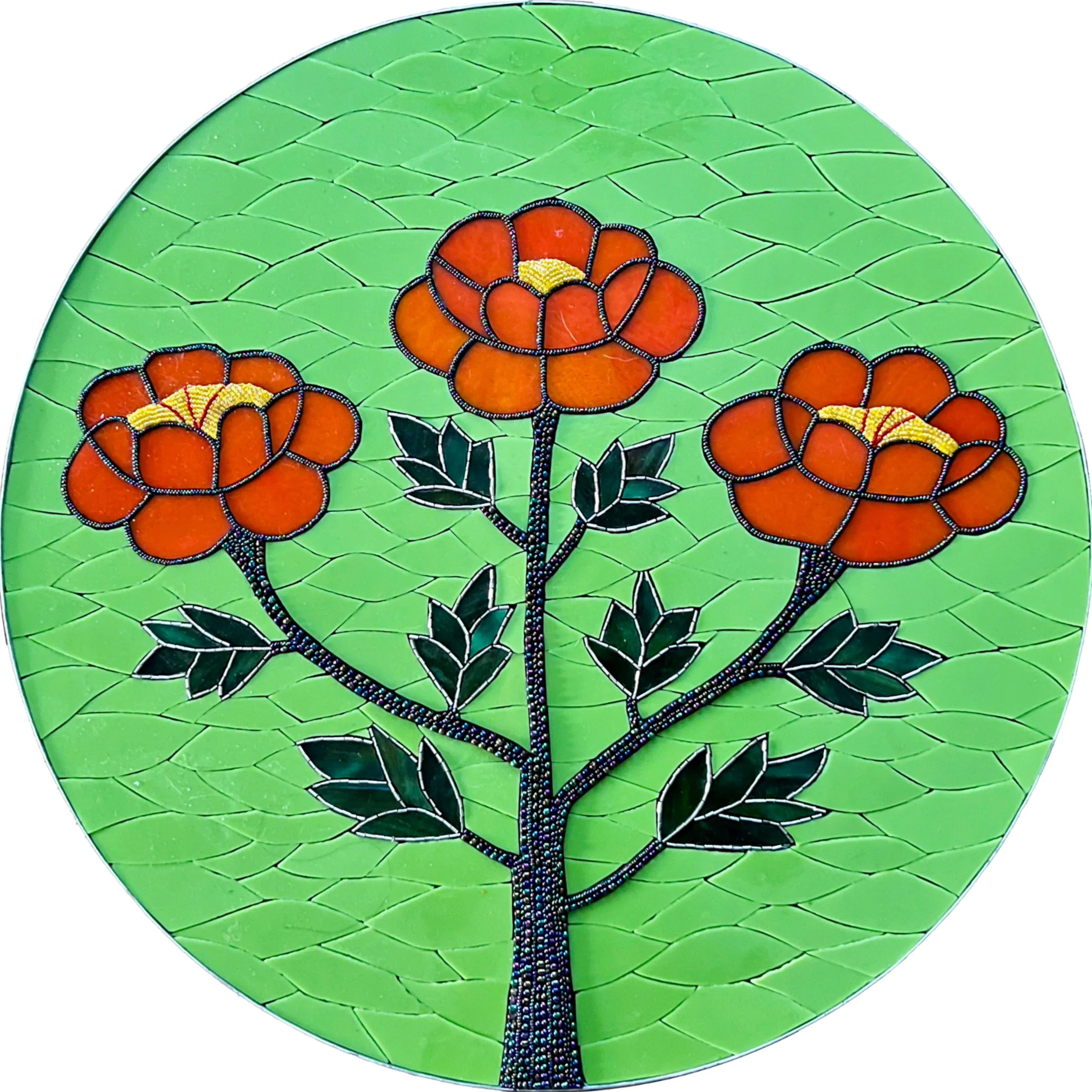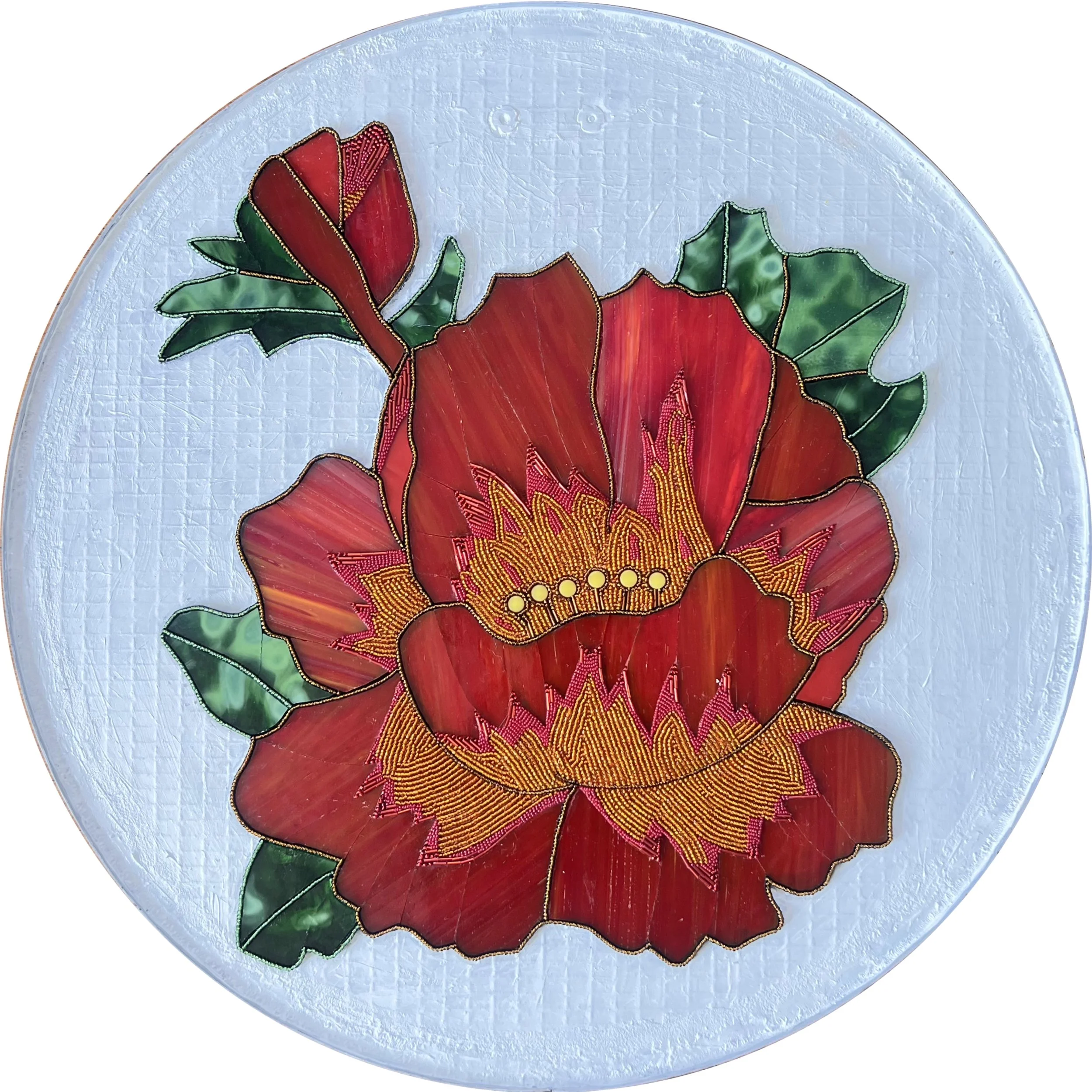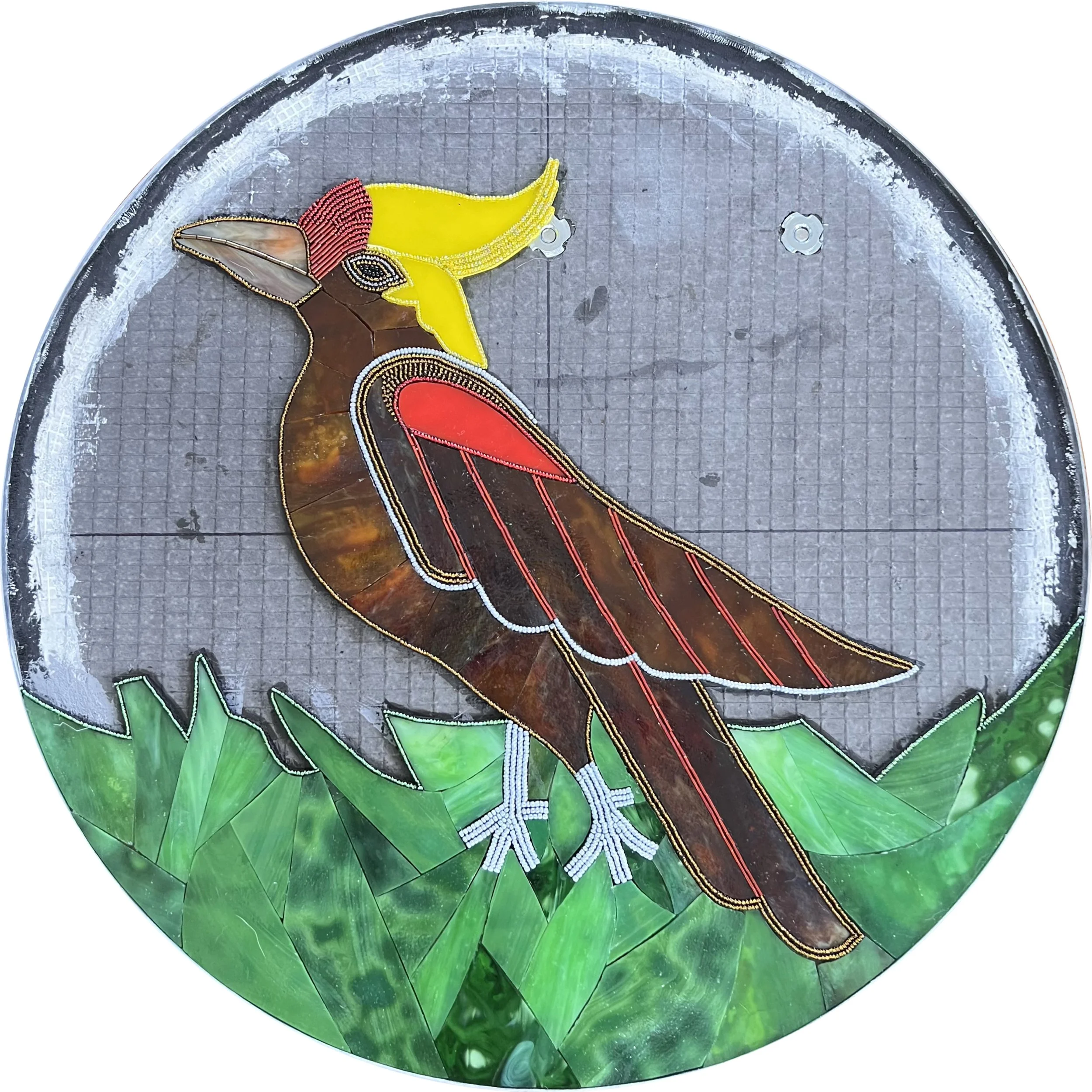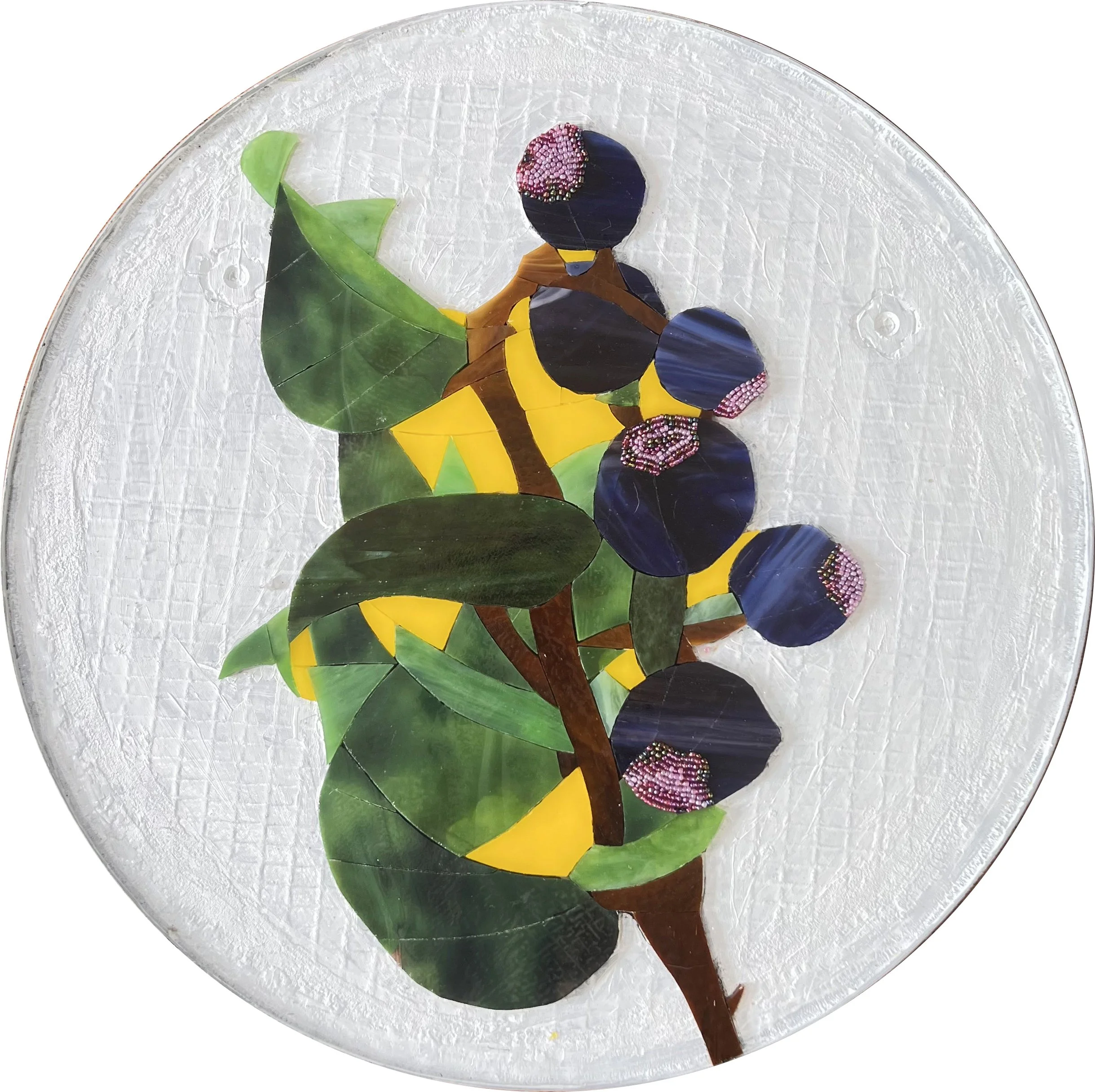
Creating Cycles, an ArtsWA Public Art Commission

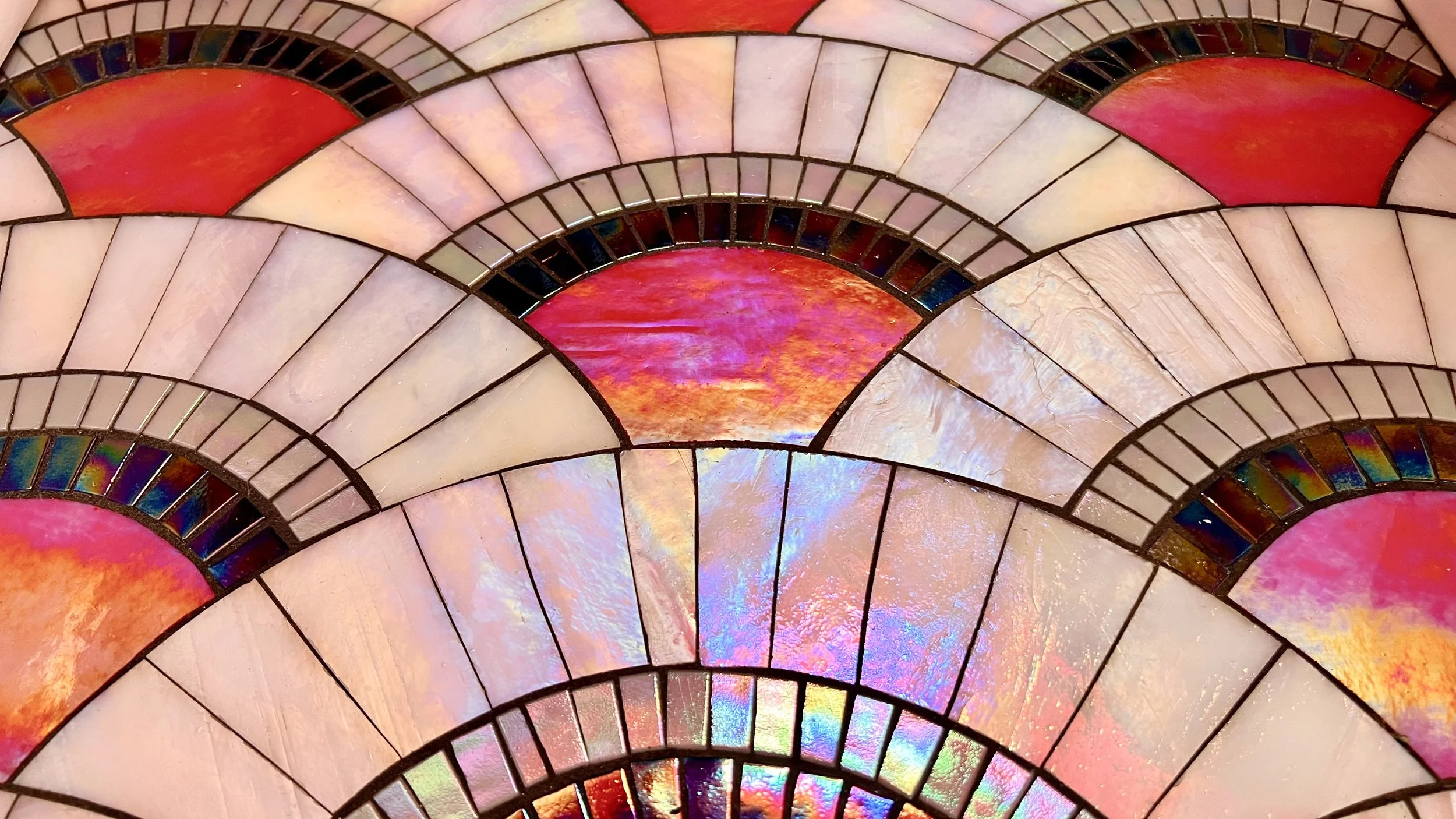
Creating this mosaic for Ida Nason Aronica Elementary School in Ellensburg, WA was a milestone. It was my first public art commission, made possible through the Washington State Arts Commission in partnership with Ellensburg School District. ArtsWA has a remarkable process that guides artists through every step of a public art project, and working within that framework taught me things I could never have learned any other way. I'm now excited and prepared to take on more public art commissions! I get a lot of questions about this project, so I wanted to share the full story from design and mosaic techniques to my personal experience along the way.

Video of Cycles, a 20-panel glass mosaic public art installation by Dyanne Williams at Ida Nason Aronica Elementary School in Ellensburg, Washington. A public art commission for the Washington State Arts Commission in partnership with Ellensburg School District.

The Beginning

Several years ago, around 2019, I applied to become an pre-approved artist for ArtsWA, the Washington State Arts Commission, and was accepted. One spring day in 2023 I got a phone call asking me if I’m available to create an art commission for Ida Nason Aronica Elementary School. I was so excited! There were contracts to sign and handbooks to read, but the big first step was to go to Ellensburg, WA for a site visit. The site is a school, so I needed to go before the end of their school year, so I found time to squeeze in the visit a couple of weeks later. Because I was in the middle of projects as a teaching artist, I was only able to be in Ellensburg for 25 hours, but I found time between meetings to go for a hike in the gorgeous mountains surrounding the valley.

Panoramic mountain view from Rattlesnake Dance Ridge Trail in Ellensburg, Washington, near the site of the Cycles public art mosaic installation.

My first meeting was with the director of the K'tɨ́taas County Historical Museum in downtown Ellensburg. She was also the curator for the Aronica family, whose relative, Yakama Nation artist and elder Ida Nason Aronica, the school and this artwork were created to honor, and whose family would need to approve the final design. The director was wonderful, educating me on local history, showing me items the museum has curated, and explaining the cultural significance of Ida's work. As soon as I saw her absolutely stunning beadwork, I knew I wanted to find a way to incorporate it into the mosaic.

Historic downtown Ellensburg, WA, near the K'tɨ́taas County Historical Museum.

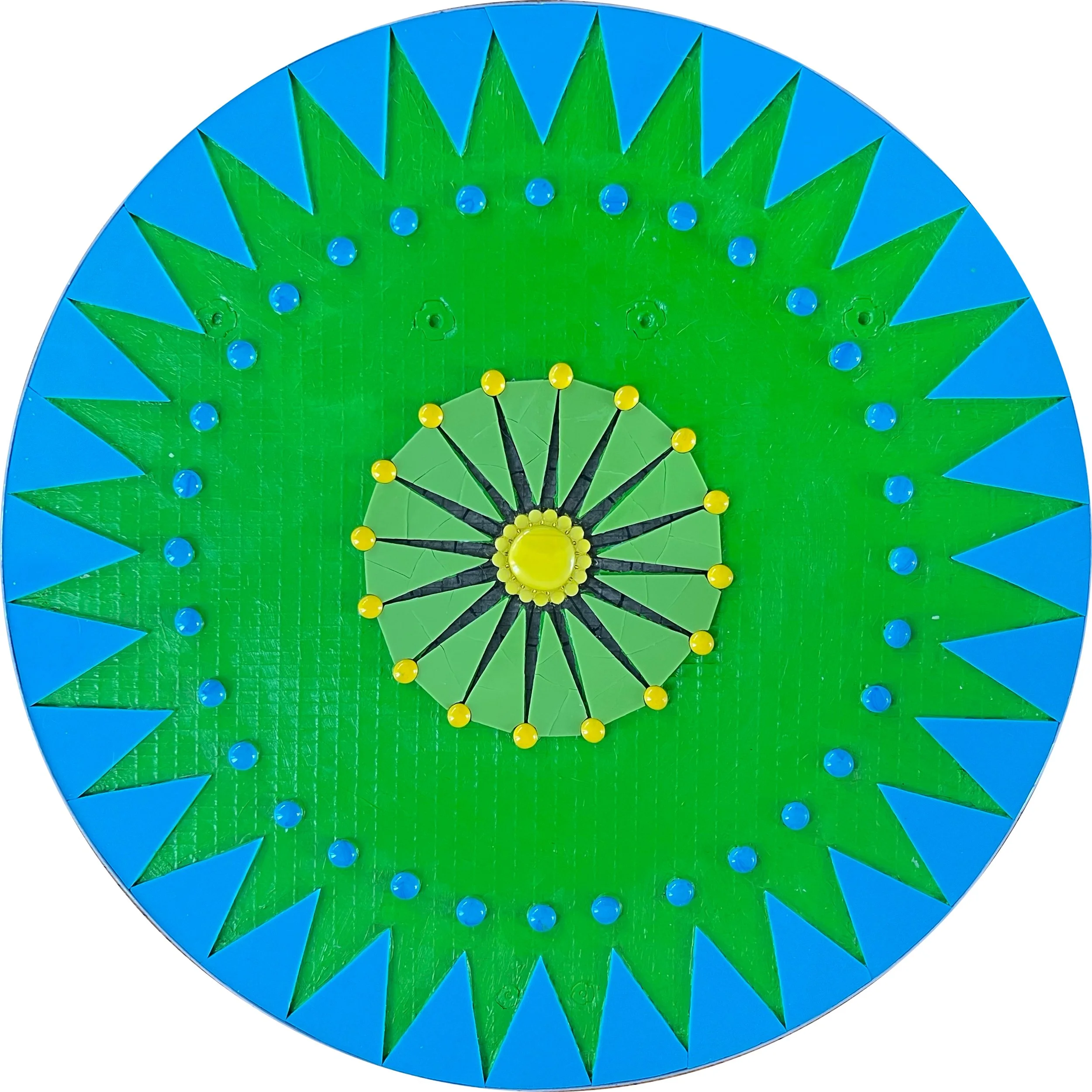
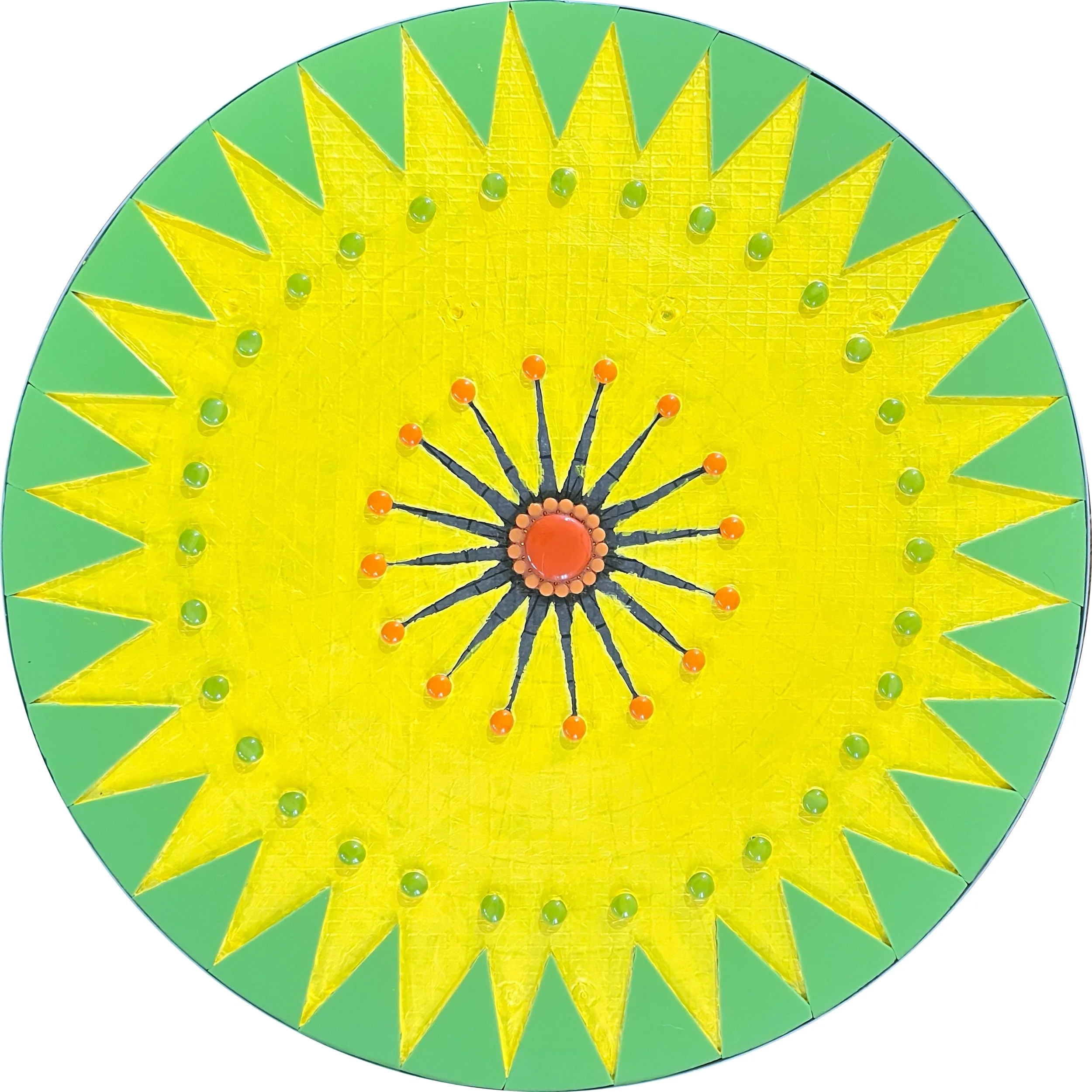
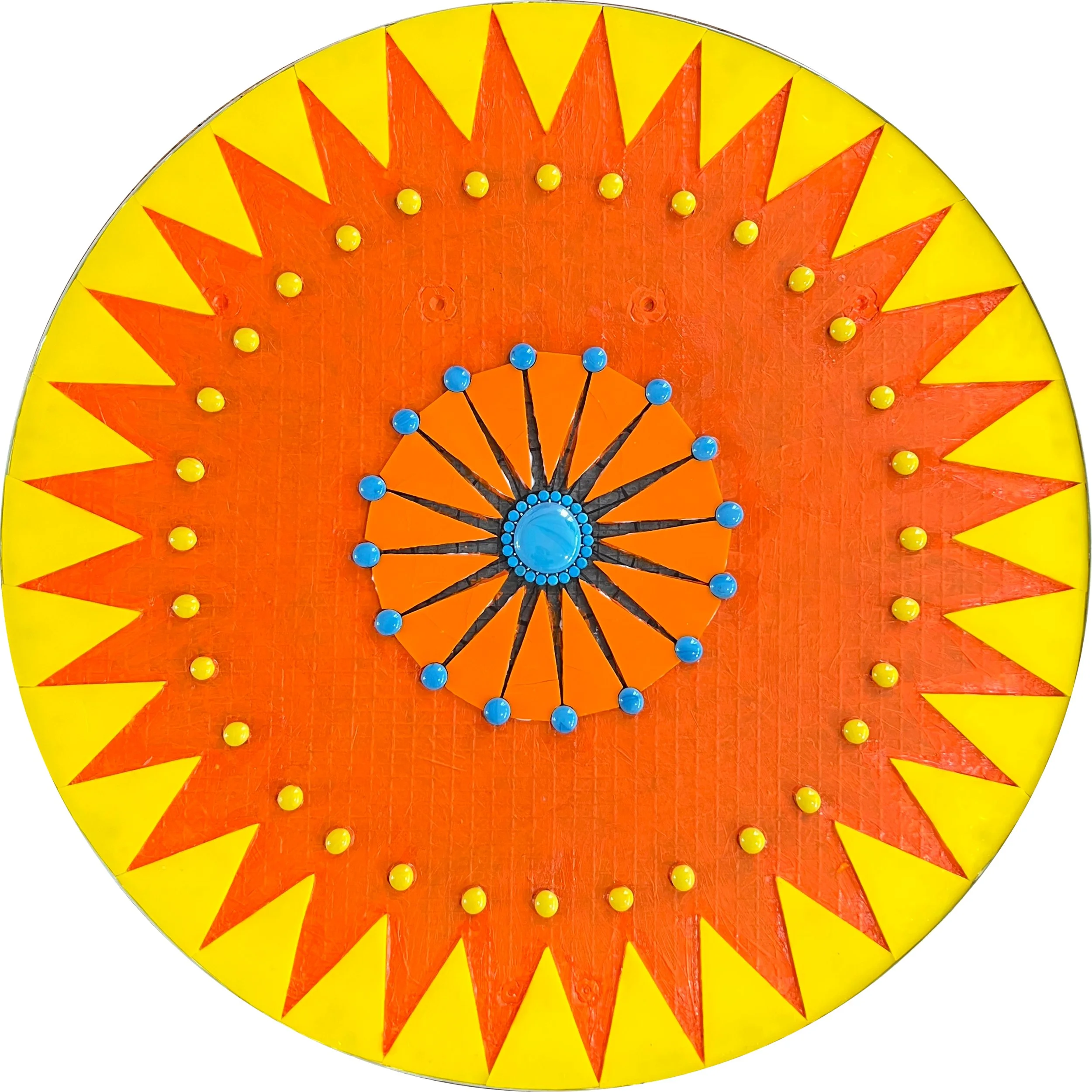
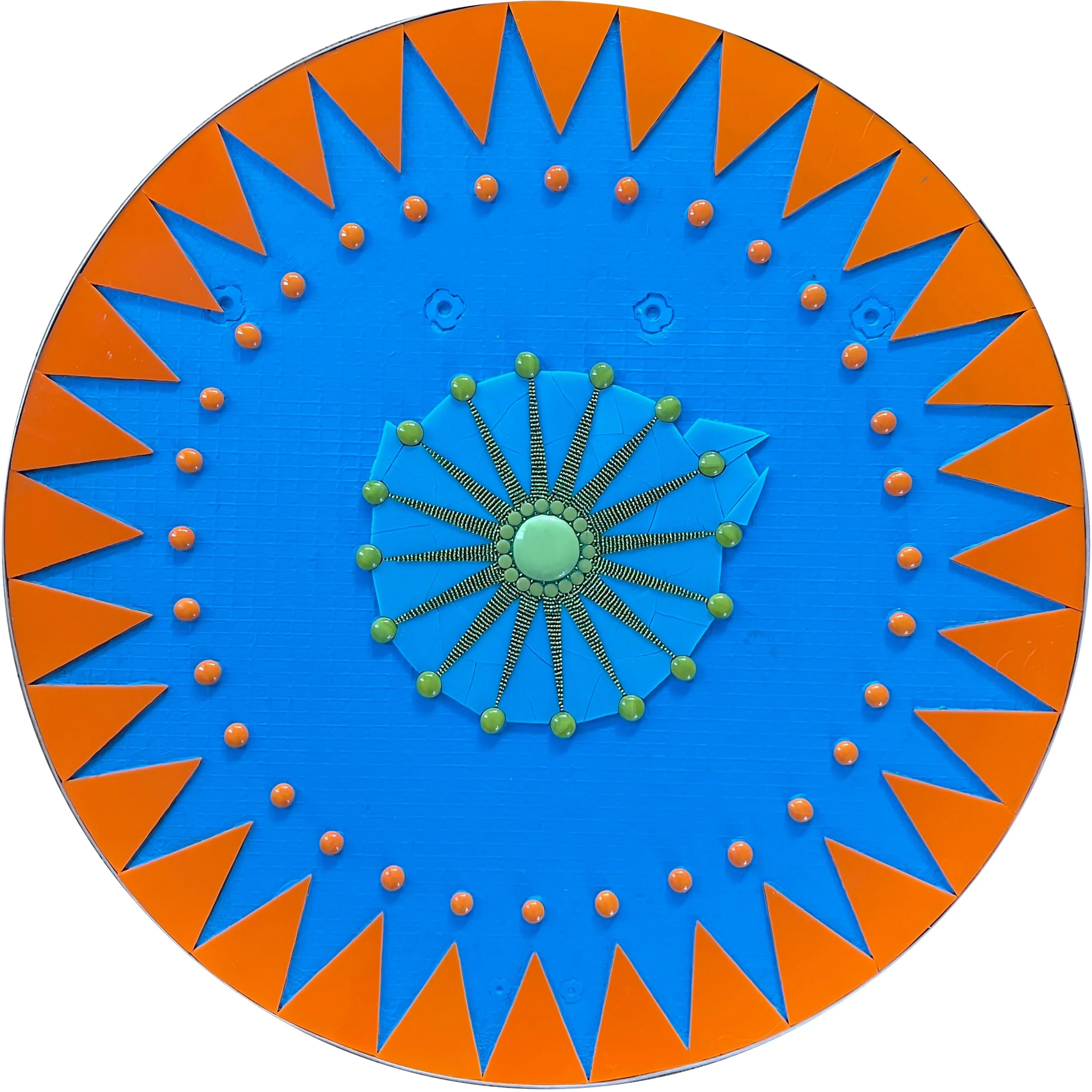
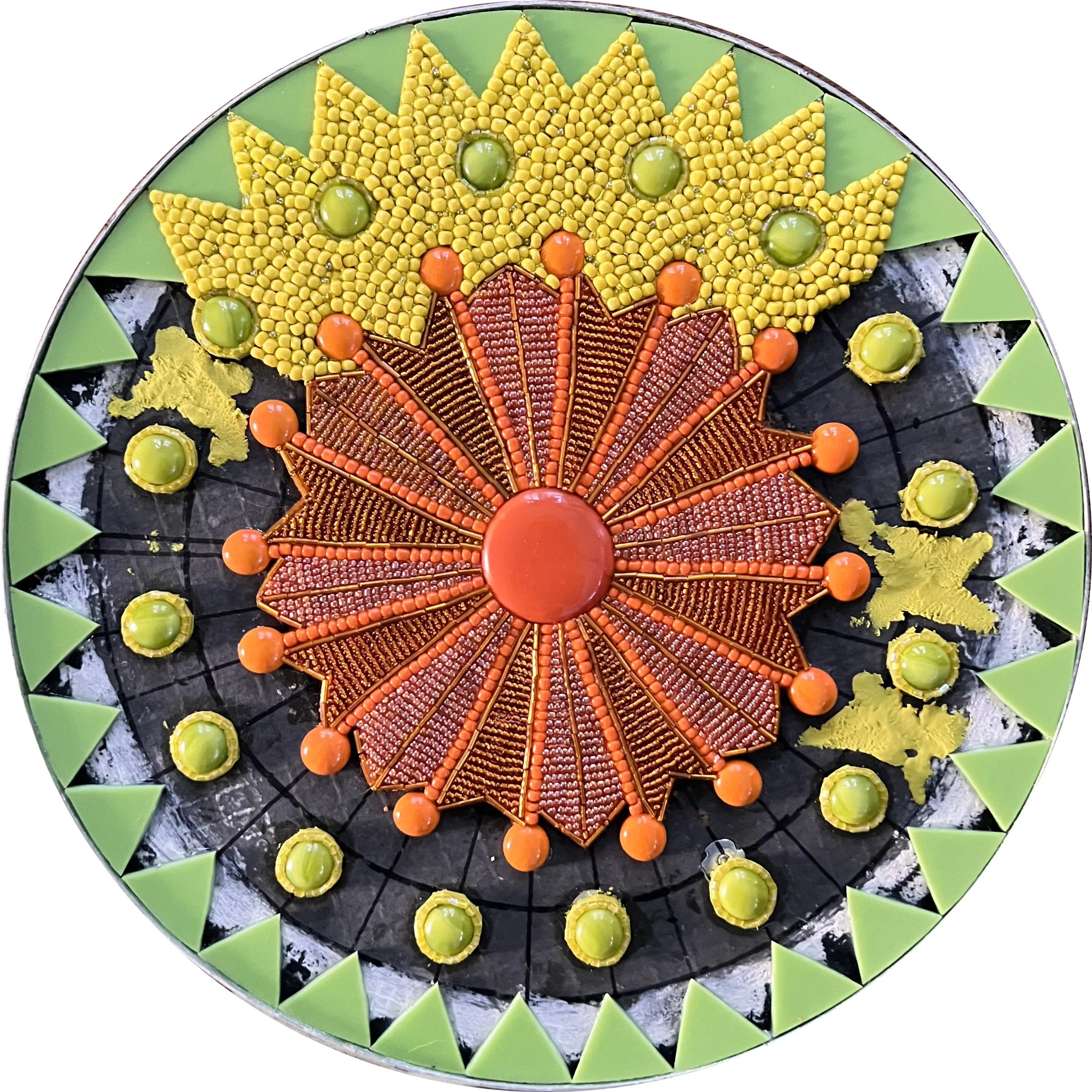
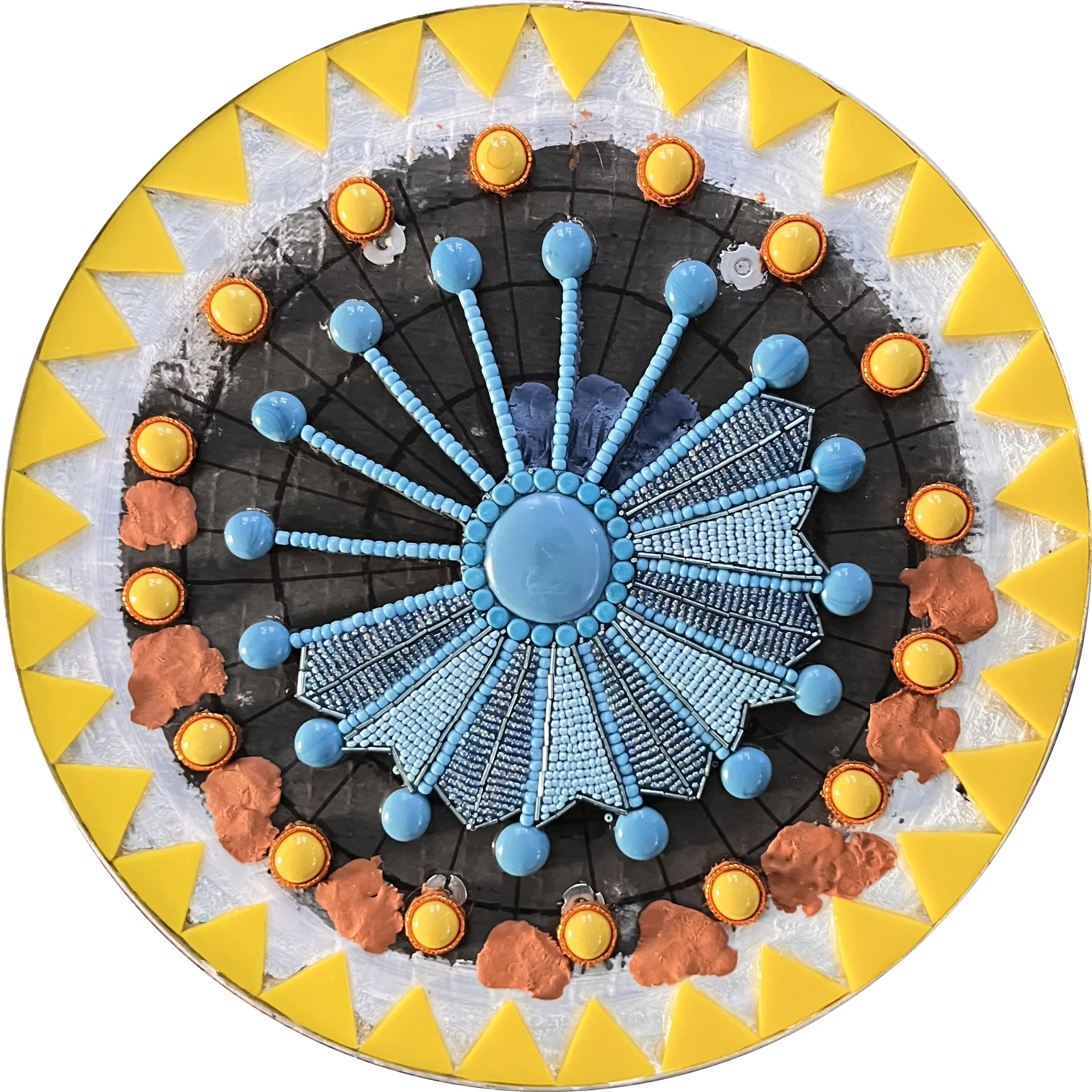
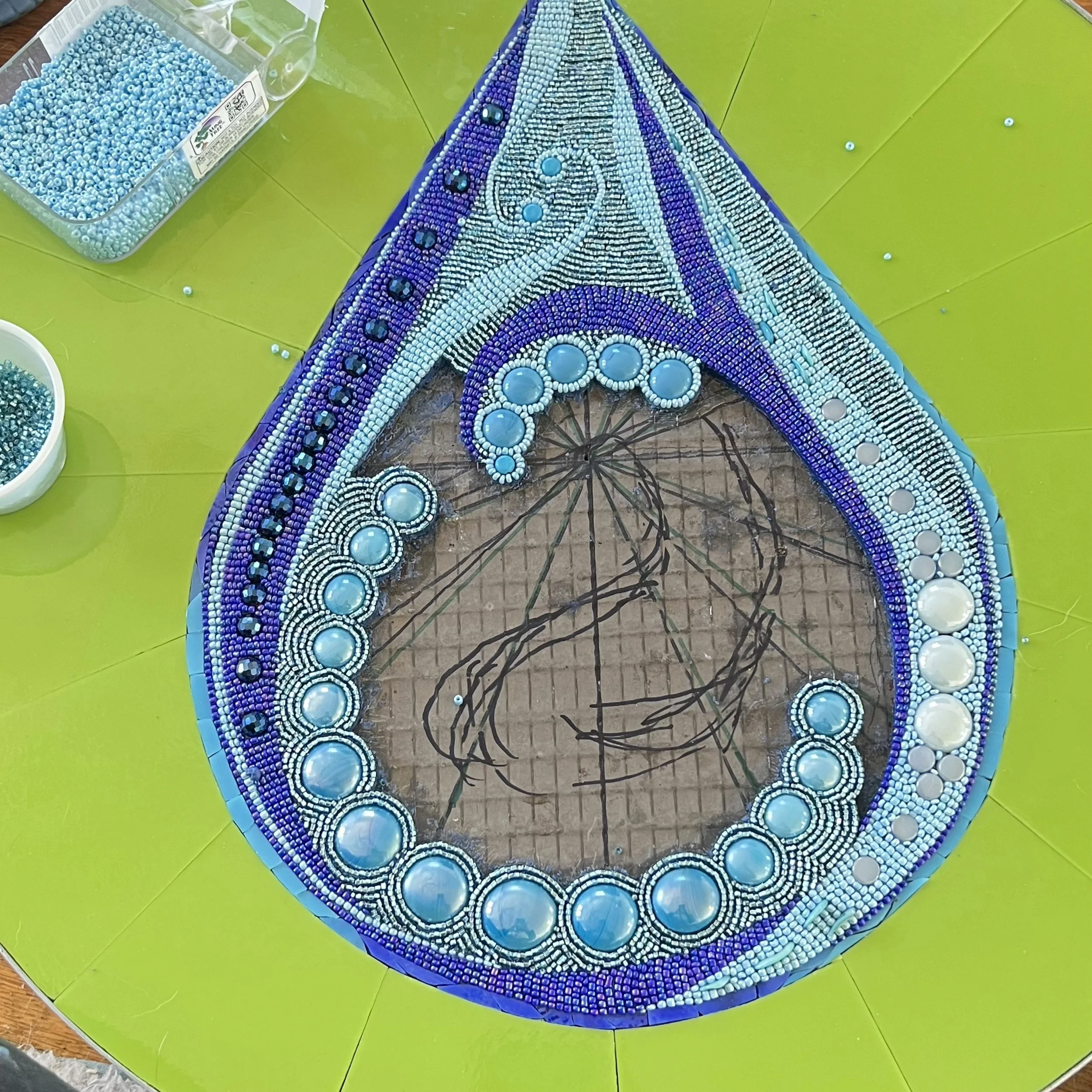
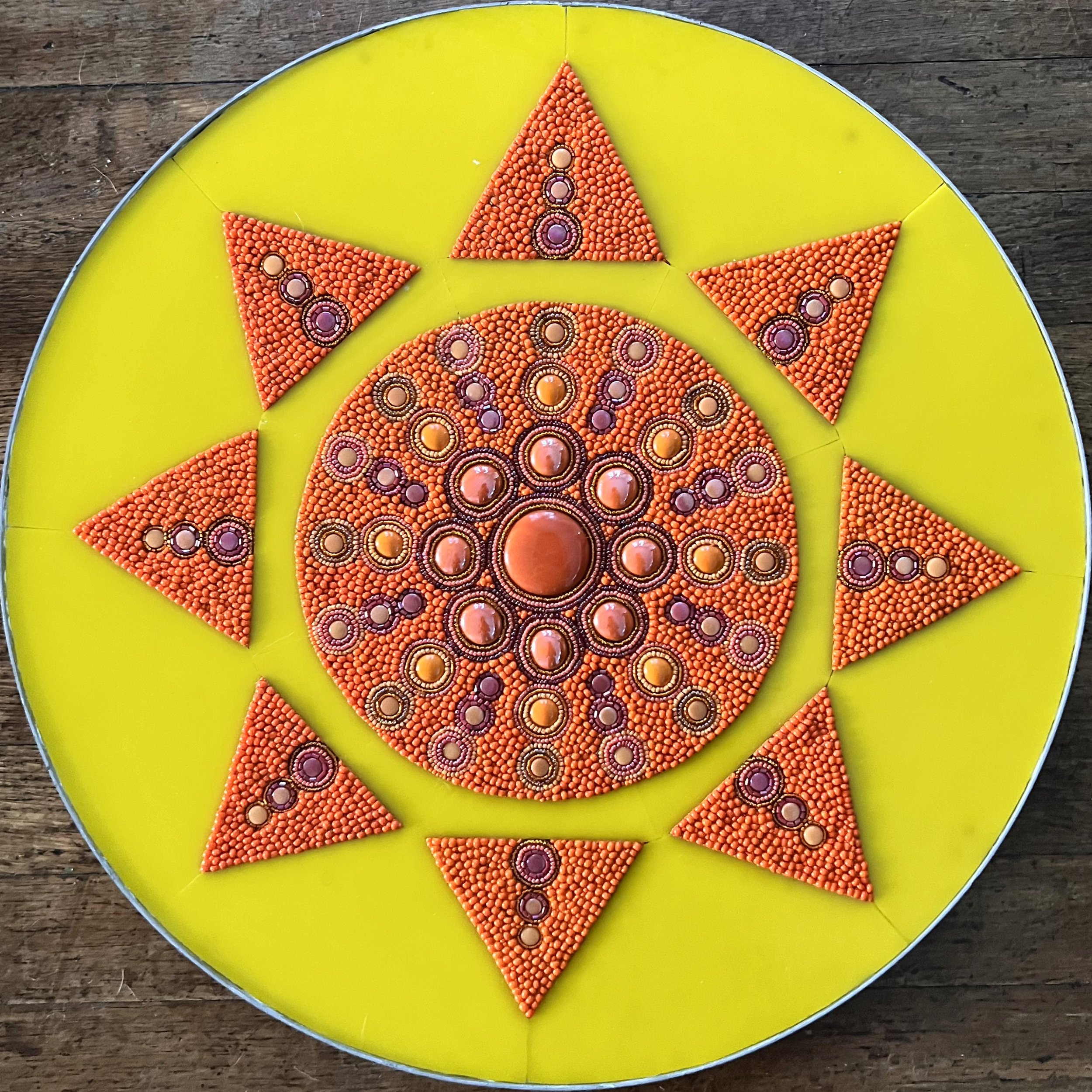
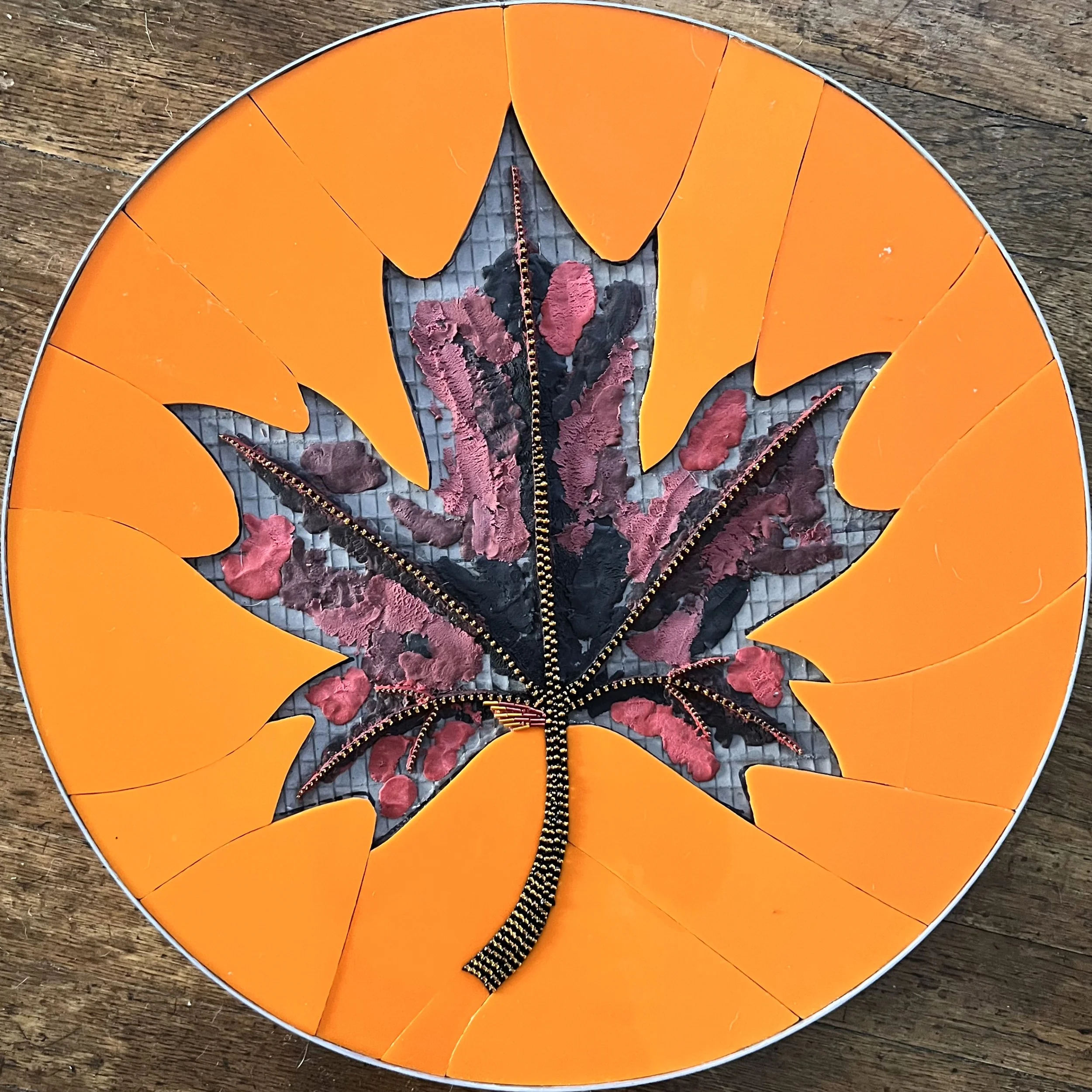
My second meeting was at Ida Nason Aronica Elementary with the arts committee. For every public art commission, ArtsWA forms a committee to approve and oversee the artwork's progress and having the building's architect on the committee was particularly valuable since the school was newly built. The school is designed as a square with a courtyard in the center where students grow local plants. Each of the four corridors surrounding the courtyard represents a season, color-coded with very specific tones: Spring Green, Summer Yellow, Fall Orange, and Winter Blue. As soon as I saw them I was thrilled to realize I already knew of a glass company that makes all four colors. It felt like a sign the project and I were a good fit.

Ida Nason Aronica Elementary Color Banner

Design

Back in my studio, the site visit had left me buzzing with ideas. One key requirement for ArtsWA public art projects in schools is that the work must be relocatable, designed with a lifespan of at least 30 years, and able to be moved if the school changes grades or purposes. Since I usually create architectural installations applied directly to a building, I needed to channel my ideas into something that could be hung rather than permanently fixed. Circles felt like the natural solution as I've always loved working with them and from there the concept began to take shape. Looking at the measurements of the various potential locations, I chose the long hallway leading to the gym, cafeteria, and assembly hall, where the artwork would be seen by every student every day.

Chosen Location for the Mosaic Installation

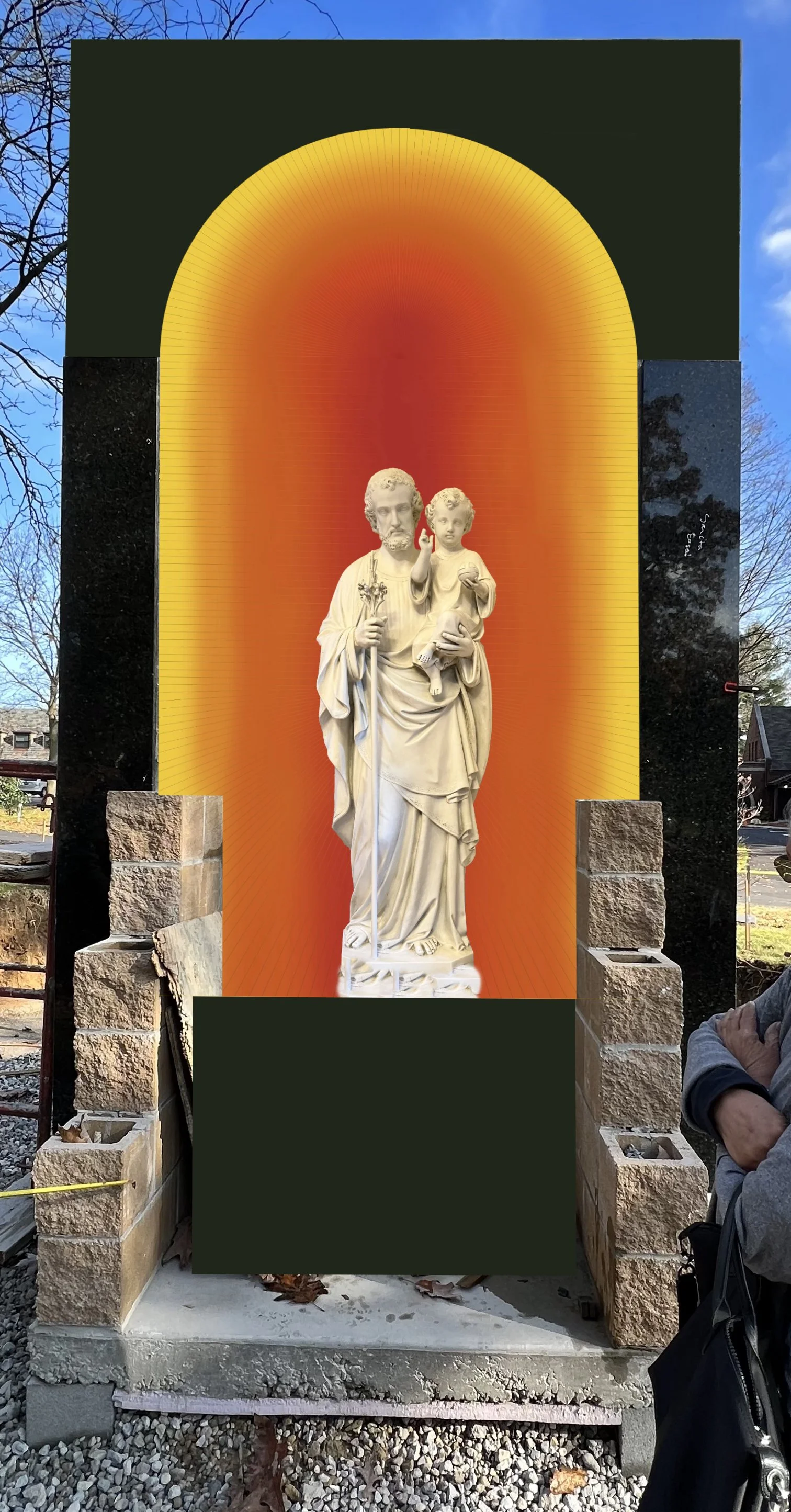
After choosing the location and shape, I divided the panels into seasonal groupings, which felt like the natural next step to reflect the school's existing motif. The architect sent exact measurements, and I settled on 5 panels per season, 20 panels total, ranging from 12" to 24" in diameter. I created my mockups in Pixelmator Pro, working through many different ideas before landing on designs that felt right.

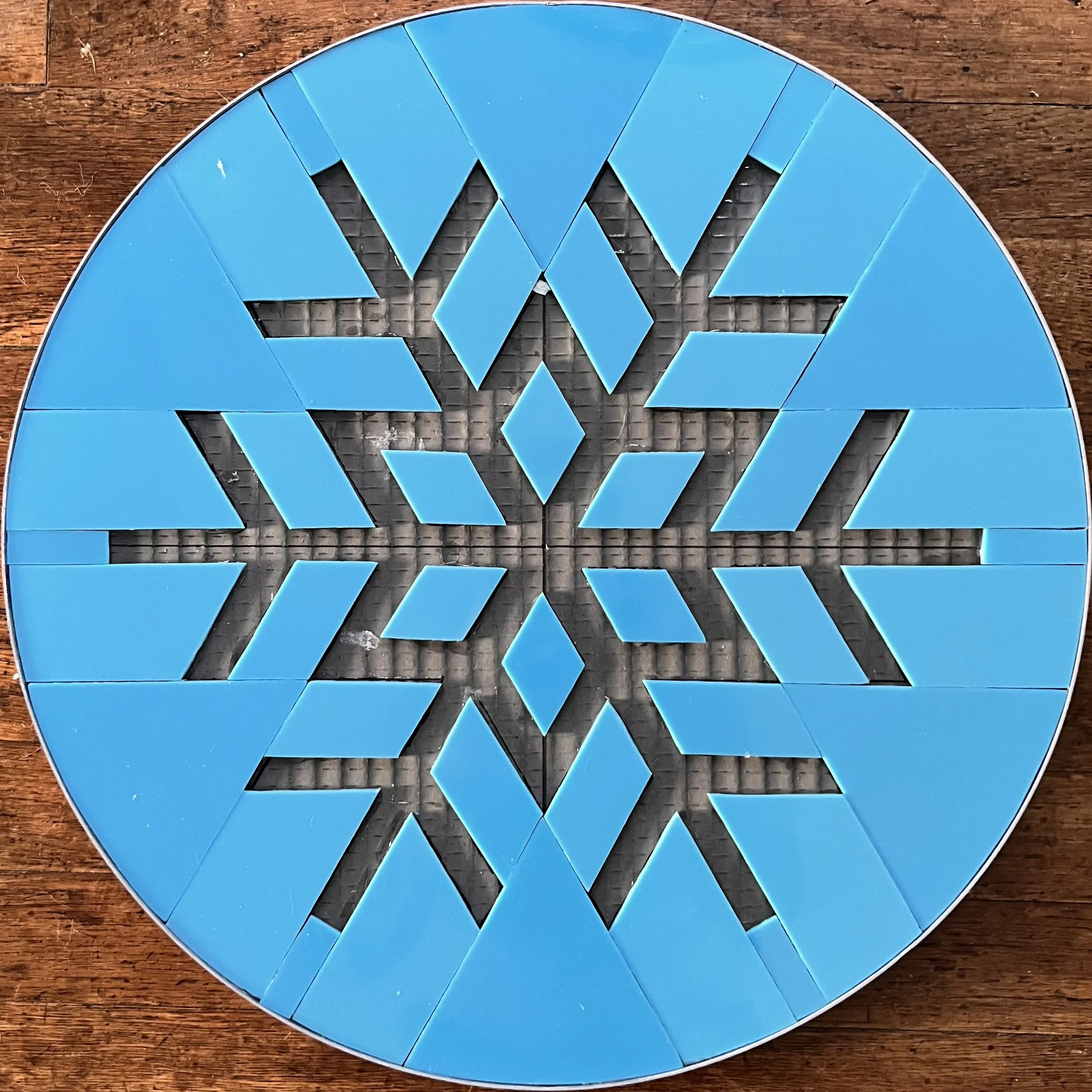
For each season, the first and last panels follow a radially symmetrical design that captures the feeling of transition. The current season's color anchors the piece, while the previous season ebbs out toward the edges and the upcoming season flows in toward the center with more ebb in the opening panel, more flow in the closing one.

Mockups of Seasonal Ebb & Flow

During my site visit I was also drawn to the beautiful woven baskets at the museum and wanted to incorporate some of those designs into the center panels. However, some patterns were of unknown origin and could be personal to specific tribes or hold cultural meanings that I wasn't in a position to fully understand or represent respectfully. It wasn't a risk worth taking. Instead, I decided the center panel of each season would feature a simple graphic representing that season, executed in intricate beaded mosaic as a heartfelt homage to Ida Nason Aronica's meticulous and stunning beadwork. It felt like the right way to honor her through the medium she mastered, interpreted through mine.

Mockup of Seasonal Graphics

The remaining two panels for each season required considerable thought and consultation to find concepts that would authentically represent both Ida Nason Aronica and local Native American cultures. Fortunately, I was permitted to photograph Ida's beadwork at the museum and given permission to use four of her designs as inspiration for the mosaics.

Attribution was handled with great care. While all four pieces were believed to be Ida's work, she was an elder who was frequently gifted beadwork, so the Aronica family wisely chose the phrasing "inspired by Ida Nason Aronica's collection" to ensure credit was never misattributed.

The one significant alteration I made was to the background colors, adjusting them to align with the school's seasonal color scheme. This required careful discussion, as colors in Native American beadwork can carry deep cultural and symbolic meaning. Since only the background colors were being changed and the designs couldn't otherwise fit the panels, everyone ultimately agreed the alteration was acceptable; a decision I didn't take lightly.

Mockup of Beadwork Panels

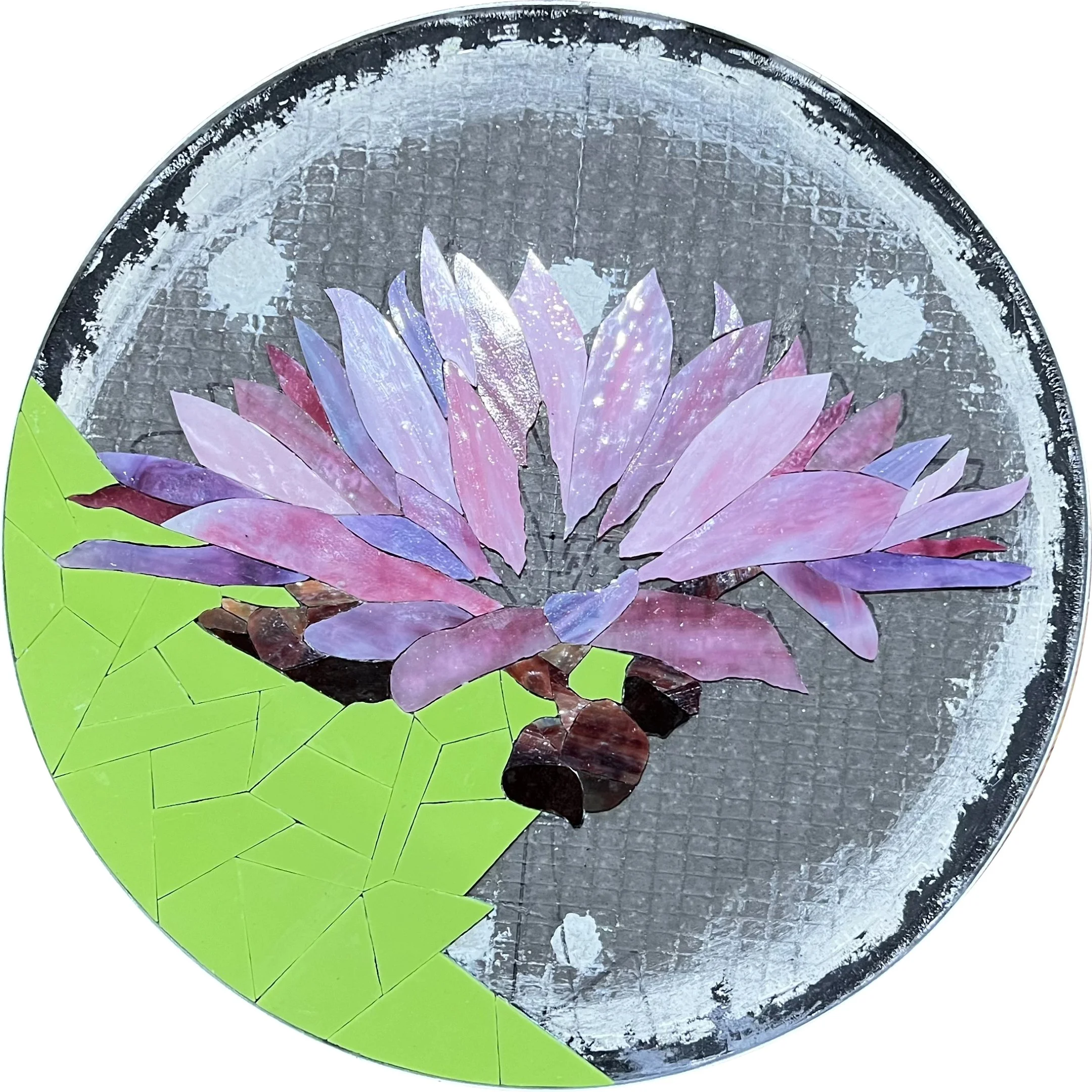
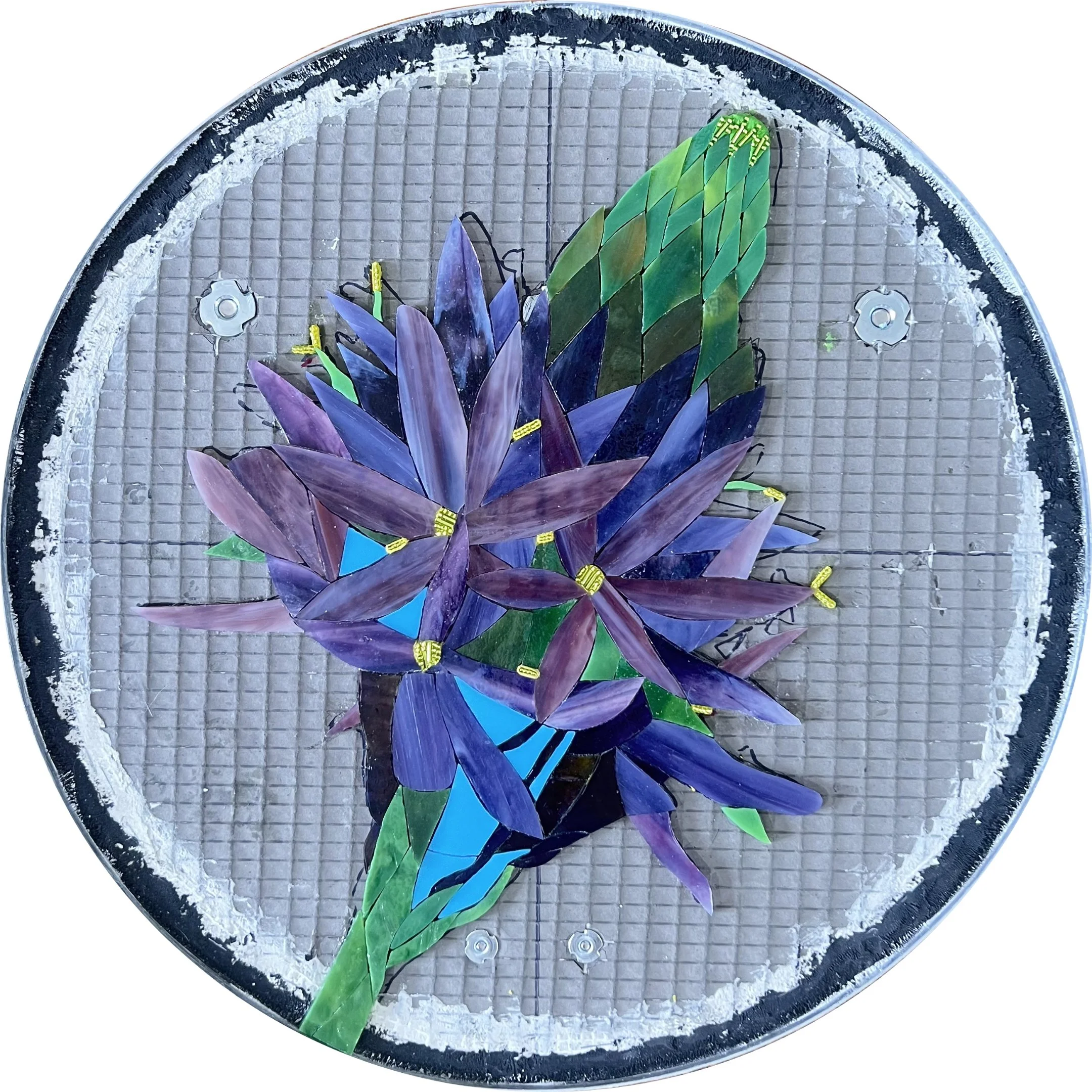
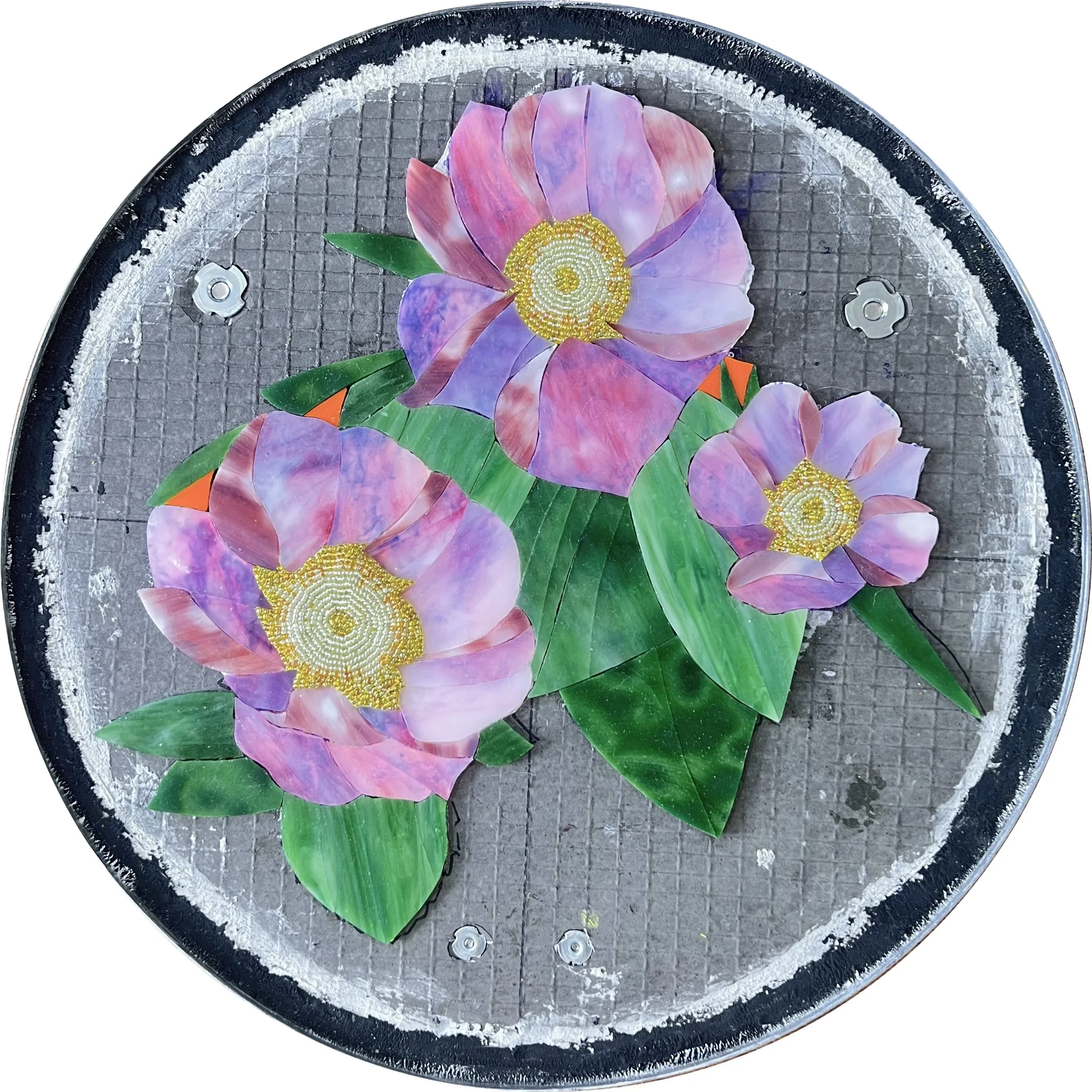
For the fourth panel of each season I returned to the director of the K'tɨ́taas County Historical Museum, who once again gave generously of her time and expertise. Together we identified food sources important to local Native American communities for each season: bitter root harvested in spring, huckleberry gathered in summer, salmon fished in fall, and camas root stored and ground into flour to sustain communities through winter.
Since I was using flowers as the visual symbol for the three plants, the poor salmon looked a bit out of place among them. I ultimately replaced it with the nootka rose for fall. Its edible hips were dried and provided a sustained source of vitamin C through the cold months, and as a flower it fit beautifully into the panel's design.

Mockup of Important Food Sources

Creating the Panels

Once I submitted the designs, the committee approved them with what the director told me was the quickest positive consensus they had ever reached. I was so proud! Before fabrication could begin, I still had several important steps to complete: creating detailed technical documentation for review, consulting with an art conservation expert, and having an engineer analyze and sign off on the structural requirements of the hanging panels.

Then, finally, it was time to start making mosaics. ArtsWA requires extensive visual documentation of the entire fabrication process in case the artwork ever needs repair or restoration in the future, which means I have plenty of photos to share!

For the substrate I used 1/2" Wedi board: a foam core backer board coated on both sides with fiberglass mesh and cementitious resin. It's my go-to for installations because it's waterproof, easy to cut into any shape, and most importantly for a project requiring shipping across the country, remarkably lightweight. Once I had all the measurements and designs mapped out, I drew them directly onto the board and cut out the twenty circles.

Next I cut fiberglass mesh to fit around the edges of each circle, holding it temporarily in place with staples before applying a skim coat of mortar to bond it permanently. This is an important step that's easy to overlook. The cut edges of Wedi board expose the foam core, which isn't strong enough on its own to hold up over decades of public display. The fiberglass and mortar create a durable, finished edge that will last.

To finish the edges I added aluminum edging, securing it with Apoxie Sculpt which is a two-part epoxy clay that dries rock hard and bonds to almost any surface. Where the two ends of the edging met, I positioned the seam at the top of each circle where it would be least visible, reinforcing it with additional Apoxie Sculpt and finishing it with Testor's silver enamel paint. The result is a seam that is nearly invisible at a glance, but upon close inspection has the appearance of solder, a small detail I loved.
Because Wedi board won't hold a screw on its own, all hanging hardware has to be installed before the mosaic is created. The wide washers that anchor the screws need to sit on the front surface, which means they have to go in while that surface is still accessible. I used French cleats sized between 6" and 18" depending on the panel size, with special wide washers that screw in flush with the surface so the glass lays flat on top without any bumps or gaps. Getting them perfectly flush is a finicky process and I'll admit I don't always nail it, but if a washer ends up slightly recessed I simply smooth over the depression with a little leftover mortar or Apoxie Sculpt. Problem solved.

The security hangers also need to be attached before the mosaic is created, using the same wide washer method as the French cleats. Once the artwork is hung, a second piece attached to the wall is locked into place using a wrench-like key, preventing the panel from being accidentally (or intentionally!) lifted off the hanger. In a school setting this was particularly important. Without them, a curious kid reaching up to touch the artwork could inadvertently flip an entire panel off the wall. With twenty mosaic circles hanging in a busy school hallway, that wasn't a risk worth taking.

With the substrate prepared, edged, and fitted with hardware, the first panel was finally ready for mosaic! I can't overstate what a relief this was. I had conceived the whole framing and mounting system about six months before receiving the go-ahead to begin fabrication, and the entire time I quietly worried that one of the steps wouldn't come together as planned. Having it turn out exactly as I'd envisioned was deeply satisfying.

Of course, now I had 19 more frames to build...

Precision was critical at this stage as the hangers can't be adjusted once the mosaic is in place, so I measured everything multiple times before committing. It was painstaking work, but I pushed through and completed all 20 frames in about two weeks.

The timing of the project couldn't have been more chaotic. ArtsWA gave me the green light at the exact same moment I was buying my first home. I knew the next couple months would vanish in a whirlwind of carpet removal, painting, cleaning, and moving my entire life, including tens of thousands of pounds of glass.

Fabrication

Once the dust settled, literally and figuratively, from the move it was time to begin creating the mosaics in my new studio. The new space was a revelation. For the first time I have a separate glass room across the hall from my mosaic studio, where I can browse and select glass that wasn’t covered in grout dust, without tripping over works in progress, or balancing precarious stacks of stained glass sheets on boxes. Having a dedicated table in the center of the room to lay everything out and make considered color decisions was a joy and I'm happy to report I got significantly fewer cuts from the stained glass as a result!

The glass room in my new home. My family & friends are kind enough to act like it’s normal to have a room just to store my glass.

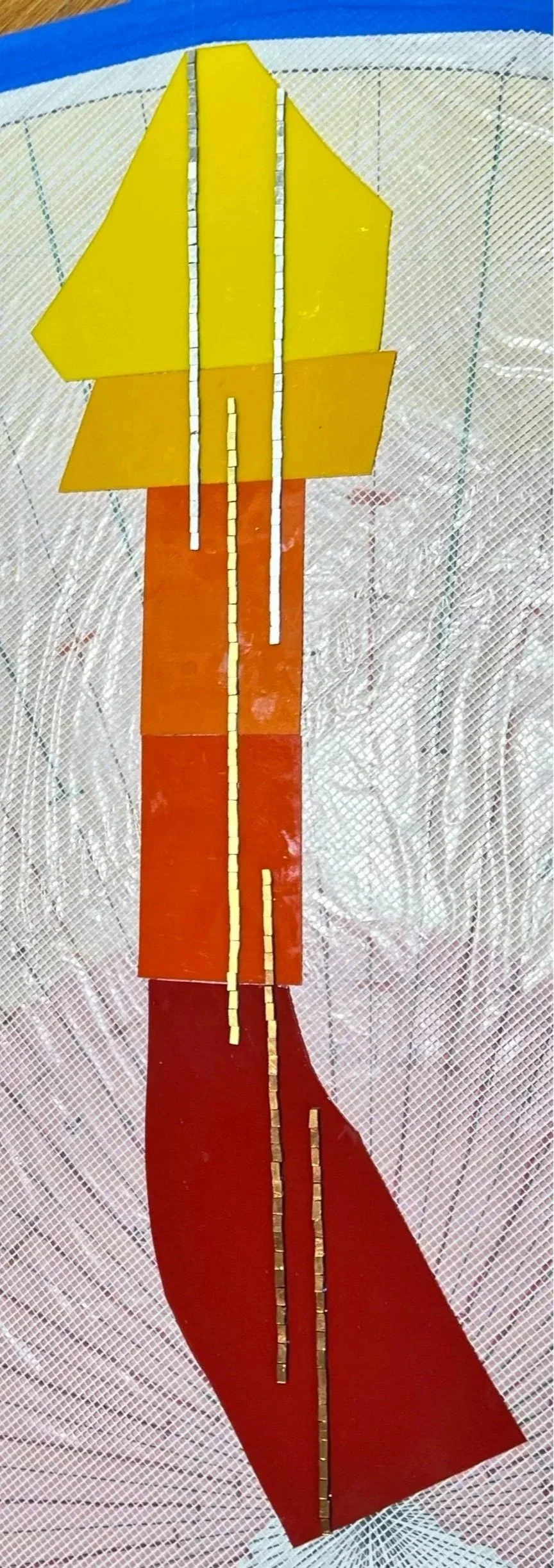
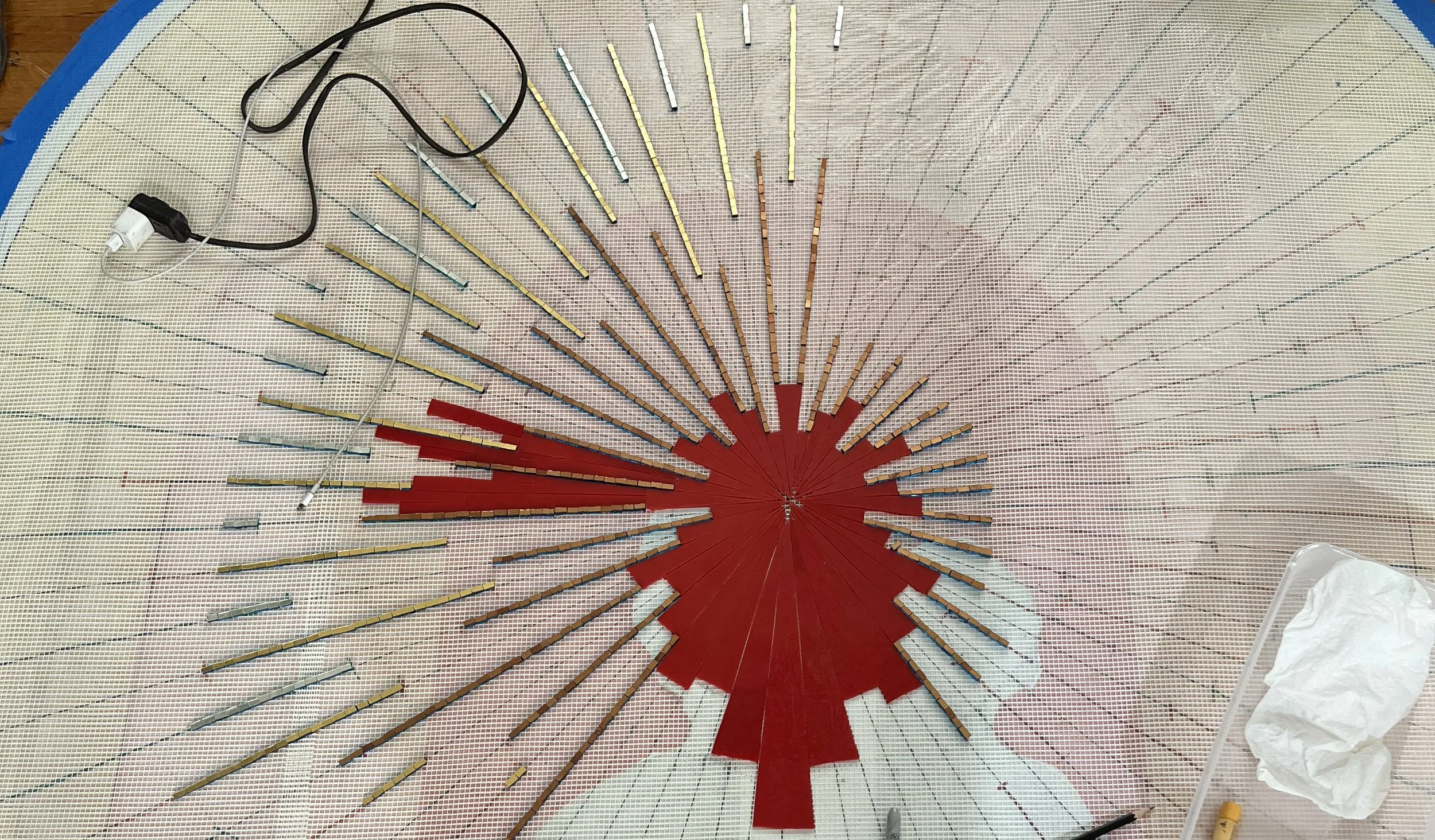
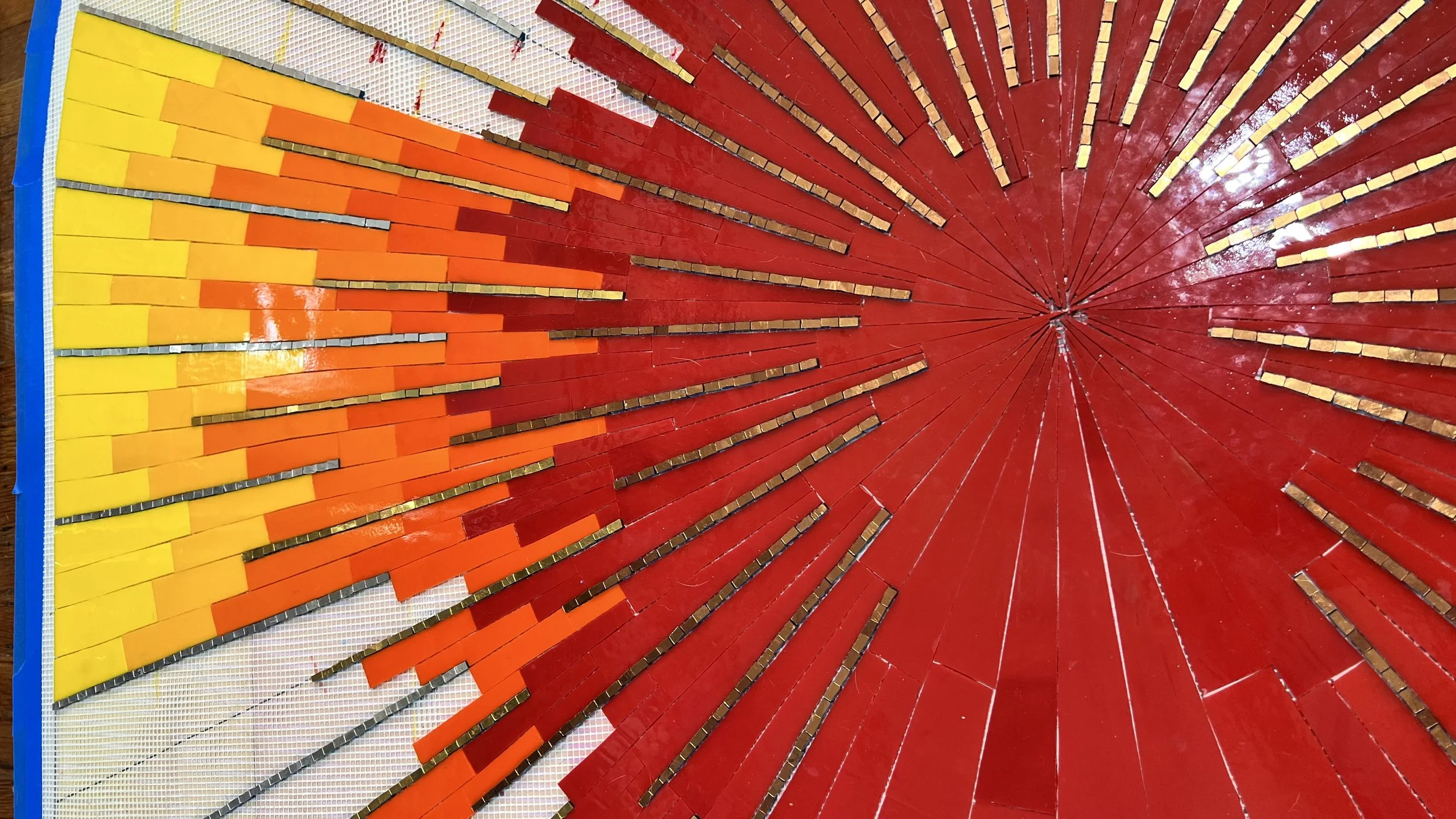
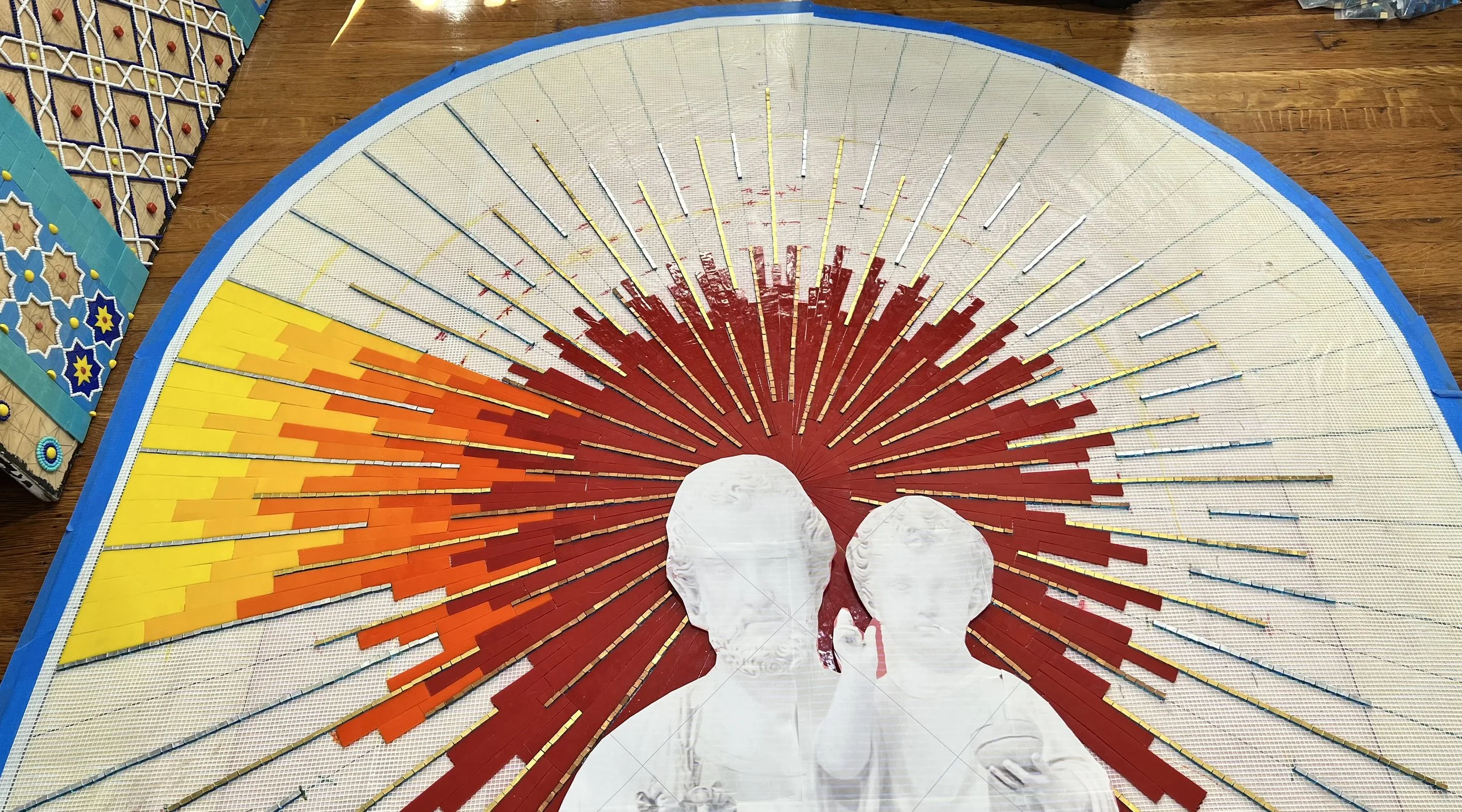
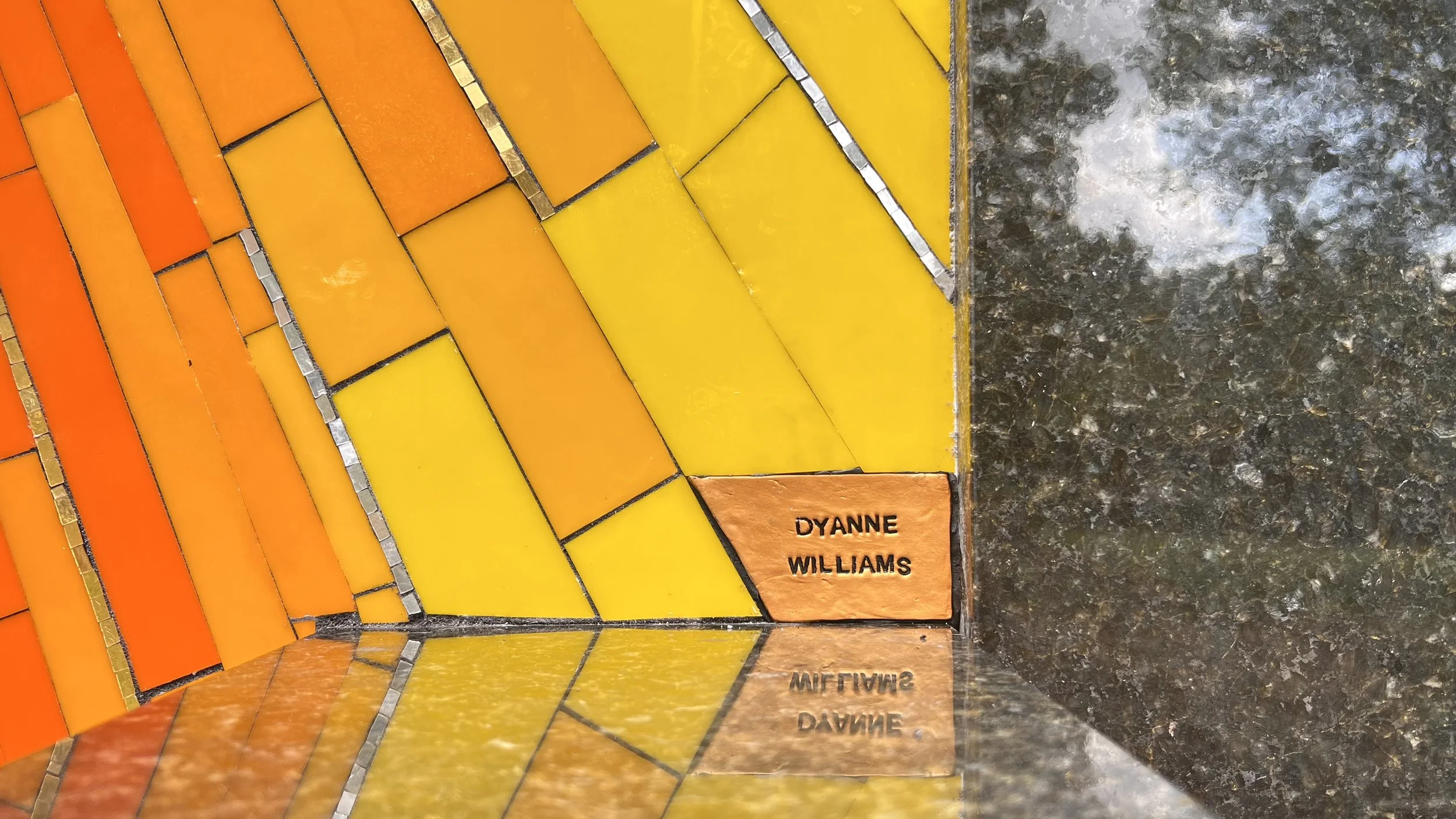
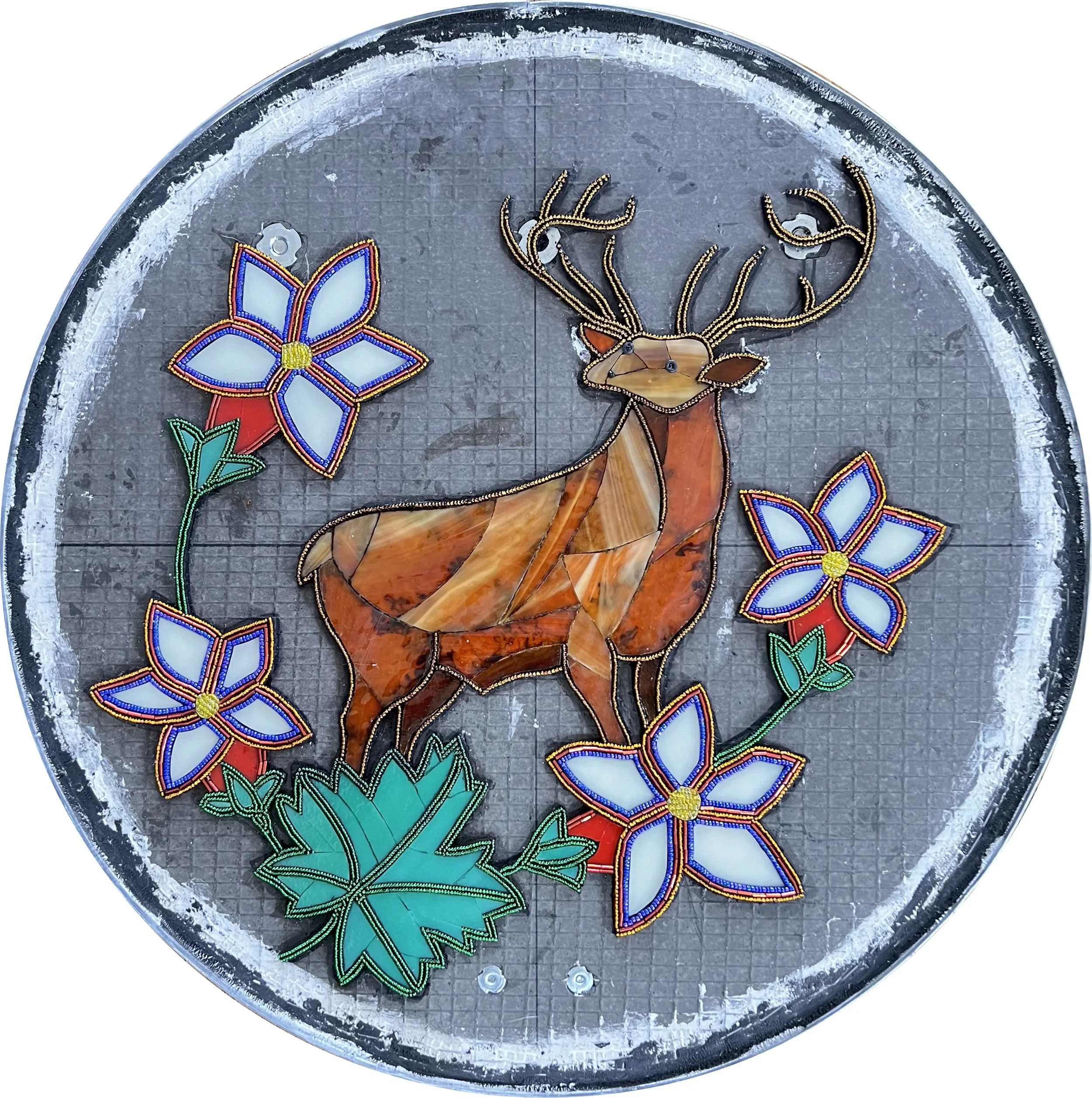
Selecting the materials was one of my favorite parts of the process. I carefully chose stained glass, glass gems, and glass beads not only to make each individual panel shine, but to ensure the entire collection of twenty pieces would flow together as a cohesive artwork. For adhesives I used Weldbond for the stained glass and gems since it's reliable, flexible, and dries clear, and Apoxie Sculpt for the beads, which need a stronger mechanical bond given their rounded surface. Below are images of all 20 panels in various stages of completion. Click any image to view it in detail.

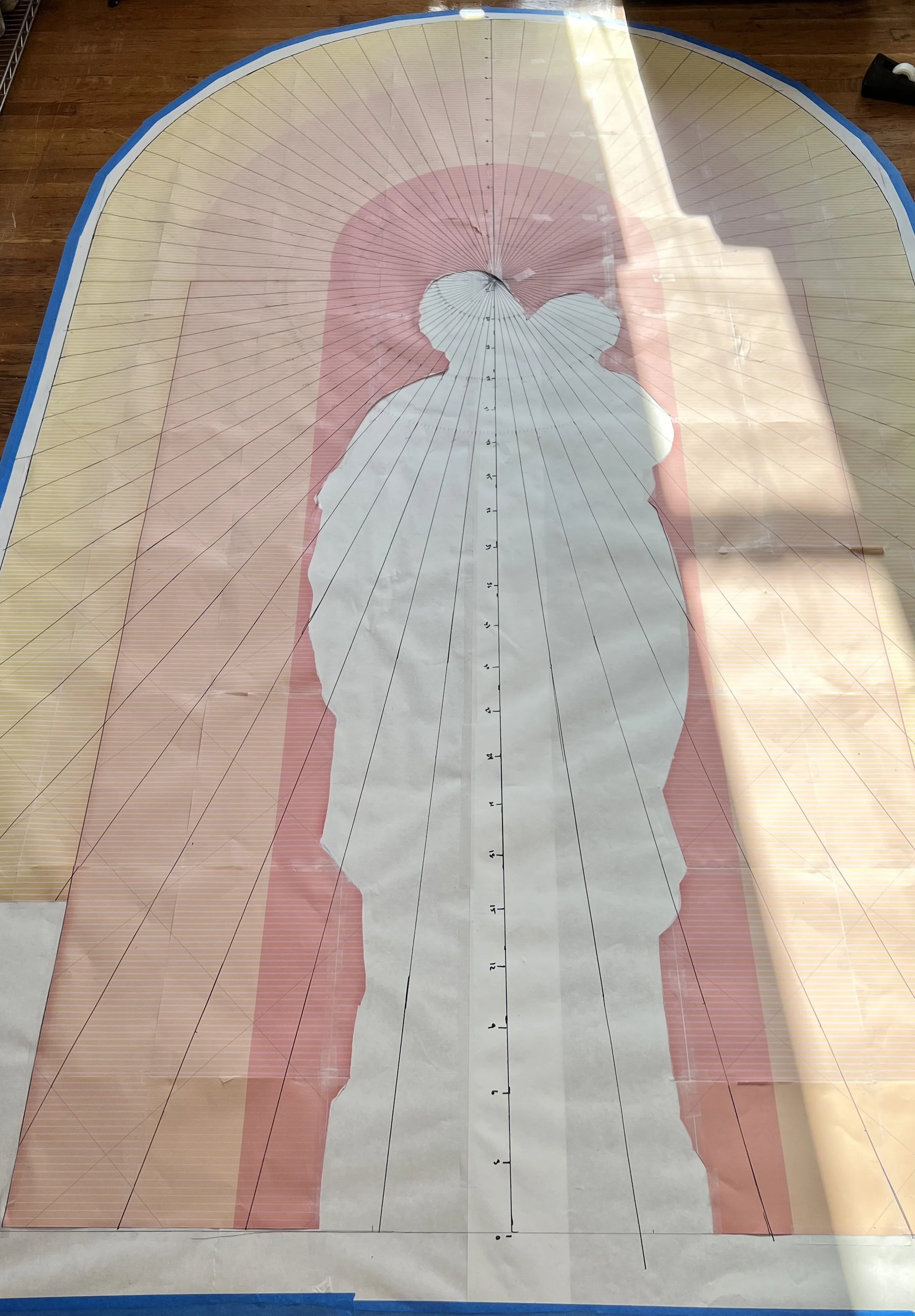
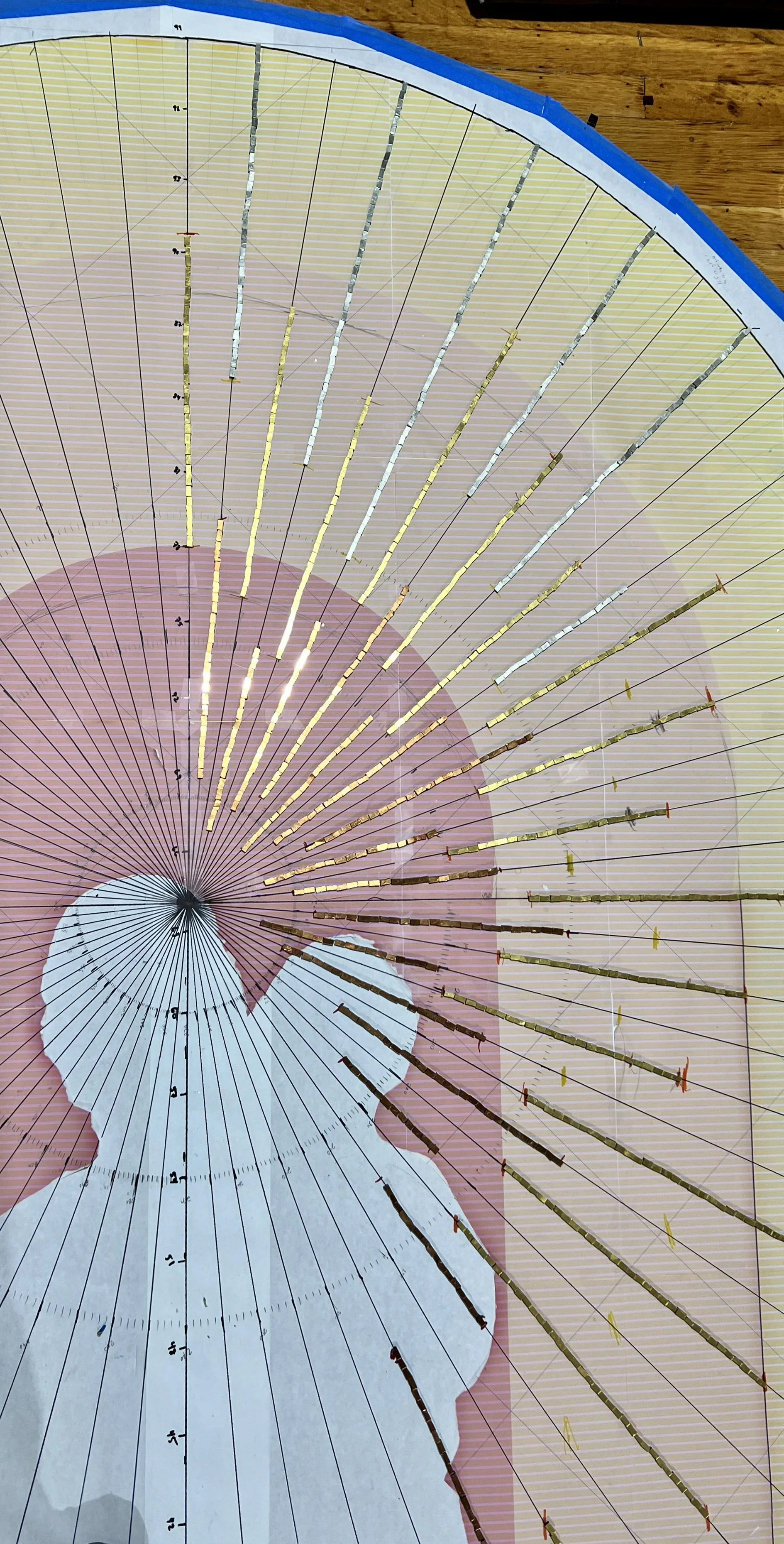
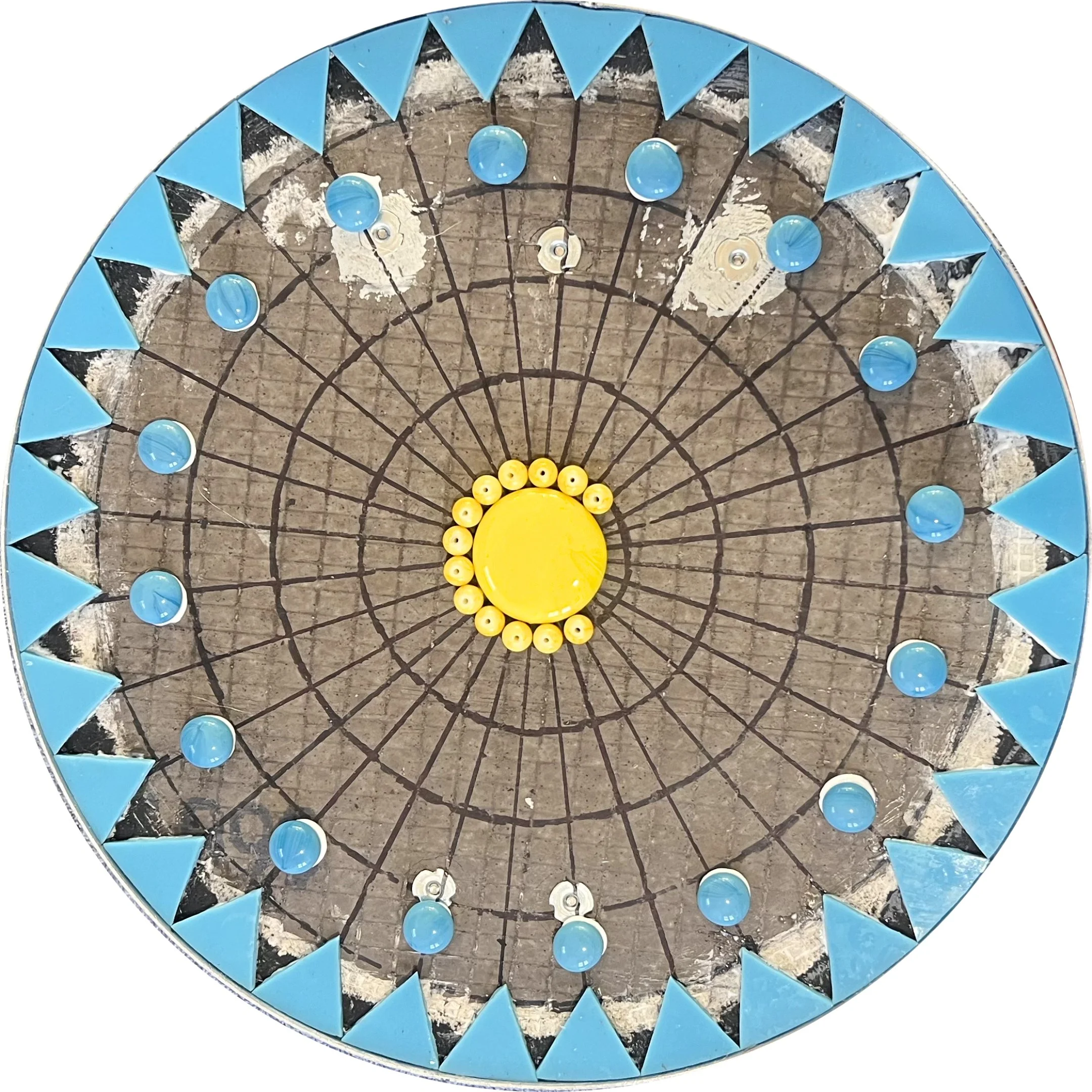
For the first panel of each season I began by drawing diameter lines at every angle needed, followed by concentric circles. These guidelines keep the geometric design accurate while I'm focused in on the small details. You can see them more clearly in the photos of the later geometric panels below.

I painted the substrate background before laying any glass, which might seem like an unnecessary step but makes a significant difference in the final result. Even opaque stained glass has some level of translucency, and without a painted background the dark grey of the Wedi board and my pencil guidelines would show through and shift the color of the glass. On the yellow panels especially, the lines were completely visible through the glass before painting.

The grout choice added another consideration. I used Starlike Evo Epoxy Grout, which has a beautiful glassy, reflective finish, but that reflectivity also picks up the color of whatever is beneath it. Left unpainted, the grey substrate would have made the grout appear darker and murkier than the clean, luminous effect I was going for.

The final panels of each season are similar in structure to the first, but smaller at 12" in diameter and considerably more intricate, featuring detailed beadwork throughout. Since I was using Apoxie Sculpt as the adhesive for the beads rather than mortar, I didn't need to paint the full background, though I did paint under the edges of the yellow stained glass where translucency would have been an issue.

As with the opening panels, I laid out the geometric elements in stained glass and gems first, then added the beads. To prevent the smaller central elements from shifting before they could set, I started by placing the thin pinwheels of glass radiating out from the center, then filled in the smaller bead designs once the pinwheels had dried and stabilized.

The beaded sections would not be grouted. Grout would obscure the delicate detail and fill the spaces between beads in a way that would diminish rather than enhance the design. Instead I used Apoxie Sculpt in various colors, sometimes mixing colors together or adding powder pigments to achieve exactly the effect I was looking for.

The second 20" panel of each season was inspired by Ida Nason Aronica's beadwork collection. Rather than simply replicating her beautiful designs, I wanted to interpret them using a combination of beads and stained glass to bring something of my own medium to the tribute.

These were by far the most difficult panels to create. The process required building tiny walls of Apoxie Sculpt and beads, most of which used 15/0 seed beads, the smallest size available. The challenge was relentless: there was a very small window between the clay being firm enough to hold the bead walls upright and becoming too firm to accept the beads securely. Too soon and everything collapsed. Too late and nothing would set. I repeated this process hundreds of times across the four panels.

It was painstaking work, but I never regretted taking the time to do it this way. The results exceeded my expectations, and I hope they honor Ida Nason Aronica's extraordinary beadwork in a way that would make her family proud.

The center panels of each season are 18" in diameter, each featuring a simple symbol of its season made elegant and dynamic through intricate beadwork. As with the beadwork panels, I applied the stained glass shapes first to establish the composition, then built up the beadwork around and within them.

These panels demanded the same painstaking patience as the others, but the results made every tedious hour worthwhile. The fall leaf panel in particular turned out beyond what I had imagined, and remains one of my personal favorites in the entire collection.

The fourth panel of each season depicts a flower representing an important food source for local Native American tribes, at 15" in diameter. I found ways to incorporate beaded details into each one, both because the beads add a liveliness and sparkle that I love, and because maintaining that beadwork thread throughout all 20 panels ties the entire collection together visually.

This project genuinely changed the way I think about my work. I loved the way the beads added energy and dimension to the floral designs so much that I expect beads will find their way into every floral mosaic I make from now on.

To complete the mosaics, I grouted all the stained glass sections with Starlike Evo Epoxy Grout. Its smooth, glassy, reflective finish was a deliberate choice: I wanted the grout lines to recede quietly into the background rather than compete with the beadwork and glass for attention. As you can see in the photos, the grouted panels have a much softer, more unified appearance that draws the eye directly to the subject of each piece.

Of course, the background glass itself received just as much care. I took considerable time cutting the background of each piece into patterns that flow well and remain consistent across each panel type, because even the supporting elements contribute to the overall cohesion of the collection.

You can view all the completed panels in detail here.

Shipping

With all 20 panels completed, grouted, and polished, it was time to pack them up and ship them to Washington. I gave myself a few days before packing so family and friends could come see them first. After more than a year of work, this was the only chance anyone I knew would ever have to see all 20 pieces together in person.

Arranging the shipping took some coordination. The school was closed for spring break, but the principal was wonderfully kind and communicative, arranging to receive the delivery at her home on a specific date. The packed panels filled several large boxes, and I was genuinely grateful she was willing to accommodate such a cumbersome delivery.

Then came the moment that nearly stopped my heart. I was already booked on a flight to Washington. The installation, student projects, and dedication ceremony were all scheduled. I dropped the boxes at FedEx, drove home, sat down, and breathed a long sigh of relief. Then an email arrived informing me the packages were en route to a random address in Georgia.

I checked the labels I had printed. They were correct. I called FedEx, shaking, and kept being told it was a computer glitch and everything was fine. Something about their responses did not reassure me at all. So I drove back to the FedEx location where I had dropped them off.

The woman who had helped me originally was still there, and she was a lifesaver. She knew something was wrong, made a series of calls, and discovered the boxes had not yet left the building. She arranged for me to load them back into my car and drive them directly to the main FedEx hub at the airport, where a staff member would personally take them from my car and ensure they were on the correct vehicle that afternoon. He even texted me later to confirm they were on their way to the right destination.

I still checked the tracking every couple of hours for the next few days. But they arrived exactly on time, exactly where they were supposed to be. I have never been so relieved in my life.

Installation

Nearly two years after the initial site visit, it was finally time to return to Ellensburg for the installation. I was nervous, excited, and ready.

ArtsWA asked me to arrive Saturday evening rather than Sunday, even though I wouldn't have access to the school until Monday. The reasoning was practical: if anything went wrong with the flight or the notoriously tricky mountain pass from Seattle, there would still be time to sort it out. As it turned out, the early arrival was a gift. I spent Sunday exploring the trails winding through the gorgeous landscape surrounding Ellensburg.

I had my heart set on visiting Mount Rainier, mostly because I envision it as a volcano that continuously spurts out Rainier cherries. Unfortunately the only route that wouldn't require a seven-hour round trip was temporarily closed. I was more than consoled by discovering the Umtanum Creek Falls Trail instead. No volcanoes, but an absolutely stunning waterfall.

Video of Umtanum Creek Falls on the Umtanum Creek Falls Trail near Ellensburg, Washington, visited during the Cycles public art mosaic installation trip

Finding the waterfall turned out to be an adventure in itself. The snow had just melted and the trail was barely visible. I had no cell reception, but thankfully had taken a screenshot of the trail map before leaving. At some point I wandered so far off the path that I had to climb a large hill just to get a vantage point and figure out where I was. I stood there for nearly 20 minutes studying the map and the landscape, trying to reconcile the two. The breakthrough came when I finally accepted how far off course I actually was. Once I let go of my mental image of where I thought I should be, the landscape suddenly matched the map perfectly. I could have turned back and found my way to the car. But I really wanted to find that waterfall.

This was like 5 minutes in. I looked like a mud monster when I left!

I can’t believe I actually made it across this “bridge”.

I fit in a couple more easy hikes that afternoon, but the waterfall was the highlight of the day. I realize I'm including a lot of nature photos in what is meant to be a mosaic installation post, but hiking in the Ellensburg area is simply extraordinary. Beyond the beauty, there was something deeply meaningful about walking this landscape while thinking about the project. This is the ancestral land of the Yakama people, and while I was out on those trails I kept thinking about how remarkable it would have been to live on this land hundreds of years ago, and how that history runs through every panel I had just spent almost two years creating. Back to the installation!

The next morning I met the principal well before dawn and we carried the packages of mosaics into the school together. I knew time would be short, so I had prepared obsessively. I created this detailed layout of all 20 panels and studied it so many times I could picture it with my eyes closed. The custodian generously provided a ladder, tape measure, and level, and I got straight to work marking every screw position for every French cleat with painter's tape.

Hanging the first mosaic panel.

Inspecting to make sure the security hanger is correctly in place.

Installing the fall leaf mosaic panel.

Making sure the French cleat is level.

As an artist working on state property, I wasn't legally permitted to drill into the walls myself. The principal had anticipated this and arranged for the head custodian of the district to come and handle the drilling and hanging of the French cleats. He was incredibly generous with his time, making sure every cleat was secure and positioned correctly. He was even gracious about it when I decided midway through that I wanted one of the panels shifted slightly from its planned position. When you've spent over a year creating something, getting the placement exactly right matters.

The head custodian for the district using the wrench-like key to lock the security hanger onto the wall.

We finished the installation by early afternoon, which gave me just enough time to change clothes and prepare for the end-of-day school assembly. I would be speaking to the students about the artwork, sharing a little history of mosaics, and giving them a preview of the hands-on project they would get to make the following day. After nearly two years of working on this project largely in solitude, I was about to meet the kids it was made for.

Cycles, a public art commission for the Washington State Arts Commission in partnership with Ellensburg School District. Complete and installed!

Student Participation

As part of this commission, involving the students in the artwork was always part of the vision. My original plan was to have each student create a small mosaic disk using glass gems, which would then be installed collectively on the wall opposite the Cycles mosaic. The idea was to install everything in the fall so the students could see their own work displayed throughout the school year, then take their individual pieces home at the end of the year.

The timeline shifted and the installation ended up happening at the end of the school year instead. On top of that, the specific glass gems I had planned to use have become increasingly difficult to source over the past couple of years. With both the timeline and materials changed, the student project needed a fresh approach.

Mockup of Original Kids Artwork Concept

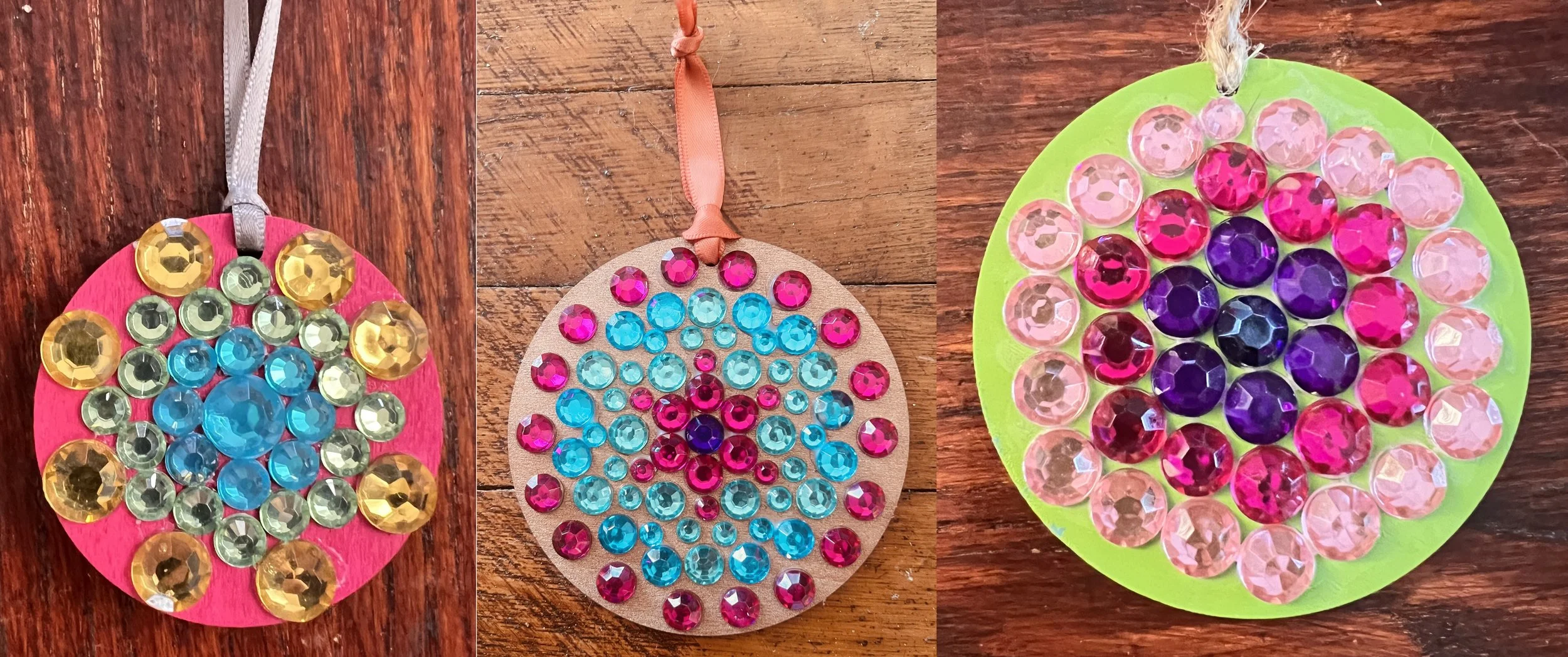
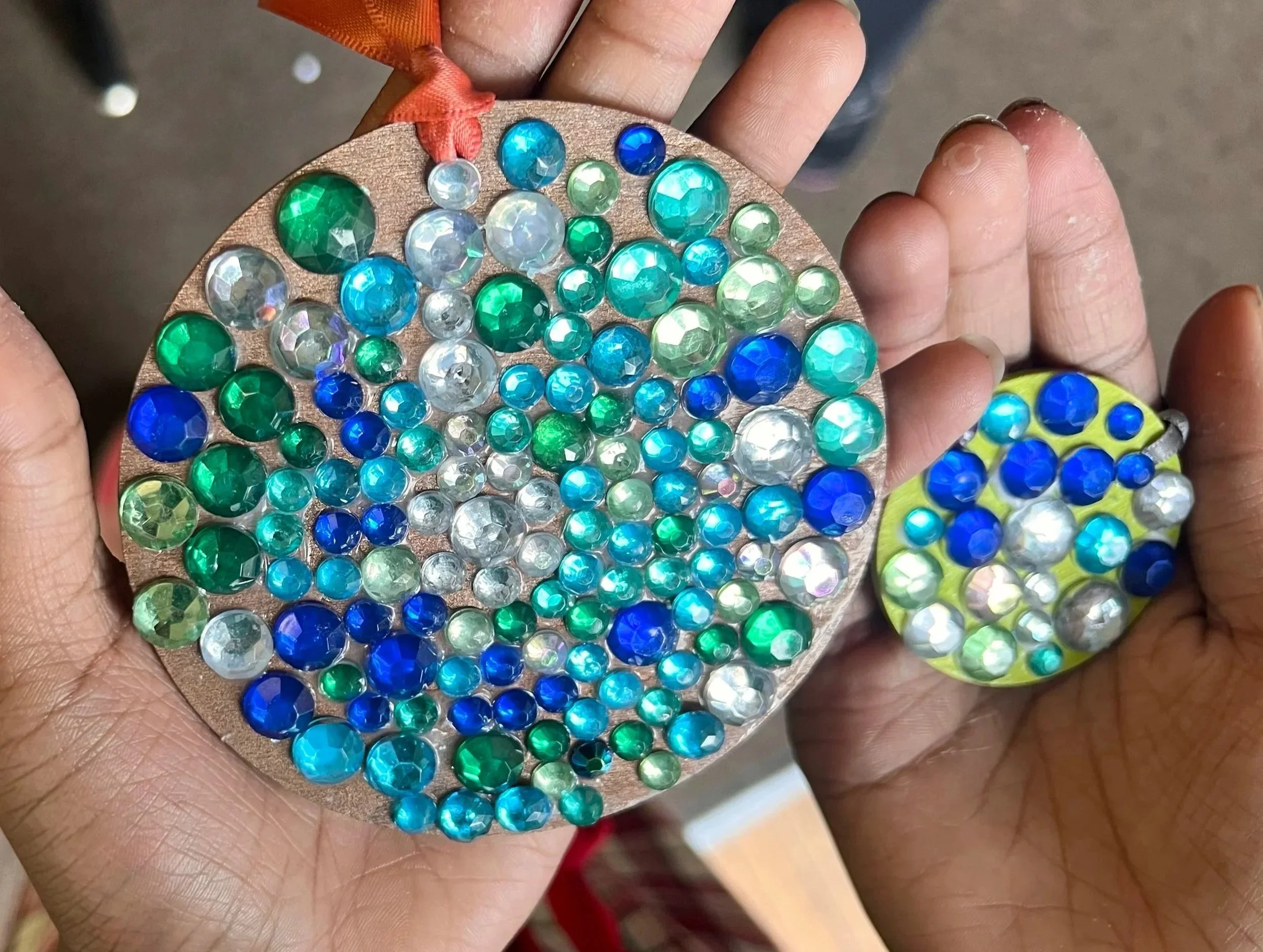
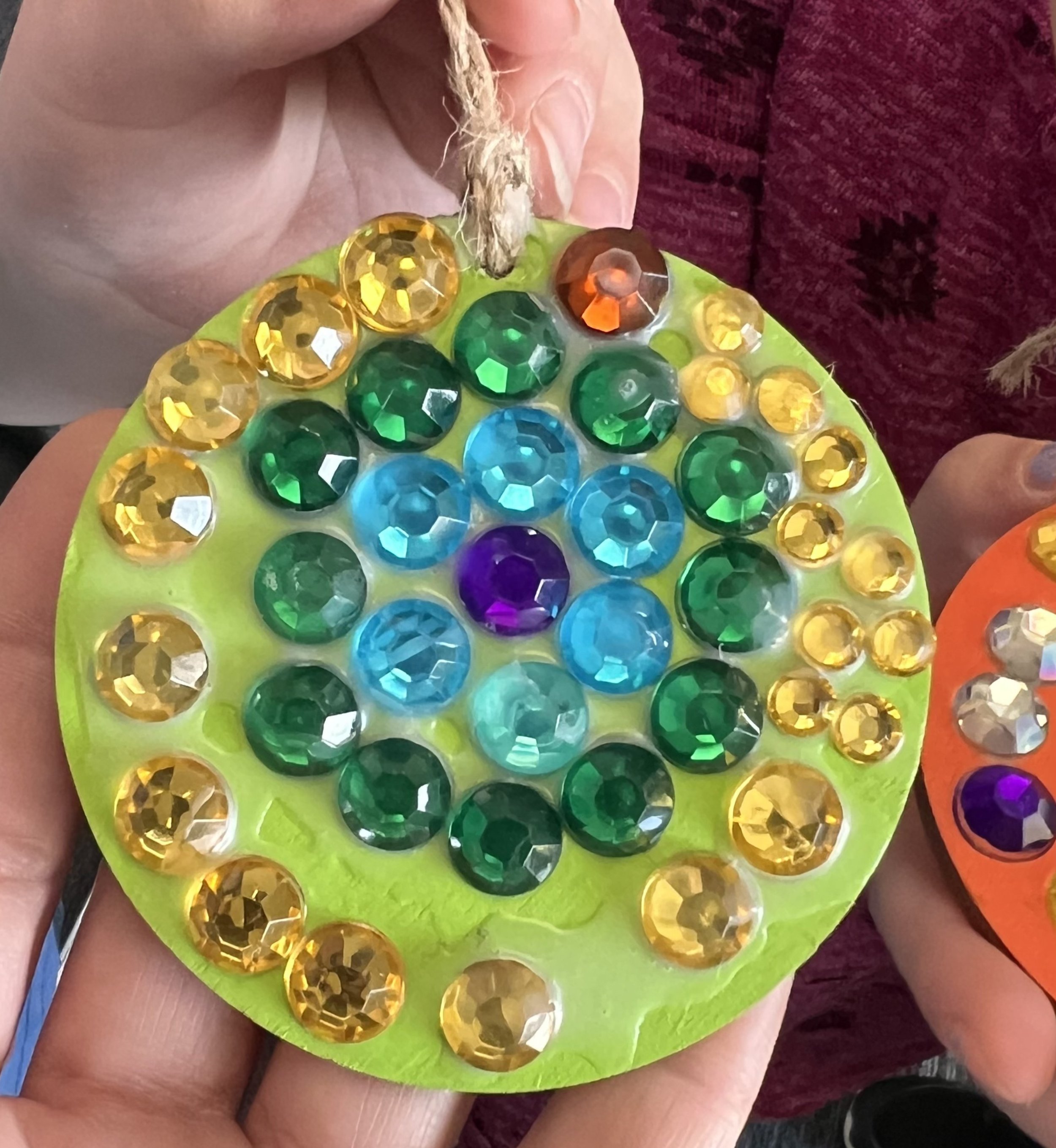
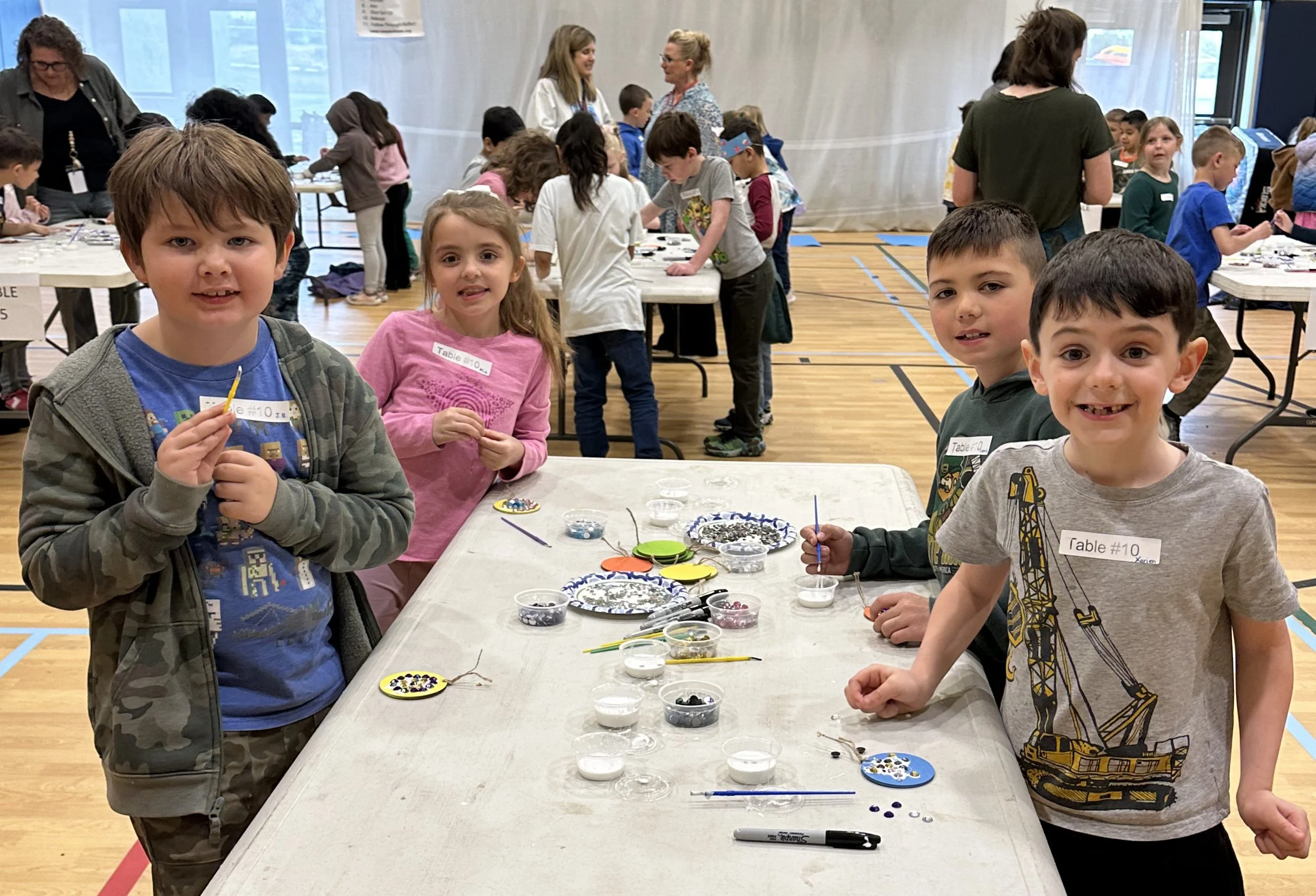
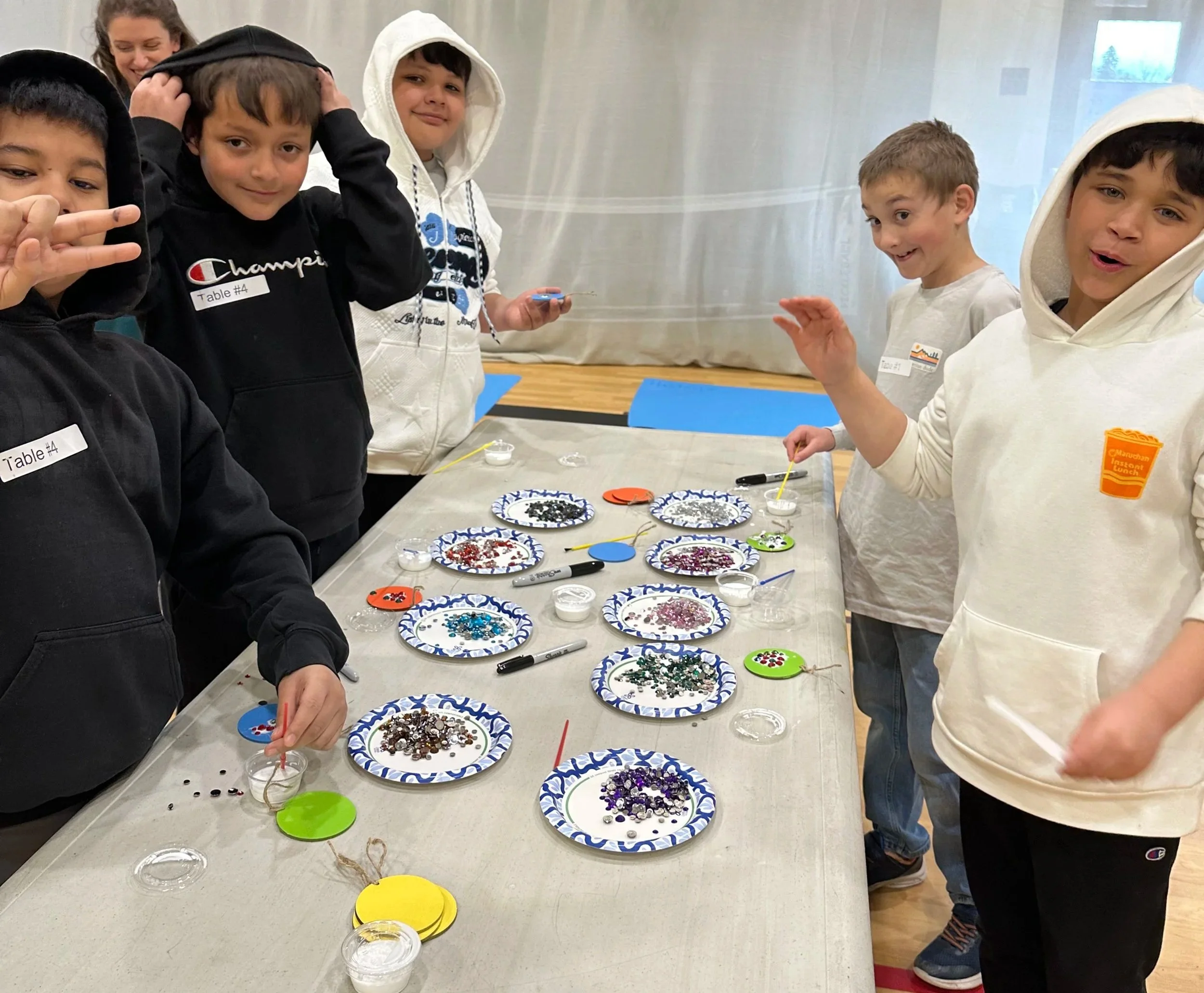
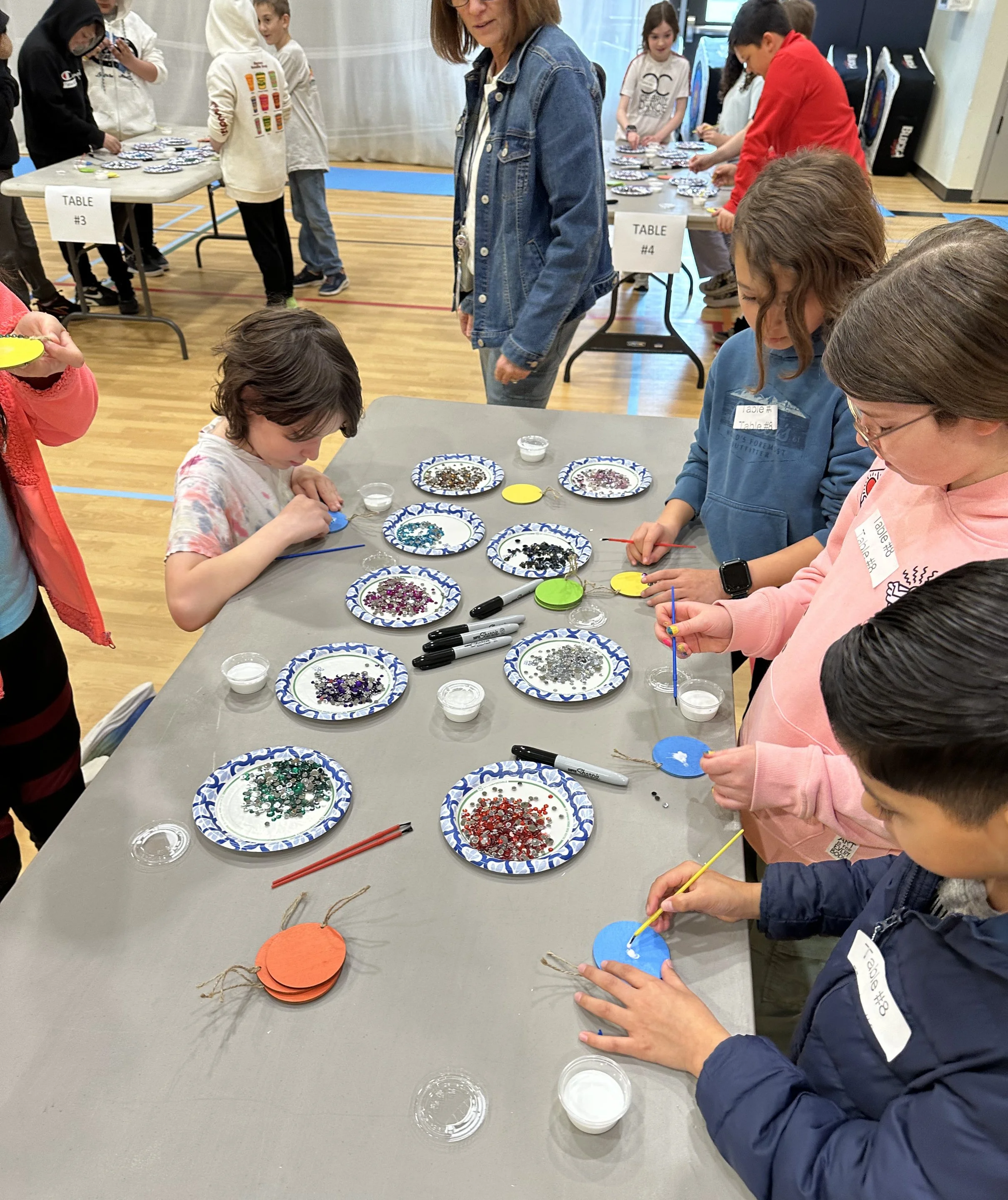
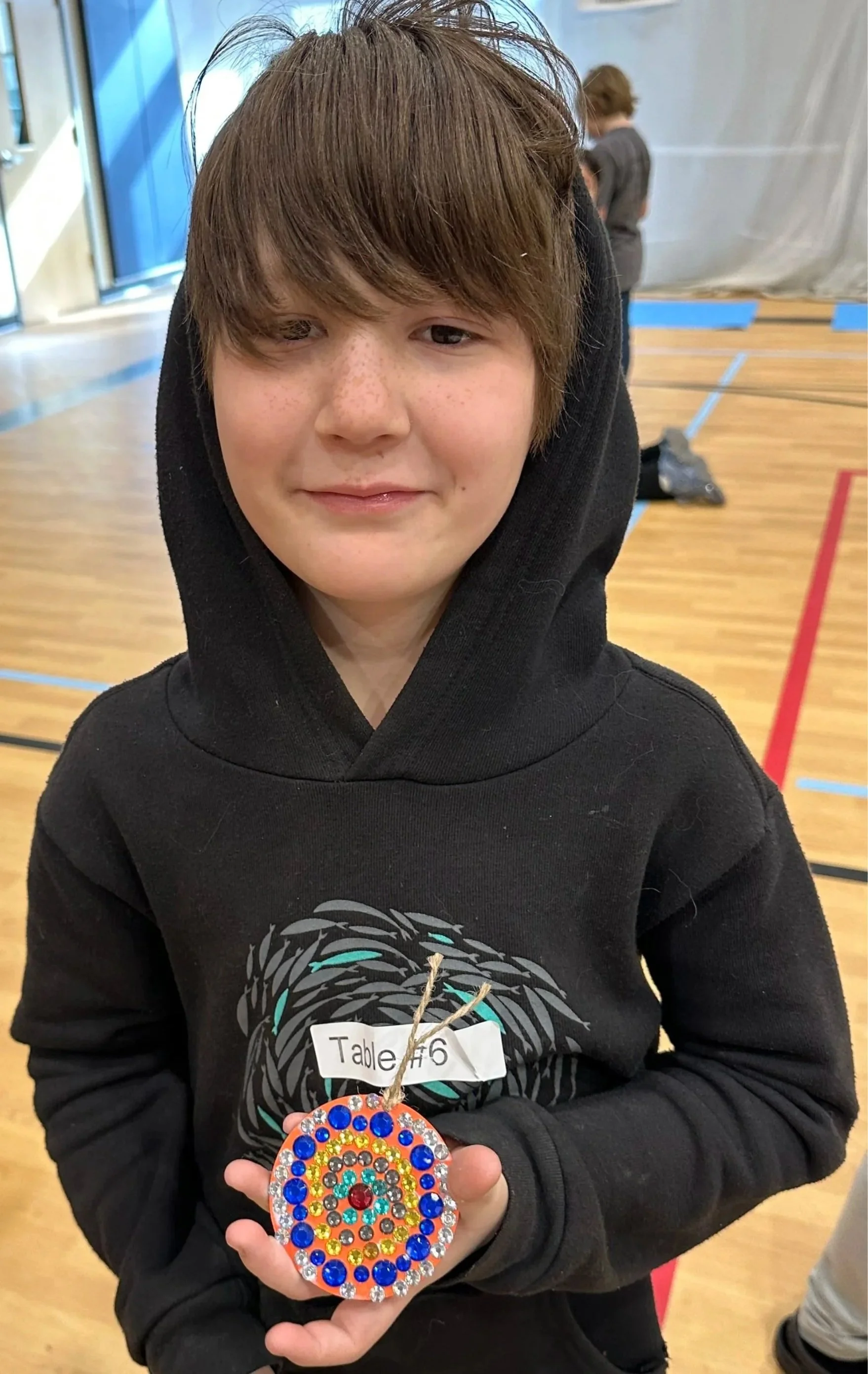
Instead I decided to have the students make mosaic gem medallions they could take home that same day as a keepsake. We worked with students throughout the entire school day, approximately 350 kids in total, cycling through group after group from morning until the final bell.

The librarian and art instructor of the school was the unsung hero of the day. Her organization and preparation made the whole thing run seamlessly, and I genuinely could not have managed it without her. By the end of the day I was completely exhausted, but the joy in the room made every moment worth it. The kids had a wonderful time and their medallions were absolutely adorable.

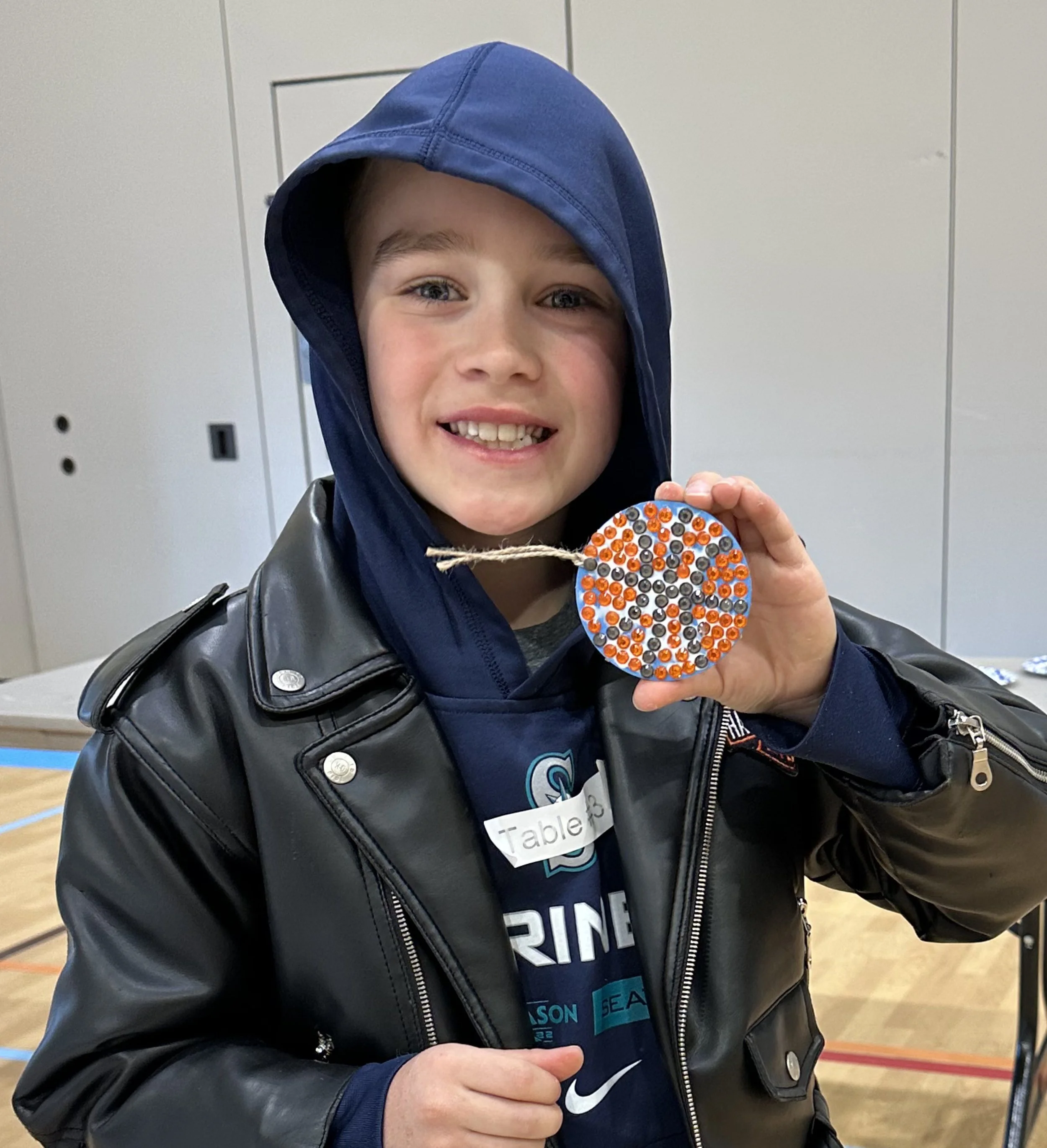
Three examples of gem mosaic medallions made by students at Ida Nason Aronica Elementary School as part of the Cycles public art commission by Dyanne Williams
Child's hands holding two completed gem mosaic medallions made during the Cycles public art commission student participation project at Ida Nason Aronica Elementary School
Children's hands holding two completed gem mosaic medallions made during the Cycles public art commission student participation project at Ida Nason Aronica Elementary School
Students creating a gem mosaic medallion during the Cycles public art commission participation project at Ida Nason Aronica Elementary School in Ellensburg, Washington
Student proudly displaying his completed gem mosaic medallion from the Cycles public art commission participation project at Ida Nason Aronica Elementary School in Ellensburg, Washington
Student proudly displaying his completed basketball gem mosaic medallion from the Cycles public art commission participation project at Ida Nason Aronica Elementary School in Ellensburg, Washington

Dedication

The dedication ceremony took place on my final day in Ellensburg. Photography wasn't permitted during the ceremony itself, but the gathering was deeply meaningful. The family of Ida Nason Aronica, the director of the K'tɨ́taas County Historical Museum who had guided me so generously through the cultural research, and the former principal who had championed the project from the very beginning were all there. I had to speak, which always makes me nervous, and honestly the ceremony passed in a bit of a happy blur. But it was a beautiful moment.

As if the entire experience hadn't already exceeded every expectation, one of Ida's family members honored me with a gift I will treasure always: a gorgeous hand beaded tribal medallion incorporating a rare Ellensburg Blue agate. After spending two years trying to pay tribute to Ida Nason Aronica's extraordinary beadwork through my own medium, receiving a piece of that tradition as a gift felt like the most meaningful possible ending to this journey.

A hand-beaded tribal medallion incorporating a rare Ellensburg Blue agate, a gift from a member of Ida Nason Aronica's family.

This project holds a special place in my heart for many reasons, but perhaps the most personal is the name. Cycles was also the title of my very first glass mosaic, made in Los Angeles over twenty years ago when I was just beginning to find my voice as an artist. It felt meaningful to give that same name to this commission, a public artwork that required every skill and every lesson I had accumulated over my career. In many ways, this piece represents the completion of a long arc and the beginning of a new one.

This project changed me as an artist in ways I'm still discovering. The process that ArtsWA has developed for guiding artists through a public art commission is extraordinary, and I feel genuinely prepared and excited to take on more public art projects. If you are involved in a public art commission and are looking for a mosaic artist, I would love to hear from you. You can reach me through my contact page.

VIDEO: Making of Mokuluas Mosaic

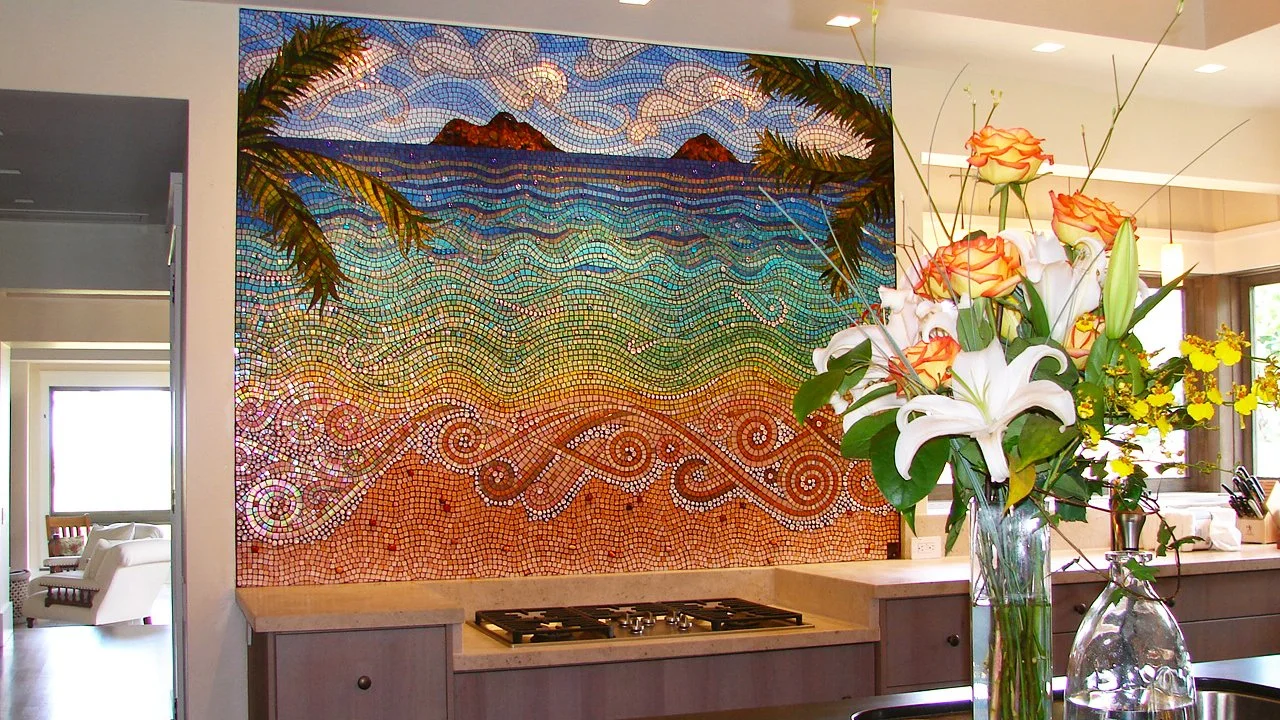
It was such an honor to have the opportunity to make such a stunning backsplash for my client in Kailua, Hawaii! This video shows the creation of the Mokuluas mosaic from beginning to end, but before iPhones took good pictures. ;)

Video transcript for deaf or hard of hearing:

 I’m going to take you way back to 2008 to one of the first major commissions of my professional mosaic career. I had done a couple small commissions before and finally got my website together when I got a call from an interior designer in the Bay area.

She wasn’t calling for a client, but for herself. She and her husband were building their dream home in Kailua, HI, and wanted me to make two mosaics for their home. Today I’m going to show you the making of Mokuluas, the Hawaiian art wall backsplash.

This was a new build, so since it didn’t exist yet, I received a pdf file with

elevations from the architect. There were still some variables, so I believe this is the image I sketched up with the red dots to let them know which measurements I needed to proceed.

The client sent me these two images of the Mokuluas islands. They are just around the cove from the new home they were building, but since they didn’t have a view from their property, they wanted this mosaic to bring the islands into their home. 

The client and I knew we wanted it to be slightly stylized, yet realistic, so I started first by showing her how an idea I had for the clouds, a motif that would carry through to the ocean waves. 

Then I sketched the ocean waves.

Again, the kitchen wasn’t built yet, so I put the measurements into a CAD program to create a layout to make sure the client understood the perspective.

Then the client wanted some palm leaves to frame the mosaic. There was also some talk at this time about adding a turtle. I believe I made some sketches with a turtle, but really felt it took away from the elegance of the design.

Then the builders sent me updated measurements, making the proportions slightly squarer.

This was the final design thrown into the CAD layout. 

The next step was to show the client the palette of glass I would use for the mosaic. I ordered samples of every color from a few different glass lines and pared them down to this. I spent a lot of time finding the perfect combos, so I remember being thrilled that the client immediately approved the glass.

Next I laid out the shifts of water color on the design as well as the backer board I would be working on. It would be easy with a free flowing, wavy design to get crooked or get carried away with one color and not leave enough room for all the transitions.

Then it was time to begin the construction.

I started with the palm fronds,

Then the stylized clouds 

And the pebble islands filled in by gold streaked glass to make sure they still catch the light.

I took some pictures for the client without the painter’s tape.

I need to leave some pieces of glass unattached so the panels can be screwed into the wall with washers, so as I’m working the blue tape is to hold them in place.

Now onto the water. I worked from both the bottom and top to make sure the colors and intensity of the waves would come together properly. 

Also as a note, I used white silicone for this project. I want it to be waterproof because it will be in a kitchen in a humid climate. Plus much of the glass is translucent, so using a white adhesive makes the glass bright and shiny.

I cut the mosaic into dozens of pieces and shipped the mosaic to Hawaii. The builder sent me these pics before lighting was installed in the home.

 The next year I went to Hawaii to grout the mosaic. I was busy working the whole time, but here are a couple pictures of the home and property I managed to take. 

And finally the mosaic was finished. This was right before inexpensive cameras and phone cameras started getting really good, so the pictures don’t quite show the movement of the mosaic.

 When you are in the room, because of all the shine and iridescence, the water appears to move and the homeowner reported that the colors change throughout the day.

Thank you for taking this trip back in time with me!

VIDEO: Afghan Blue Mosque Mosaic: WIP #3

This is the third video about the creation of my Afghan blue mosque mosaic.

Video transcript for deaf or hard of hearing:

Hi Mosaic Fans! This is where we left off last time with the Afghan blue mosque mosaic 

I’m starting the next step by pre-cutting stained glass into rhomboids for one of the border sections. Each piece will need to be cut and fitted into its space, but it’s easiest to prep about 500 pieces first and tailor them to fit rather than cut each piece from scratch as it’s needed.

Next I’m going to take a little break from those blue pieces because it’s getting a bit tedious. I’m placing some little Kismet round tiles in the upper portion of the archway. I’m really loving the way these are looking. This section should turn out a little more delicate than the rest because of the curvy design.

I’m all over the place now. I want to lock down the designs and patterning for each section, so I’m going to place whatever I can that is quick that allows me to then make decisions about the rest. Here I’m doing some of the beading work and placing the little yellow and red circles around the whole mosaic.

Next I’ll do a little cleanup and place the red squares and yellow circles in the center.

I know I need to get a little green in this mosaic, so I’m going to place the teardrop details around the two corner pieces. These are just green stained glass that I’ve cut into teardrops and surrounded by white beads.

Now it’s time to set the pattern for the center. I know I want to outline the sections in white beads, and the center tiles of the pattern in cobalt blue.

It’s going to take me a while to set this patterning, so I want to talk about why I chose to use beads. I want the crisp outlines you see in ceramic tile. It’s hard to do this with stained glass because glass doesn’t cleanly cut into 3/16” strips. Beads may be time consuming, but I can lay them down exactly how I want them, and the color will be consistent. Stained glass also tends to have dark shadows, so when you cut it super thin, the color can be inconsistent.

The white beads look overwhelming when I first lay them down, but they mellow out quite a bit once they’re surrounded by the rest of the glass. In addition, I’m using cobalt blue grout, so they will tone down a lot once they are surrounded by & slightly buried in the grout.

Next I’m going to use vellum to make some templates for the stained glass in this middle section. I’m just going to make this one square first to set the pattern idea, but if I make the templates now, it will be one less step in a couple months when I finish all the beading and I’m ready for the glass.

I estimate by the time I finish the beading, I’ll have invested at least 300 hours into the project, and that the whole project will take about 500 hours. I haven’t really been keeping track, which I regret, but it’s hard to do the work, let alone keep track of all the videos, images, and time yourself on top of it.

Here’s the mosaic so far. There’s still a lot of work to do, but it’s starting to come together.

Let’s get a little work done on one of the two featured circles. I want to know how the orange I’m planning is going to look with the orange I’ll be using in the center.

I’ll also finish up the blue pentagons on this side while I’m over here. All these robin egg blue pentagons need to be placed before I place the white star beads. I’m going to do this row, finish all the rest of the beading, then come back and finish up the left and right side.

I don’t know why these blue pieces feel so tedious to me, but they do. I’ll be much more motivated when I know I’m closer to the finish line.

And then I’ll finish the green teardrops and surrounding beads on the other circle before moving on to the never-ending task of placing the outlining the beads in the middle sections.

Onto the white beading for the upper archway. This is my favorite part of the mosaic. I love how the flowers come together to form a second pattern in between. This is my favorite thing about this type of ceramic tile in the first place; the way the designs from each tile come together to form a pattern when they are put together as a whole.

Right now the plan is to fill in the flowers with the yellow circles with orange and the designs with the orange circles with green. This may change. It will be the last thing I do because it will allow me to change my mind if a different color will help pull the whole piece together.

For the outer border I’m going to place three concentric rows of beads in kind of an ombre color scheme. This is a chance to add something different and a little more delicate to these outer rows.

I’m going to surround the beads with yellow triangles to make it kind of a sun pattern. Right now the plan is to fill in the background with cobalt blue to ground the project, but I’m going to hold off until later to see if I change my mind.

I’m just going to skim through placing some of the beads in the middle archway section. So many beads!! It felt never ending. I’m I’m just going to skim through with a few clips of placing the beads in the middle archway section. So many beads!! I’m really happy with the way it looks and I think it is worth the time investment, but there was a point at which I thought I would be 86 and still placing these beads.

Now the majority of the beads are in place. Just about another 30 hours of beads left and I can move onto the stained glass.

There’s a lot of work left but unfortunately I have to put this mosaic aside for a while to work on commissions and other projects. I will be coming back to it and sharing it with you when I do. Thank you for watching!

VIDEO: Afghan Blue Mosque Mosaic: WIP #2

This is the second video about the creation of my Afghan blue mosque mosaic.

Video transcript for deaf or hard of hearing:

Hi Mosaic Aficionados! Here I’m going to continue work on the Afghan Blue Mosque mosaic. Now that the basic structure of the mosaic is laid out, I’m going to start on the first decorative tiles.

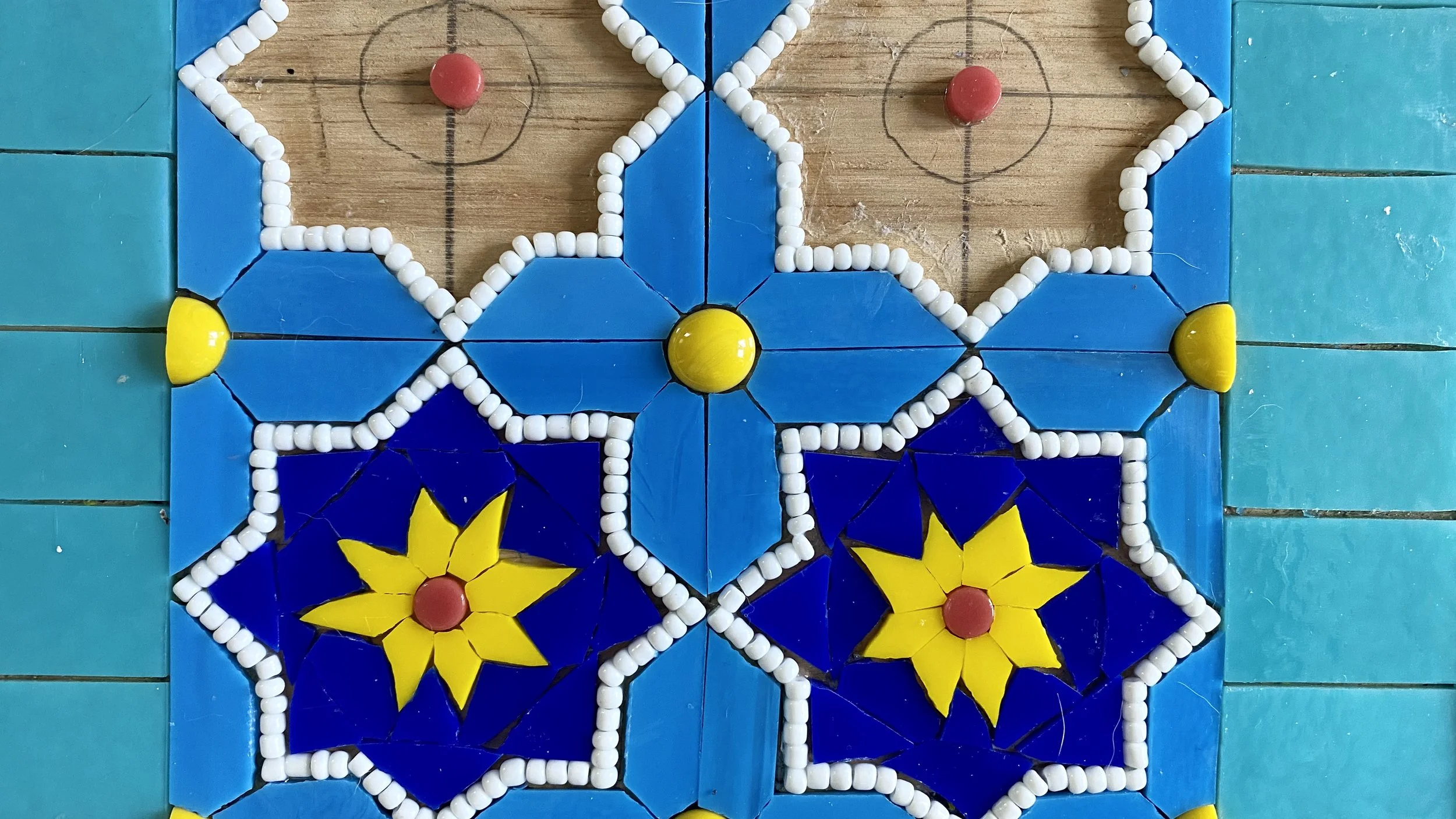
I began by making a vellum template of the 8 point star design I chose for this section. There are 60 identical tiles in this section, so this will help keep them fairly uniform.

I remembered while sketching out this section that I wanted to put bold yellow circles in the corners. To make these, I created bars using the cutting mat you’ve seen me use before, then used the glass cutter to cut them into slight wedges instead of squares. Then I just placed them into the circle so they fit snuggly together.

I skipped ahead a bit here… I was doing a little trial and error to see what materials I wanted to use, how I would create the cuts, and in what order I wanted to lay out the glass. Since this project is all about repetition and consistency, I want to create a strategy first so that all the tiles come out looking pretty uniform.

I decided the one place I’m not going to try to get super precise is the yellow flower at the center of the design. I figure that it will give it the handmade touch that all mosaics need.

Really, to cut those little pieces into identical microscopic elongated pentagons would be ridiculous and almost impossible, so I’m justifying with the “handmade touch” statement.

I  wasn’t really happy with how close in color the turquoise and blue of the tile background is, so I was really lucky that when I stopped at the Wissmach glass factory I found a perfect blue. It’s hard to see the difference because they’re so close in color, but it will make a big difference in the mosaic.

Here I’m cutting the new blue into 7/16 of an inch bars on the cutting mat so I can swap out that color. That will allow me to cut them into 480 rhomboids to fit around the stars.

Next I need to remove the old blue glass. I lightly sprayed those pieces with water, then I chiseled them out as delicately as possible so as not to disturb the rest of the glass, especially those tiny little beads.

Then I put in the new glass pieces. It’s pretty hard to fit them around the white beaded stars, so I’ve decided to change the order for how I create the rest of this section. I’m going to lay out the background rhomboid bars first, then place the beads inside.

This way is working much better! Not only is it easier and quicker, but then the edges of the blue glass are crisper because I didn’t have to trim them with mosaic wheels.

Next I just need to lay out the glass beads in the interior of the star. This part is also easier because of placing the blue glass first, so I became full of hubris and thought I could lay down the glue for the entire star first.

It’s still not that much easier. I had to wipe up half the glue because it was getting too dry.

Now I know for the rest of the stars.

So then I just need to place my yellow flower and tthe cobalt blue glass around it. You’ll notice that I am being pretty loose with the placement of the cobalt. This is because I’m going to use cobalt grout, so precision of these pieces is unnecessary.

I timed myself making these sections and it will probably take about 66 more hours to complete this section. It’s mind numbing for me to think about having to do all this repetitive work, so if I show you, it will be a super compressed time lapse.

I appreciate you too much to bore you with watching the same thing 60 times.

Before I go today, I just want to show you where I left off for the day, which was putting the glass gems and circles in place in this section so that they won’t be moving around when I’m trying to place the rest of the glass tomorrow. Thank you so much for watching!!

VIDEO: Afghan Blue Mosque Mosaic: WIP #1

The first video about the creation of my Afghan blue mosque mosaic.

Video transcript for deaf or hard of hearing:

Hi Mosaic Fans! Today I’m going to introduce to you my art book idea. I’ve started a few small steps in the last couple years. The concept behind this book is based on the Owen Jones book The Grammar of Ornament, first published in 1856. I’ll get into details about the book in a moment.

For the first step, I wanted to create a mosaic based on the cover of the book. It has been in constant publication for over 150 years, so there have been several covers and I went with this gorgeous gold leaf on leather version.

When I had some spare time between commissions I made this mosaic based on Grammar of Ornament’s amazing art deco book cover design. I used Van Gogh glass and the background is all super black tinted grout to give it a matte feel like the leather book cover and let the bronze and silver glass shine.

Now I want to discuss the interior of The Grammar of Ornament. Jones wanted to create a book that discussed architectural ideas and motifs from around the world. The result was a book that even modern day designers have on their bookshelves over a century later.

My original idea was to follow the same format and recreate all the designs from the book into mosaic. I eventually realized this wasn’t going to work. A lot of the designs just don’t translate well into the mosaic medium, and there is also the cultural shift, such as the problematic use of the phrase “savage tribes”.

Instead I’m choosing art forms around the world that I would love to translate into mosaic. I started by making a list of countries in the world organized by geographic area. I just pick a country, do some research, and find some traditional art, design, or architecture that I want to translate into the mosaic medium.

My first geographic find is located in Afghanistan, in the city now known as Mazari Sharif. It is the architectural marvel, the Shrine of Hazrat Ali, also known as the Blue Mosque. The blue mosque was completed in 1481. Fortunately the mosque has been able to survive all the turmoil of Afghanistan, even though the city of Mazari Sharif has been occupied at times by both Russia and the Taliban.

The mosque is considered an oasis of peace, not only because of its beautiful architecture and tile work, but because the mosque is surrounded by thousands of white doves.

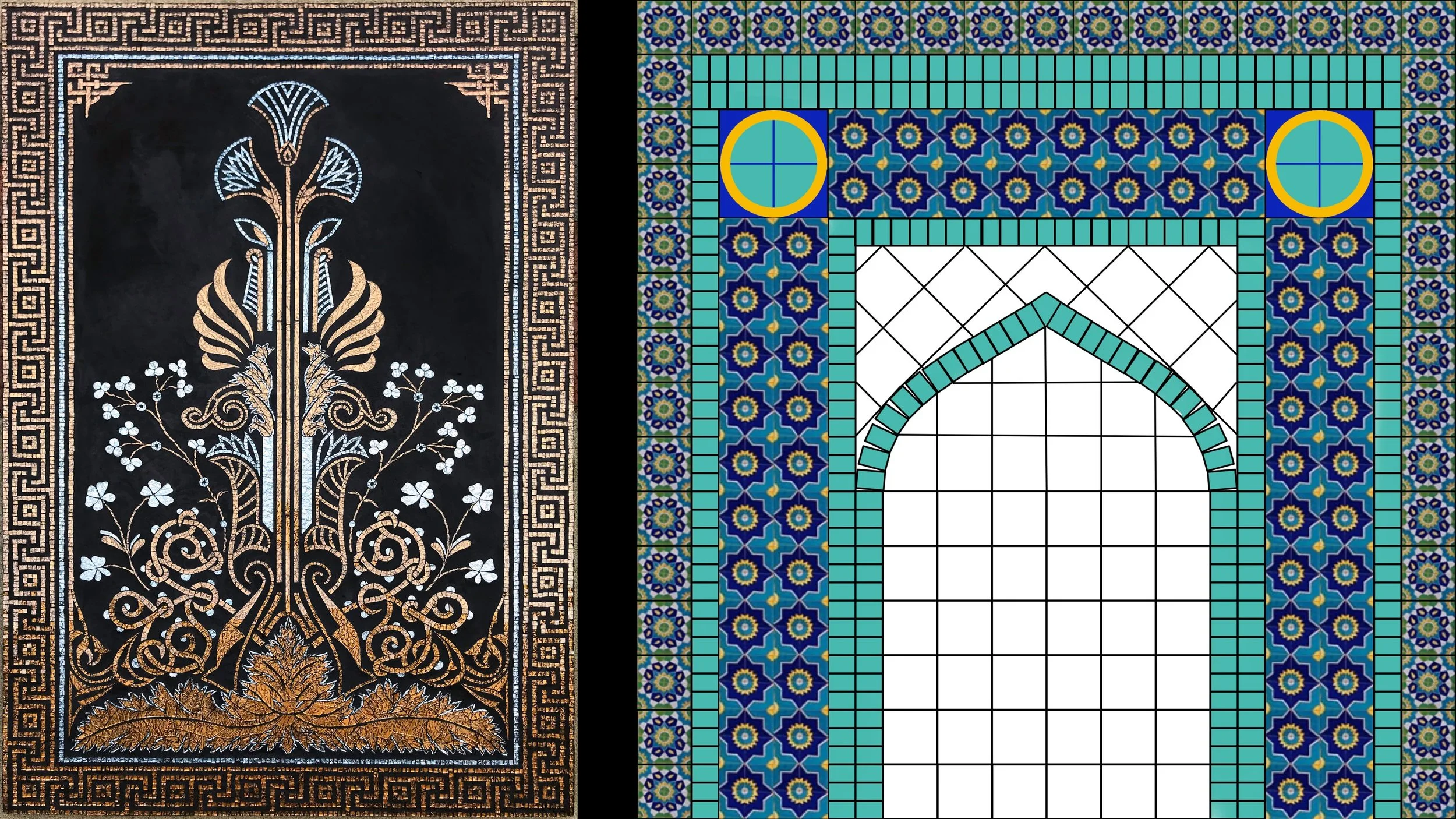
Since I’m focusing on patterning, I’ve decided that my mosaic design will be inspired by one of the archways. Here is the loose idea of my design I created in Pixelmator Pro. I will follow the structure, but I just put enough tile design in to make sure I like the layout and will make more choices as I work.

Next I collected images of tile designs used at the Blue Mosque so that while I’m creating the mosaic, I’ll have ideas to choose which ones will look best. Another factor in choosing patterns is which ones will be able to translate well in the mosaic medium. Each of the tiles will be only about 3” in my mosaic, so some patterns like this one may be too intricate to really look good.

I will start by using the t-square to lay out a grid on my 4’ square plywood substrate. I will be using turquoise glass to create the frame, or solid structure of the mosaic, so I’m going to start by cutting those pieces.

I’m using the grid cutter to cut all the pieces precisely. Each turquoise rectangle is 1-1/2” x 1”. I will need over 300, so I’m turning myself into a rectangle making factory. I’m using the t-square again to line up the pieces as straight as possible. I’m coating the entire back of each piece to seal it so the grout doesn’t seep underneath.

I made a mistake here and placed the horizontal row on top of the vertical rows when it should go one grid space lower in between the vertical rows. I’m spraying the row with water to loosen up the glass and I’ll move them down into their correct spot. Here I just need to sketch the diagonal lines and create the top of the archway.

Now I have the structure complete for the mosaic. I can’t wait to show you more as the mosaic progresses! Thank you for watching!

Red Bull Mosaic Disco Ball Coolers

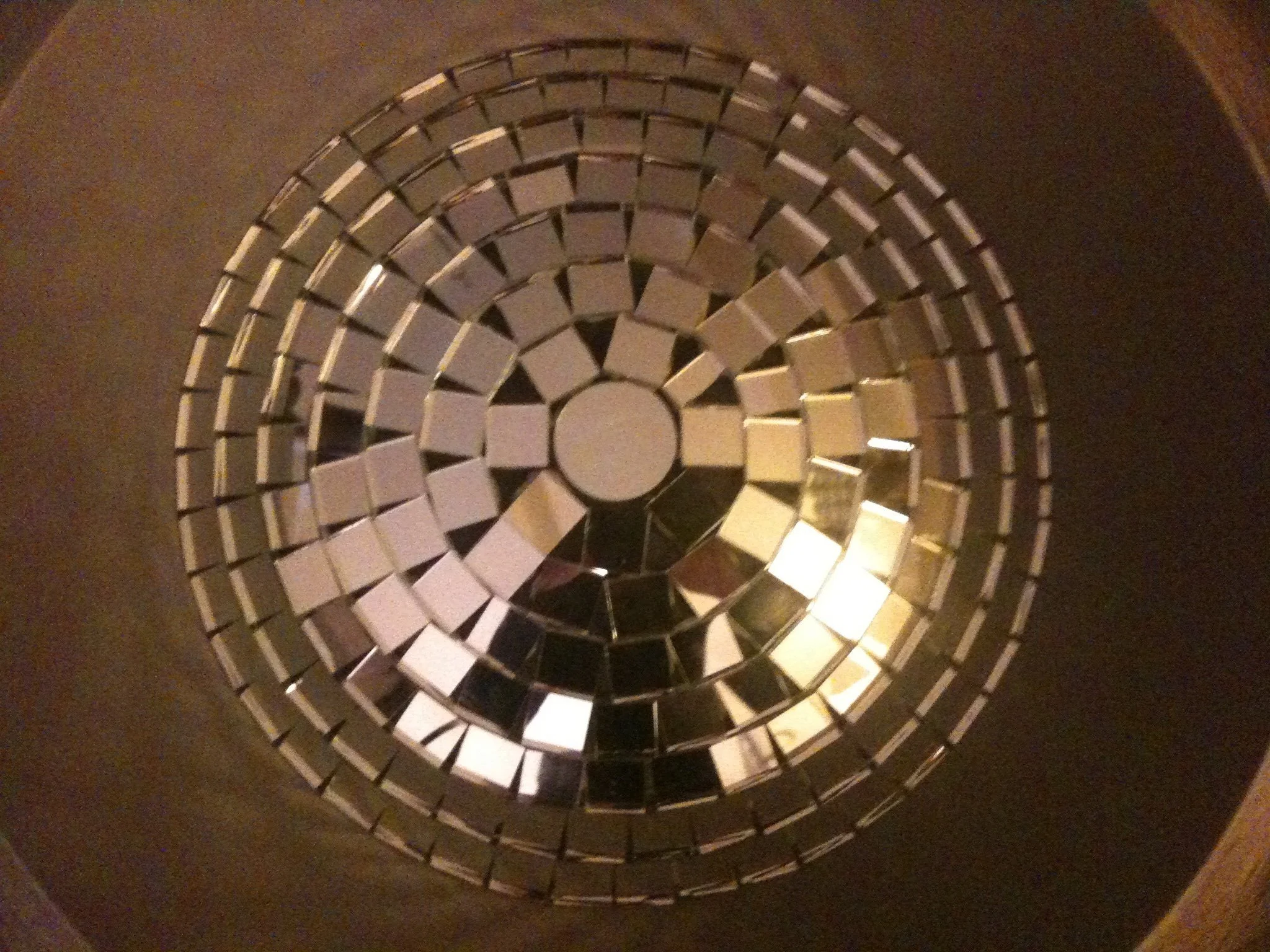
I had the opportunity to make 13 of these disco ball coolers for Red Bull. It was a ton of work, but they are so dazzingly beautiful!

These making of these fully functioning mosaic coolers started when I was approached by a product design company to make a prototype for Red Bull. I purchased the hand-cut mirrored glass from an artist on Etsy and worked hard to make sure it aligned properly as I worked my way around the cooler. The first supplier I used had almost perfect cuts, but a few coolers in, she had some family issues and couldn’t cut the thousands of mosaic tiles I needed per cooler anymore. The second supplier was wonderful, but the cuts weren’t as accurate, so I had to plan ahead a lot more.


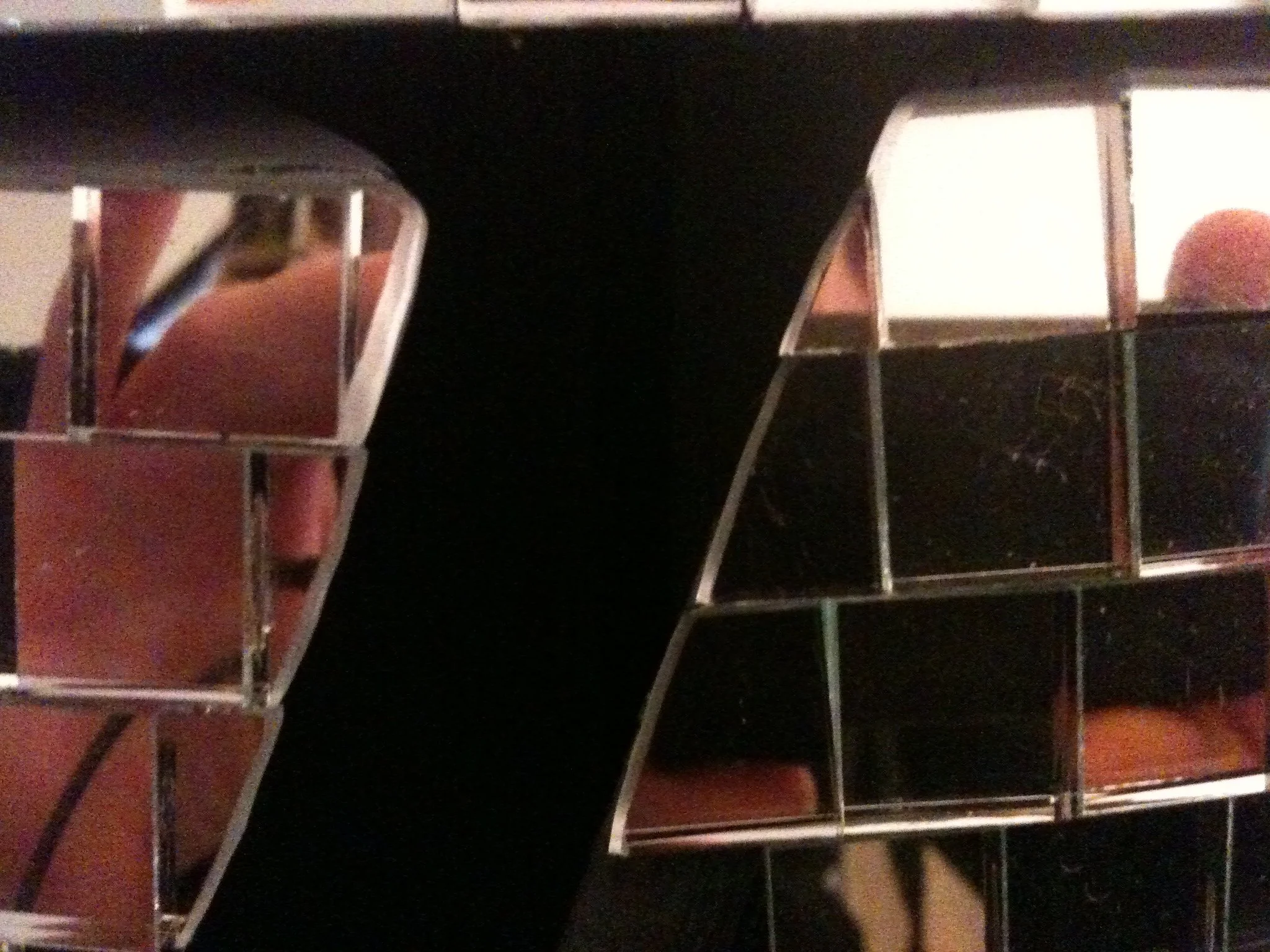
In addition to keeping the glass in straight lines, I also had to use a specific mirror bit on my grinder to bevel the edges. These were to be used in nightclubs, so the edges had to be smooth so that bartenders didn’t get cut. You can’t use a regular grinder bit because the backing of the mirror flakes off. The mirror grinder bevels both sides to create a smooth, un-chipped edge.


It was so hard and tedious making these coolers, especially because I had to use a toxic adhesive and wear an organic vapor respirator even during some extreme heat waves, but it was worth it. I found out later that the product design company made dozens of prototypes for Red Bull products, but this is the only one that moved forward into production. I was lucky!

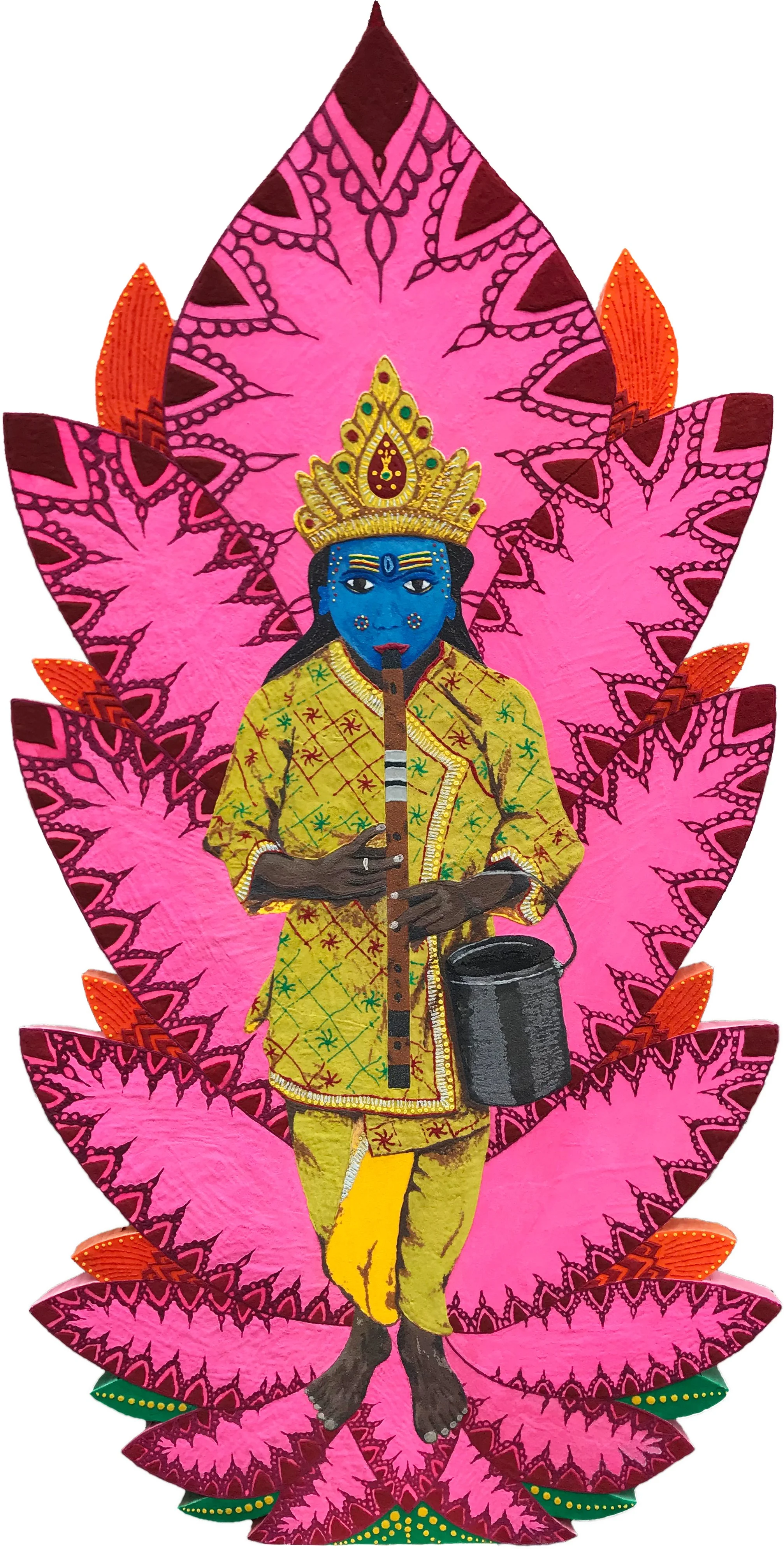
Krishna Sand Mosaic

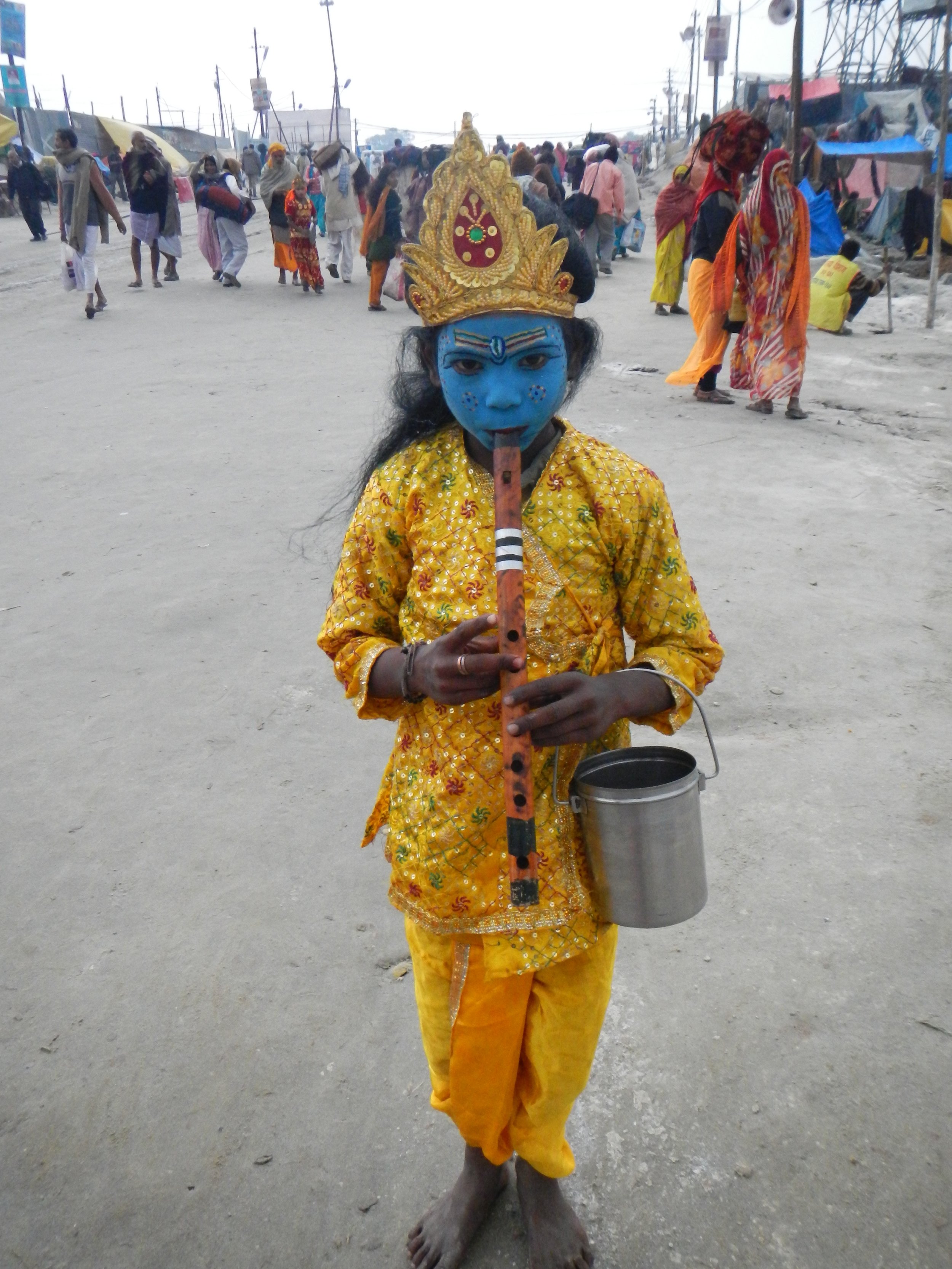
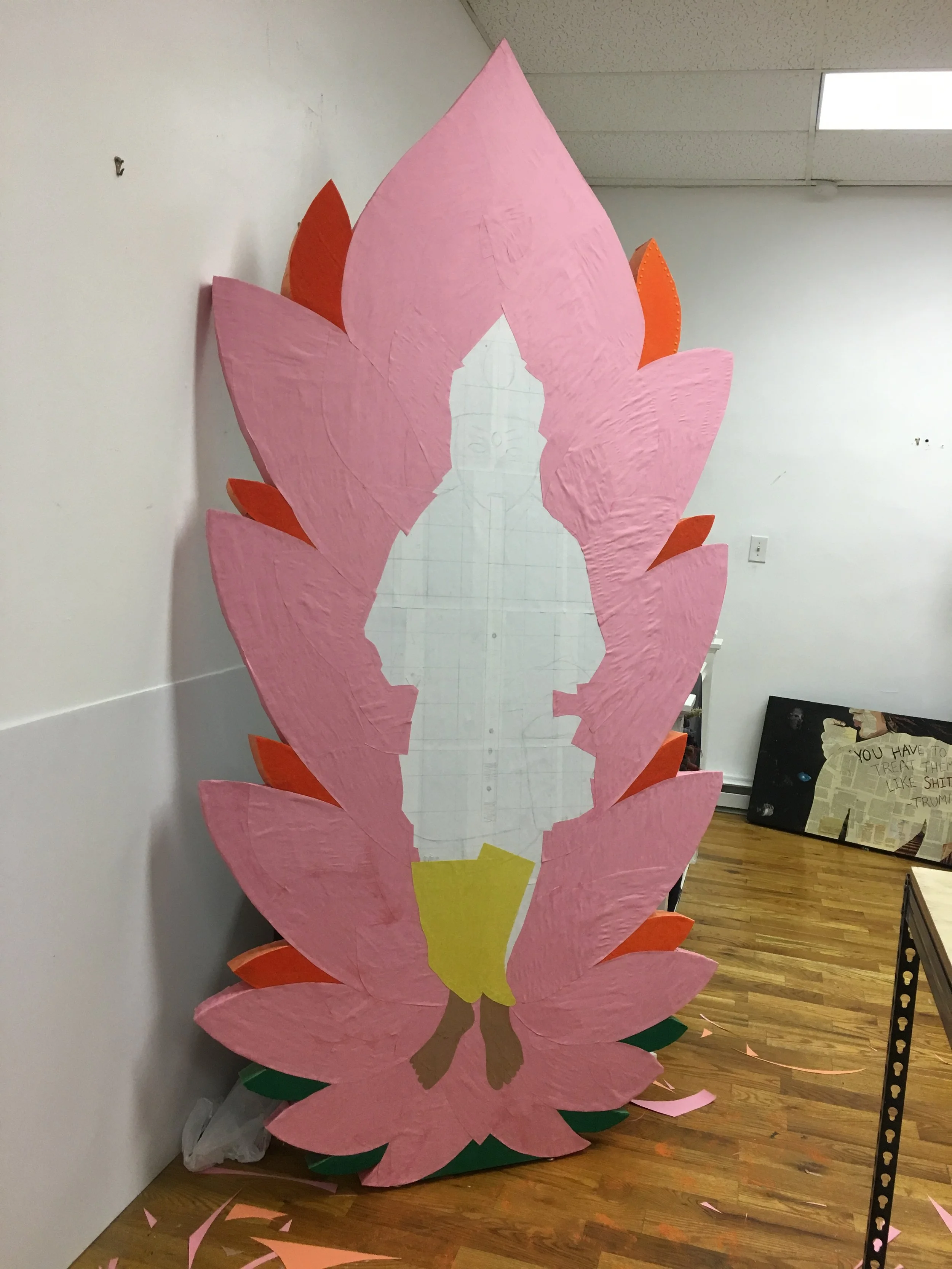
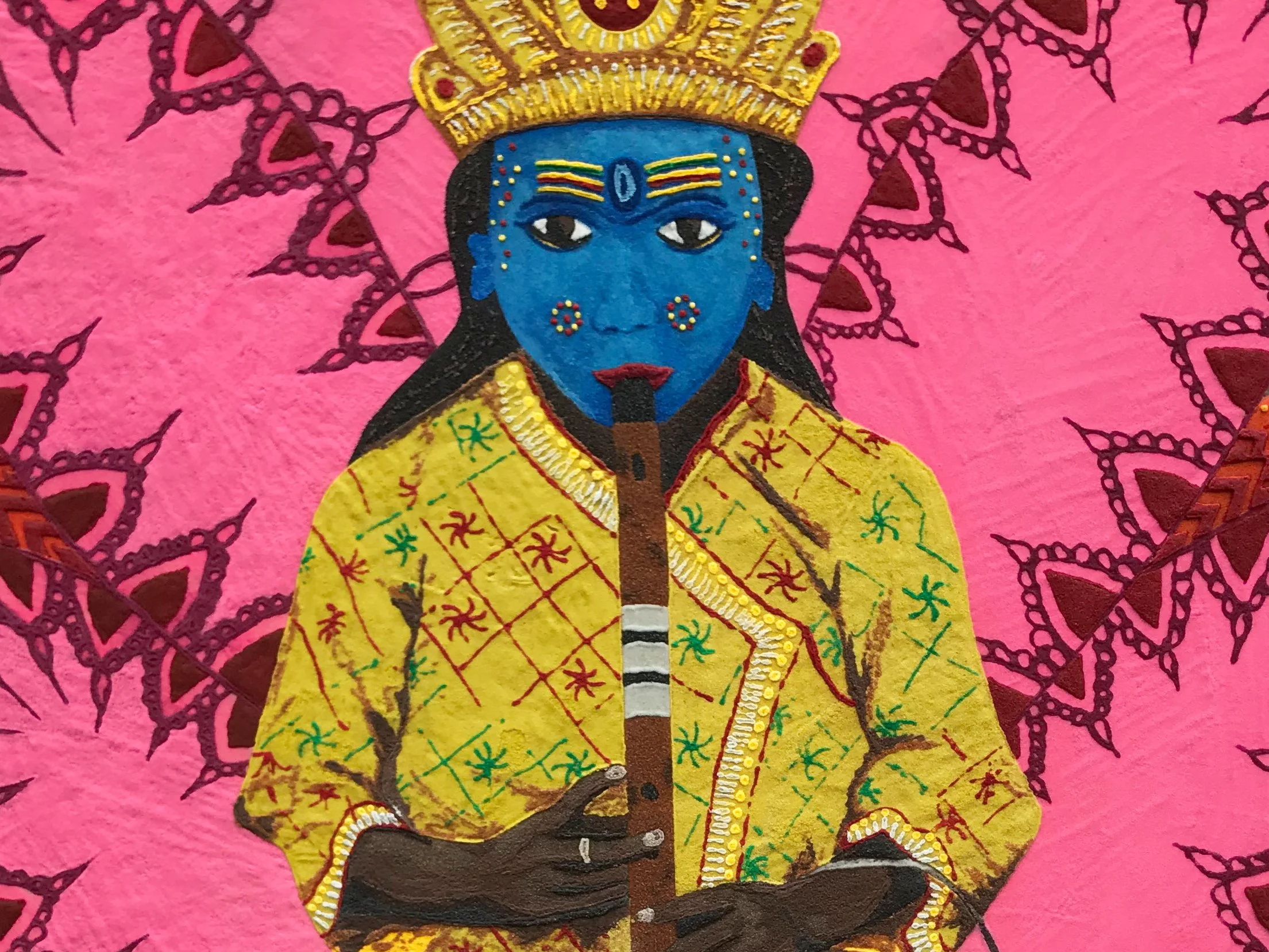
I was doing a collaborative art show in which my art partner and I decided to make mosaics in different mediums than we usually do. I had the idea of working with sand and loved the outcome! This Krishna is based on a photograph by Jeffrey Boardley.


When I first had the idea of making a sand mosaic, I planned on using an image of the 14th Dalai Lama as a child on a mandala. Then I went to a photography exhibit by a high school friend. Once I saw his photograph of Krishna, I immediately asked him for permission to use his photograph instead. Thankfully, he agreed!

Here’s Jeffrey Boardley’s original photograph.

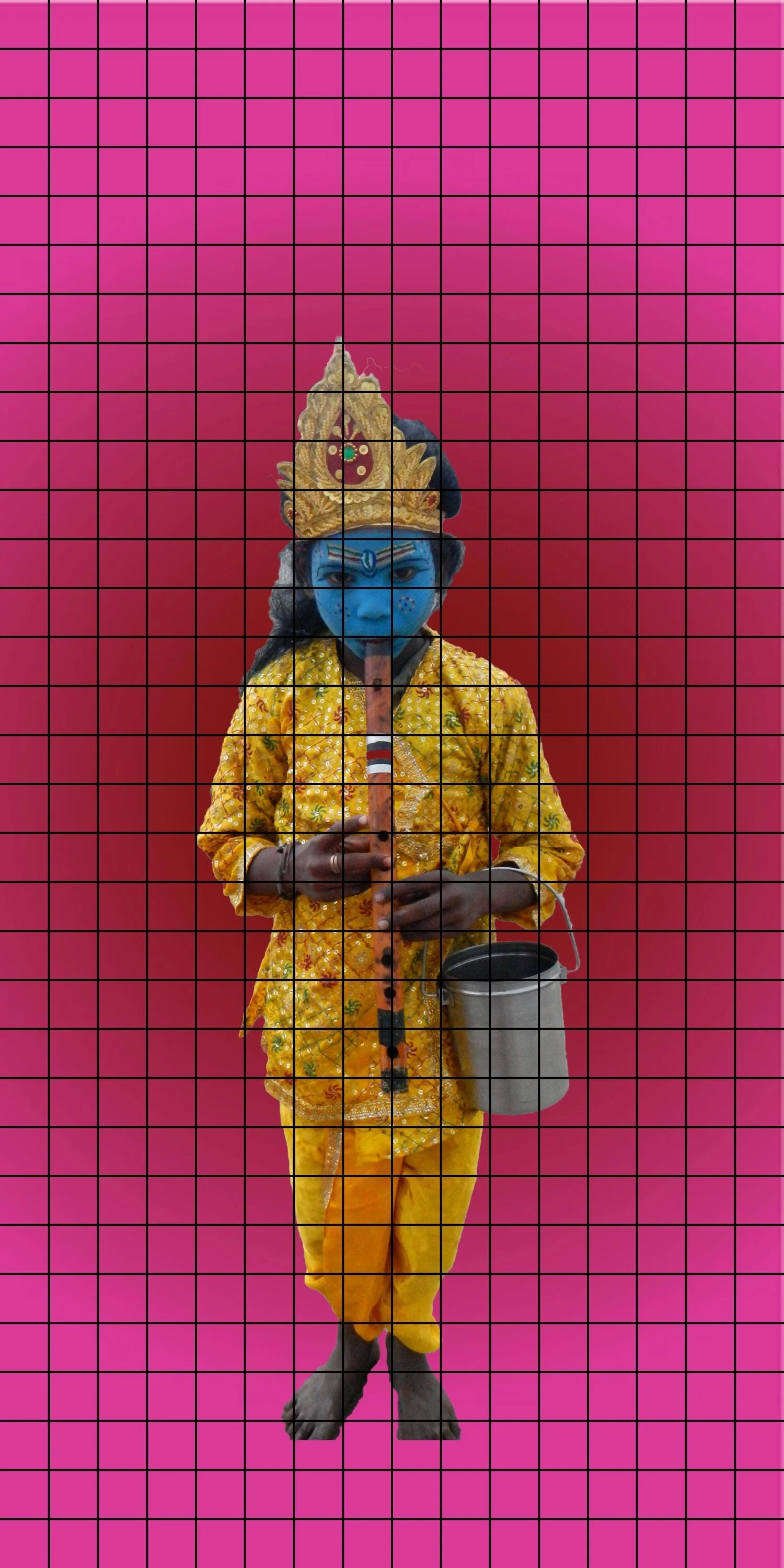
My sand Krishna is eight feet tall, so I put a grid over the original photograph to trace her onto the foam core fiberglass board I created it on.


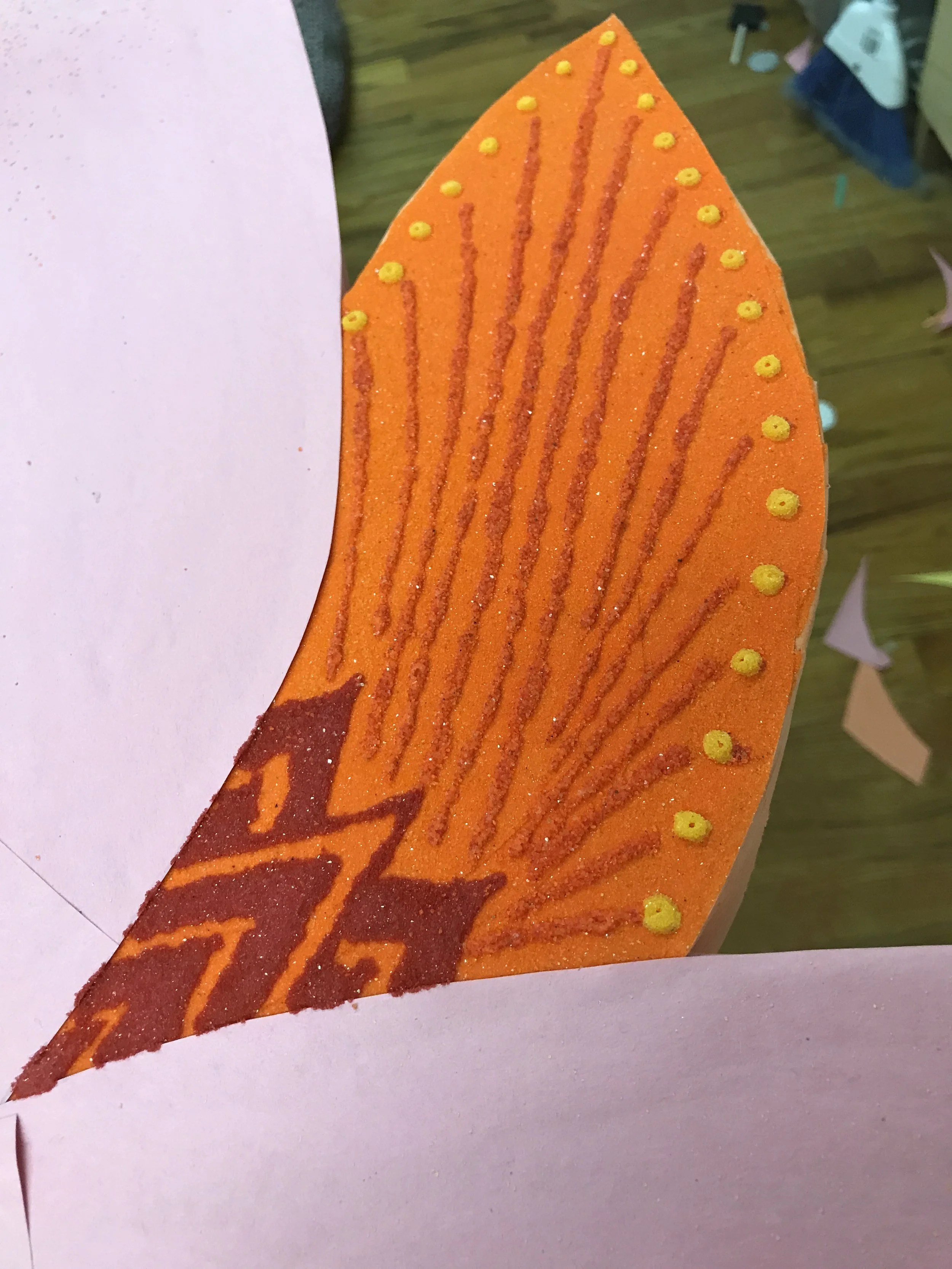
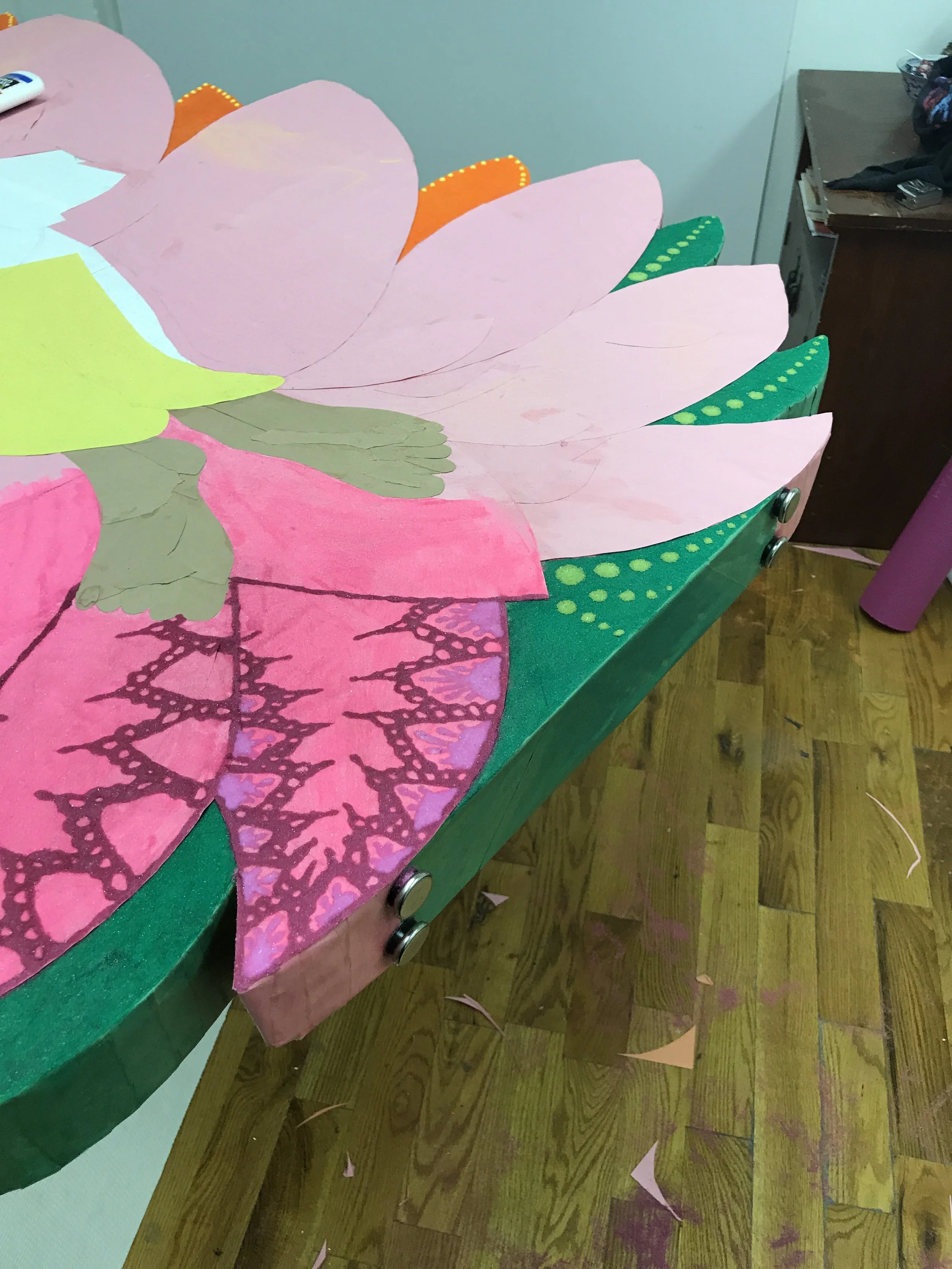
I cut the foam core board in a stylized lotus shape, then applied construction paper to help keep the design on track and because the fiberglass board wasn’t an ideal surface for applying the sand.

I just went section-by-section applying the glue and pouring on the sand. I waited for a color to dry, then shook off the excess.

There was a lot of trial and error, as there always is when trying something new, but eventually Krishna started to come together.

Delta World Map Mosaic

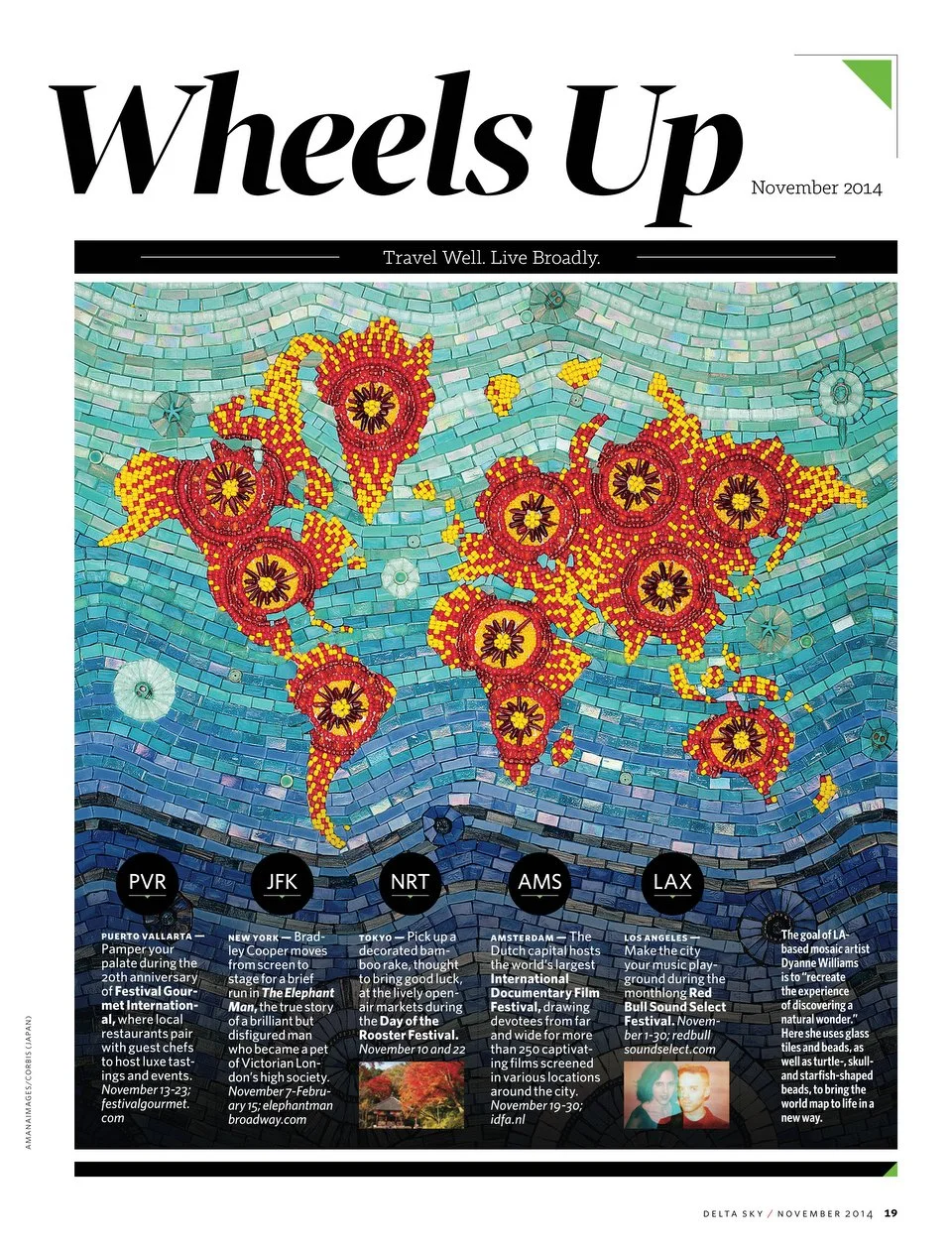
This medium sized mosaic was created for Delta Airlines in 2014. Delta had assigned a national theme for each artist and they choose Mexico for me.

There are many different ways to lay out our three dimensional planet on a two dimensional map, so they wanted to make sure all the artworks in the series were using the same map for cohesion. This also allowed for each artist to add their own personal touch to the world map and be able to express their creativity using their own art forms. 

Most of the mosaic was created organically with the exception of Delta giving me the map to use for the mosaic. This piece was part of a series in which they had artists from different cities create a map in different mediums and they then featured a new one every month for their inflight magazine.

For this project, Delta had very specific dimensions that were necessary for their photography, so I created the mosaic on Wedi board, which is a lightweight, foam-cored cement backer board. By using a Wedi board, it could easily be cut to size and even though it was being created just for a photograph, I attached Wedi washers before I started so the mosaic could be hung at a later time

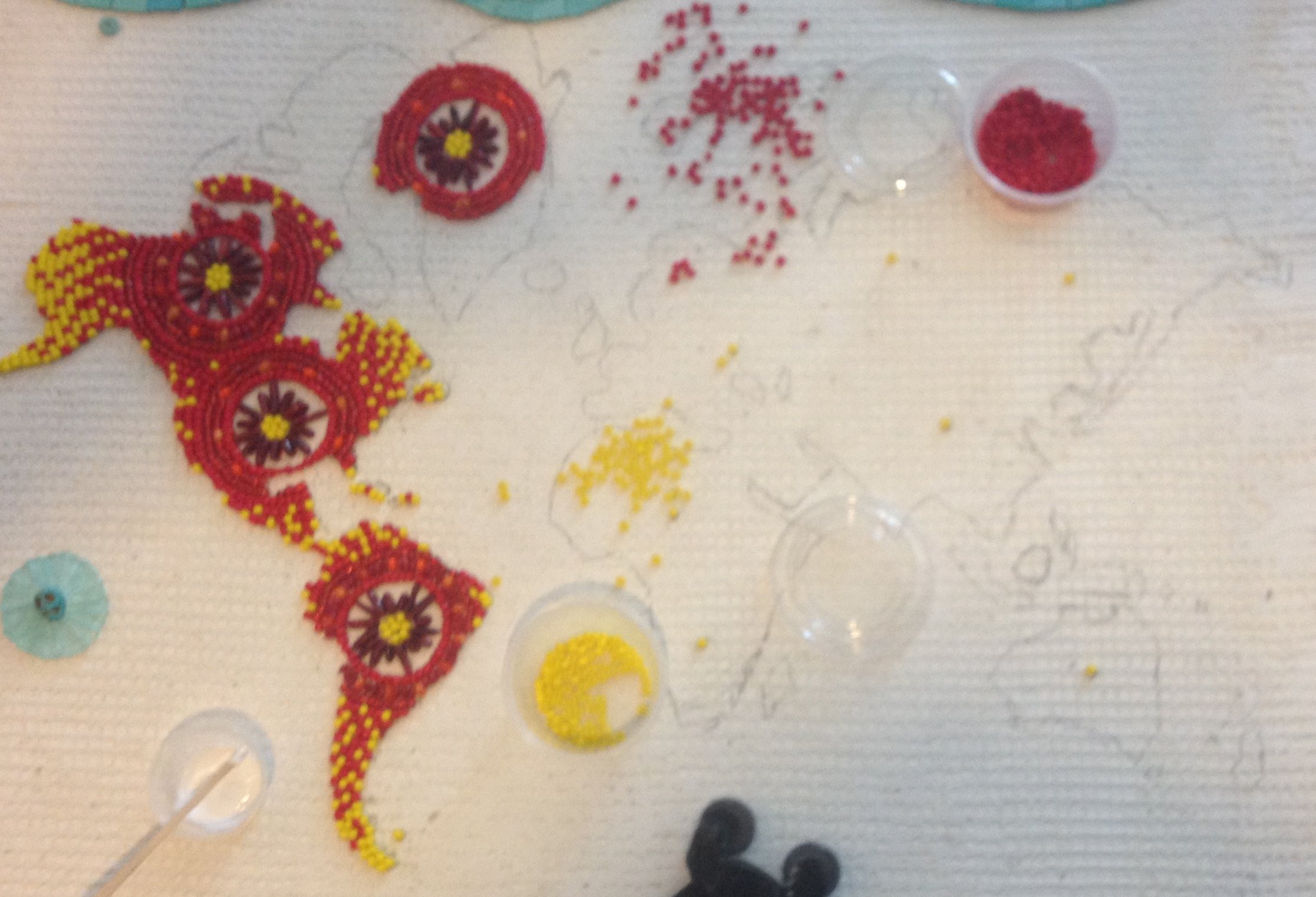
I choose to do the colors yellow and red because of the abundance of these colors in all Mexican art and their culture. Mexican artwork is filled with color, small details and they use a lot of beads as well. At this current time, I was super into beads and since beadwork is popular in Mexican culture, this seemed like a perfect fit.

Once I came up with a plan and choose the colors of beads, I went to Michael’s to buy the beads. I needed almost 20 little tubes of the yellow beads, but each store only stocked 3 at the time. The timeline was too short to be able to order the beads online, so I spent a whole day driving to every Michael’s in the Los Angeles area, from Long Beach to Burbank. I even had to call my bank to turn my debit card back on because apparently when you make purchases at 6 different Michael’s over the course of a few hours looks extremely suspicious!

In addition to just using beads, I used glass tiles. Most of the 5/8” tiles are Sicis and the 3/4” Hakatai. I used a combination of tiles that included translucent, iridescent, opaque, and gold-streaked glass along with wavy andamento to give the impression of movement within the waves. I wanted to create this sense of movement throughout the glass blues to create the ocean and the ripple effects of the waves.

When I started to add the blue shades of tile for the ocean, I originally intended to grout the whole mosaic, however, only the type of dark red beads that were available were painted on the outside so the grout would have just wiped the paint off.

Instead of using grout, I used white silicone with the translucent light glass on the top and then Weldbond for the rest. I also used Mapei black grout for just the bottom portion of the mosaic which included the darkest shades of blue.

I thought of a pattern that flowed from red to yellow would be beautiful, but I mostly wanted red to be the star too because I like red better then yellow and it’s also a complimentary color to the ocean blues that I am using. Just when I started to place the red beads and slowly started adding the yellow, I could see the map come along and it was easy to identify that I was creating North and South America.

Upon completion of my project, I took it to Studio Q photography where Yuno Cho placed in under a LED light box, and this helps so that the lighting can then be diffused and there would be no odd white or dark spots on the photograph in the end result. I really wish I could have all of my art professionally photographed in this way! Professional photography is very expensive... but it if for sure worth it if you can do it! Your artwork will truly benefit from it!

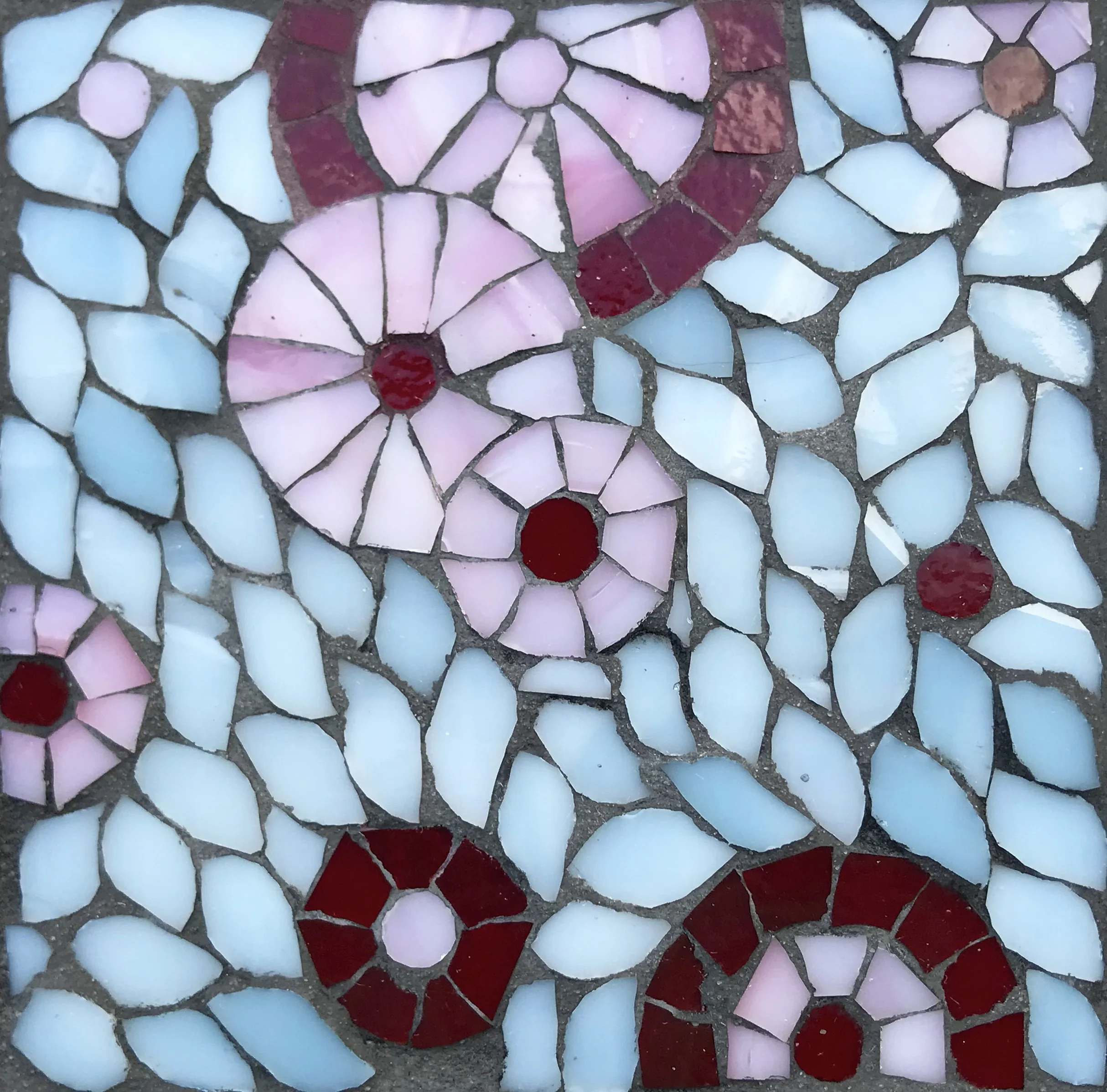
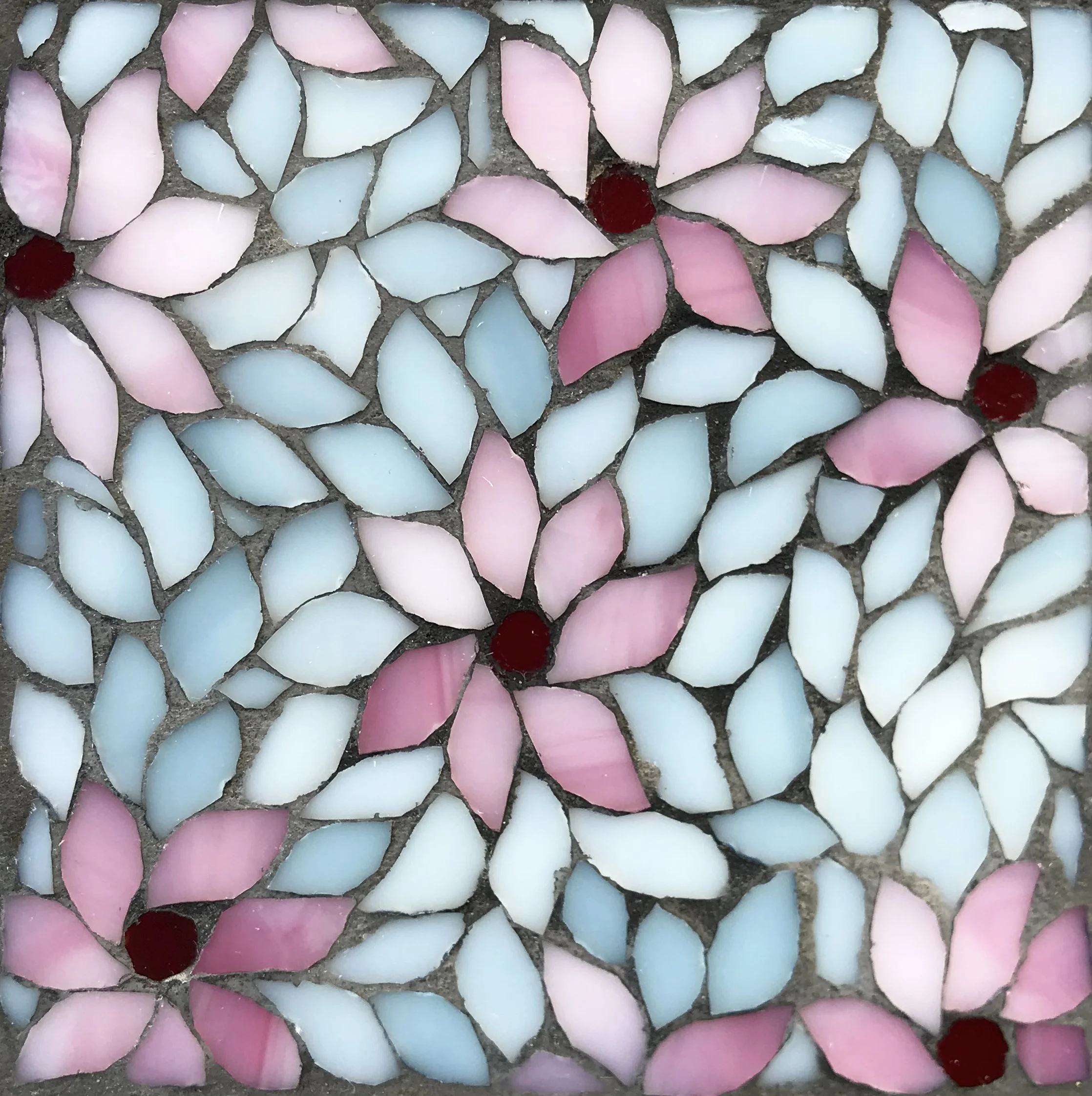
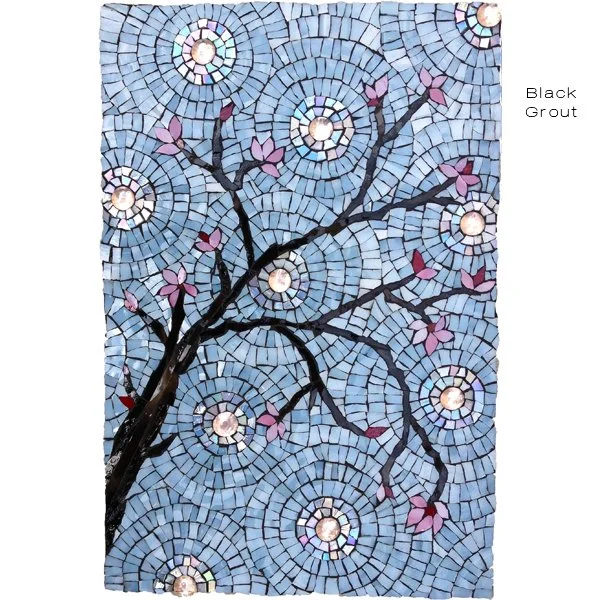
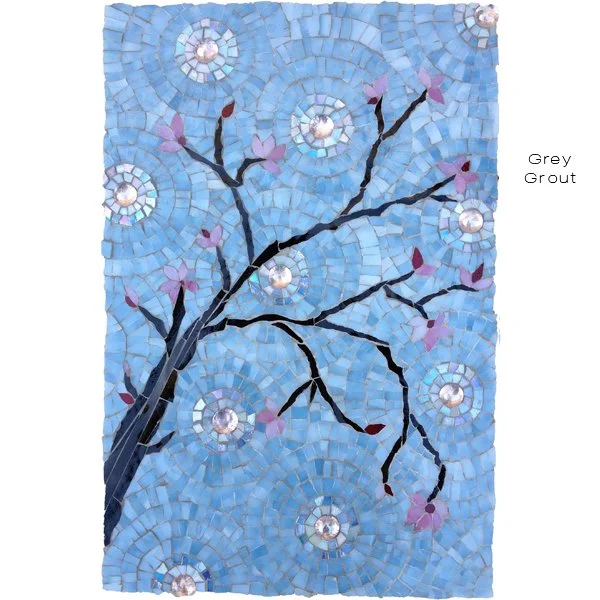
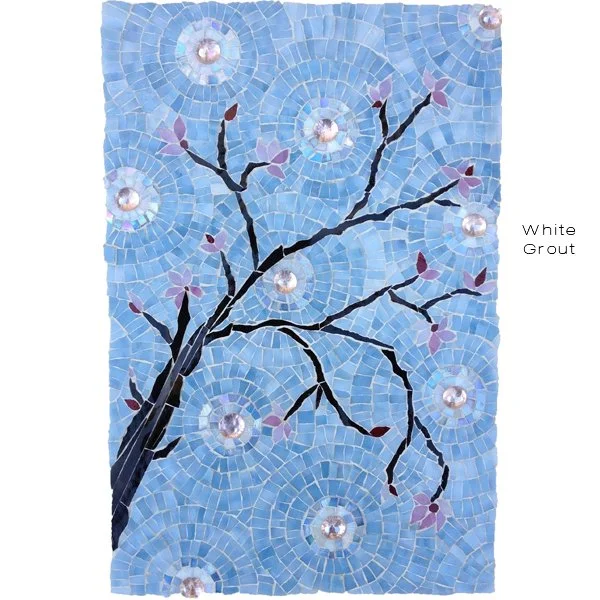
Cherry Blossoms Mosaic

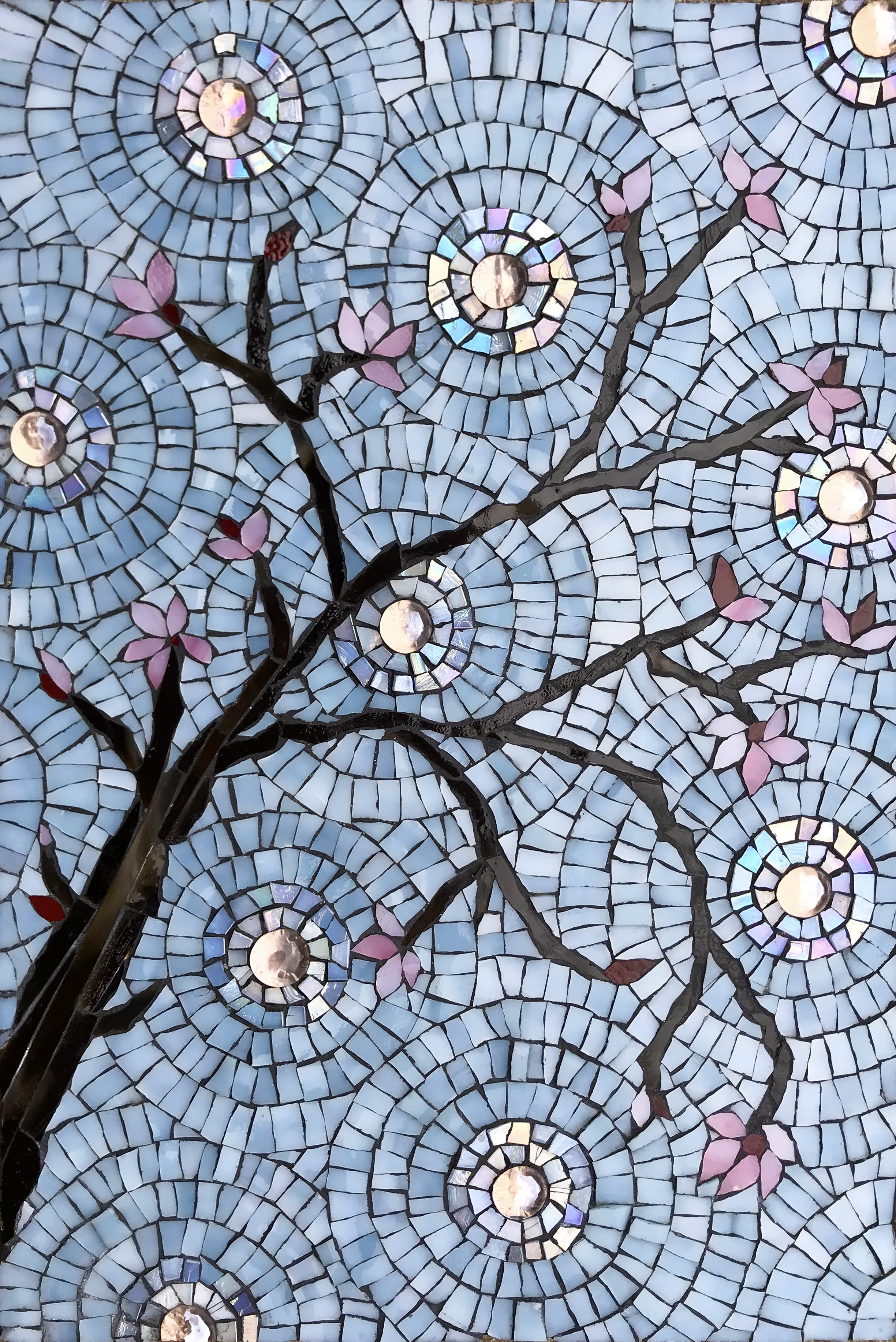
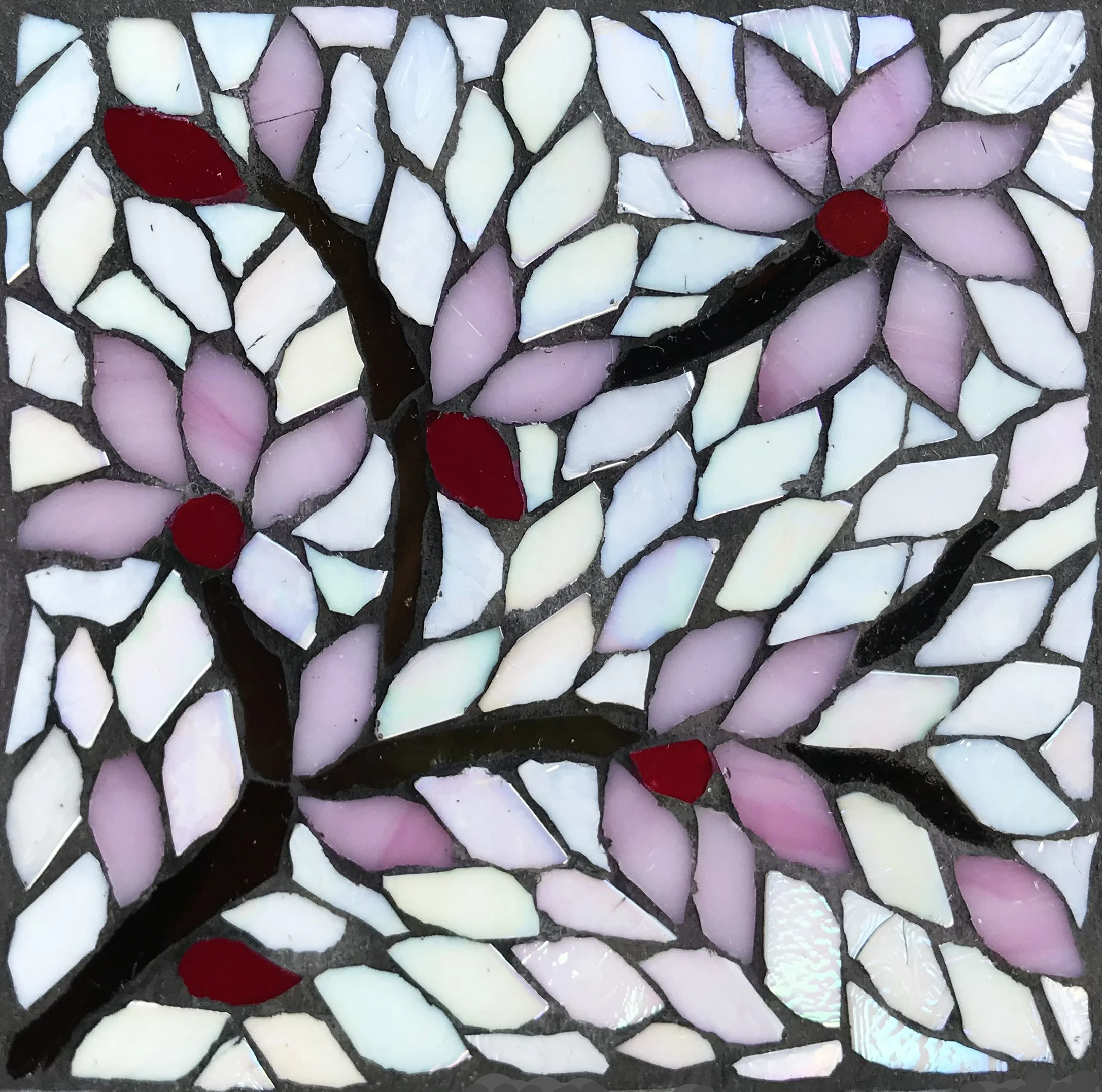
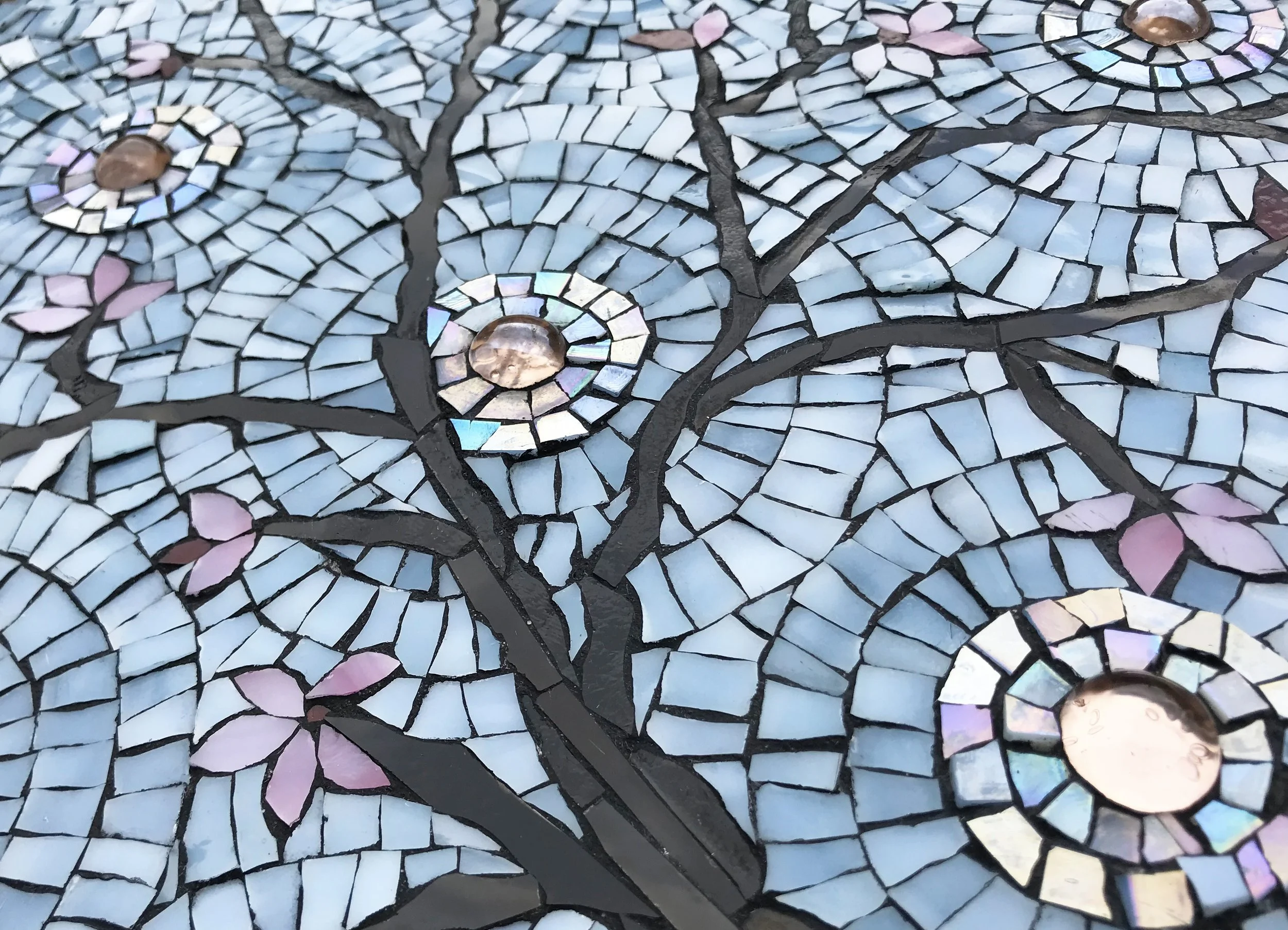
Here’s a delicate little mosaic I made when I was inspired by the elegance of cherry blossoms.


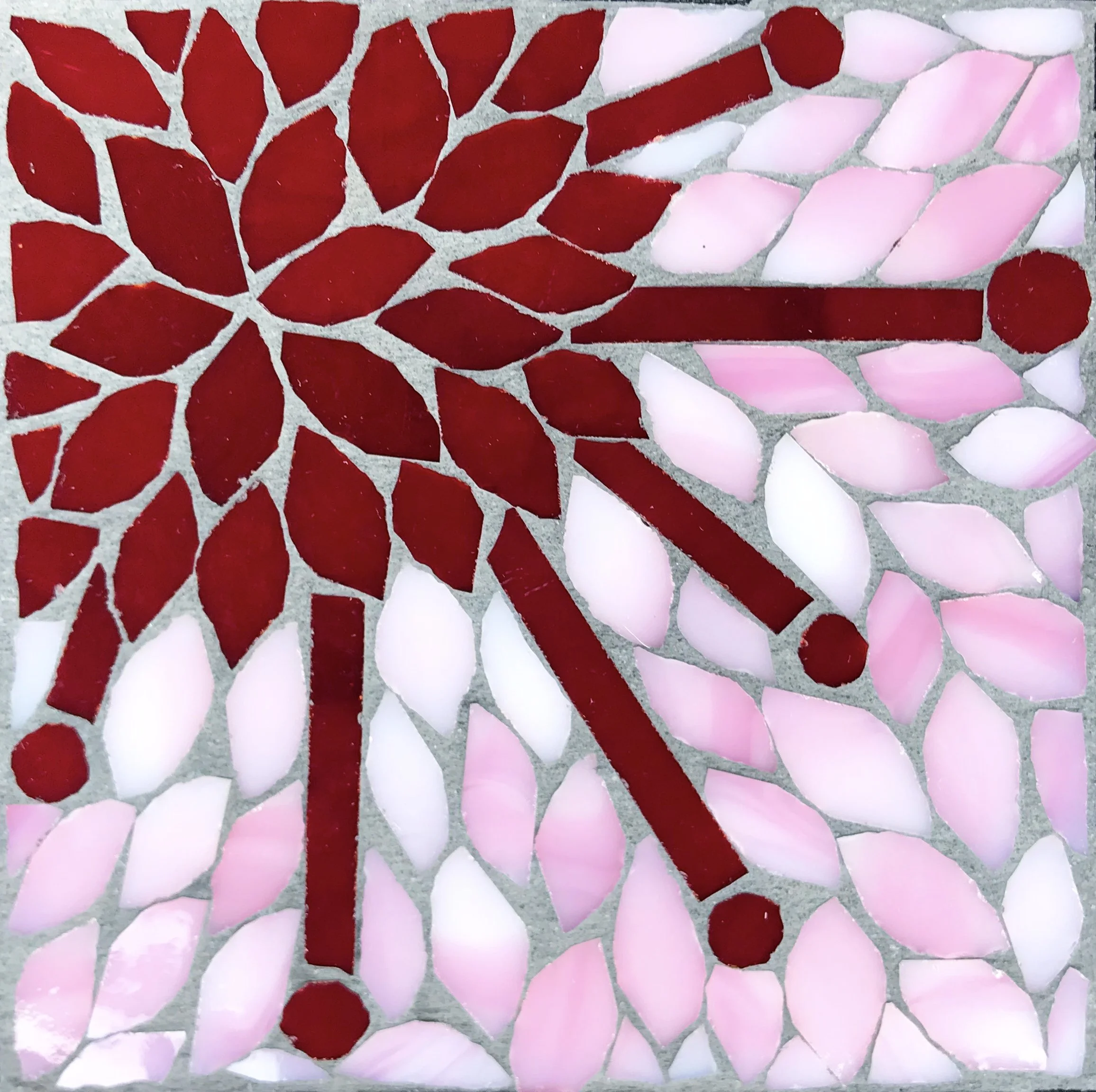
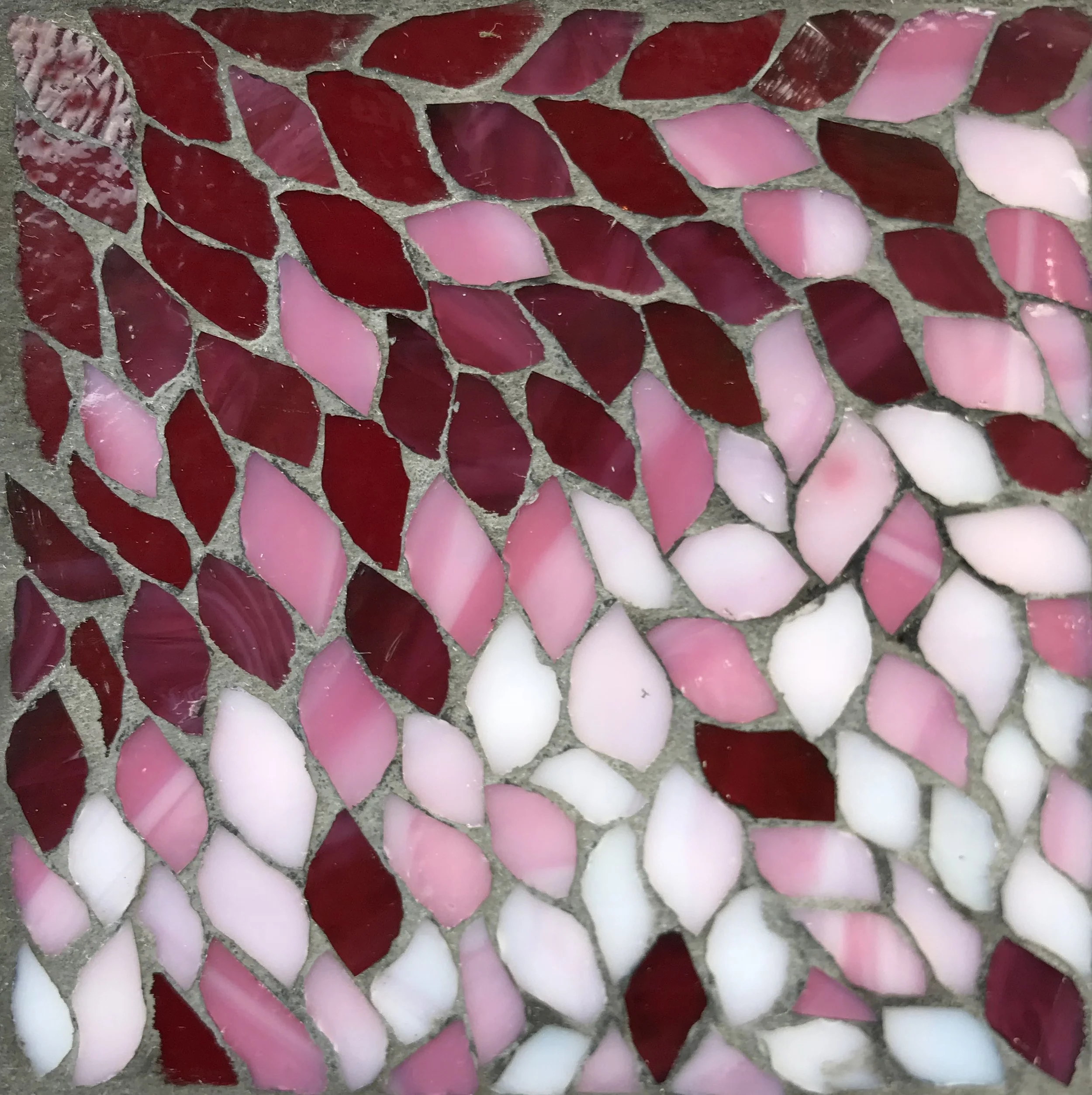
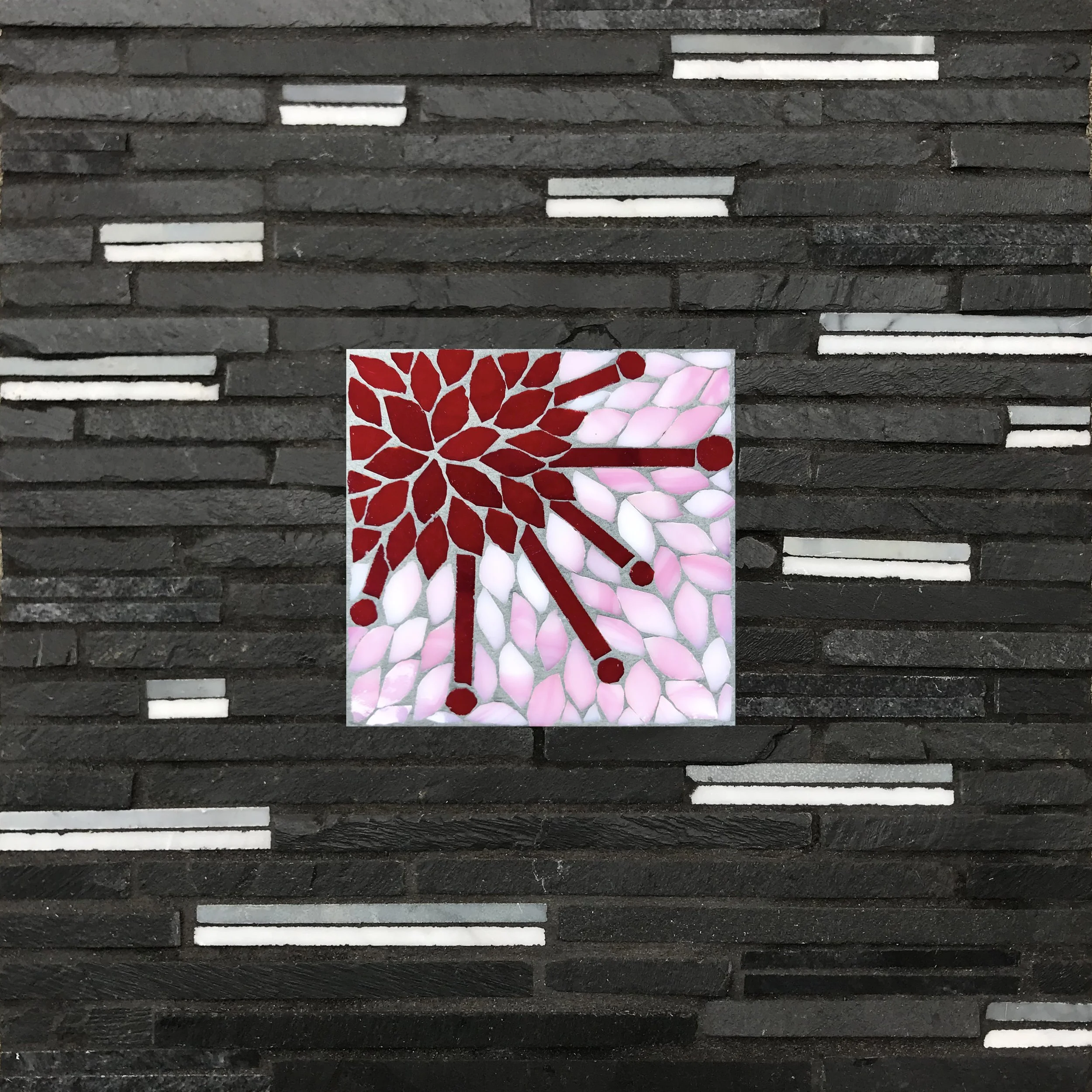
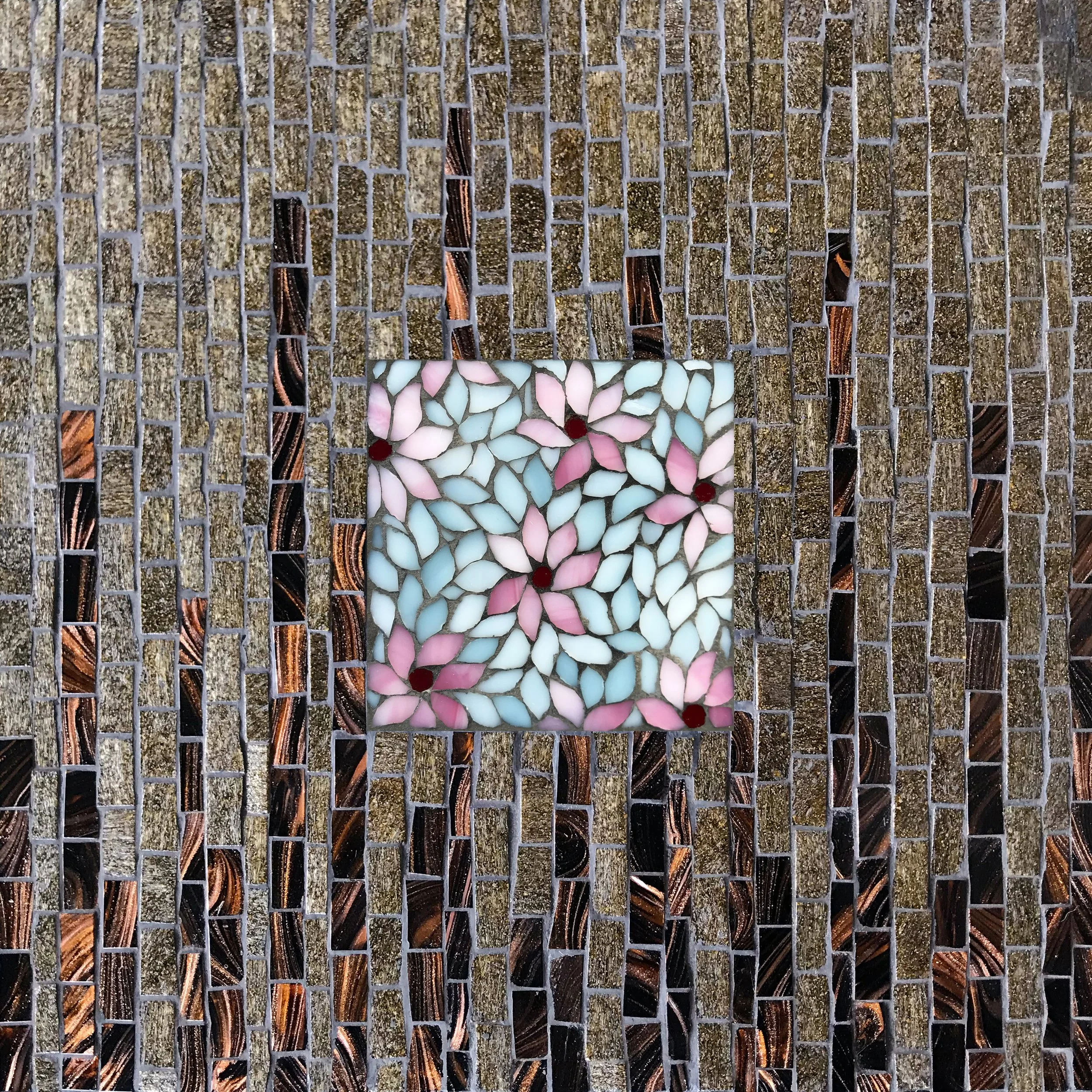
I made this mosaic as a feature piece for a line of tile I wanted to make. I made these tile samples with the intention of making them to be placed on backsplashes embedded within other tile.


I made samples with different colors of grout and tile beds to show how they would look, but the idea didn’t catch on.

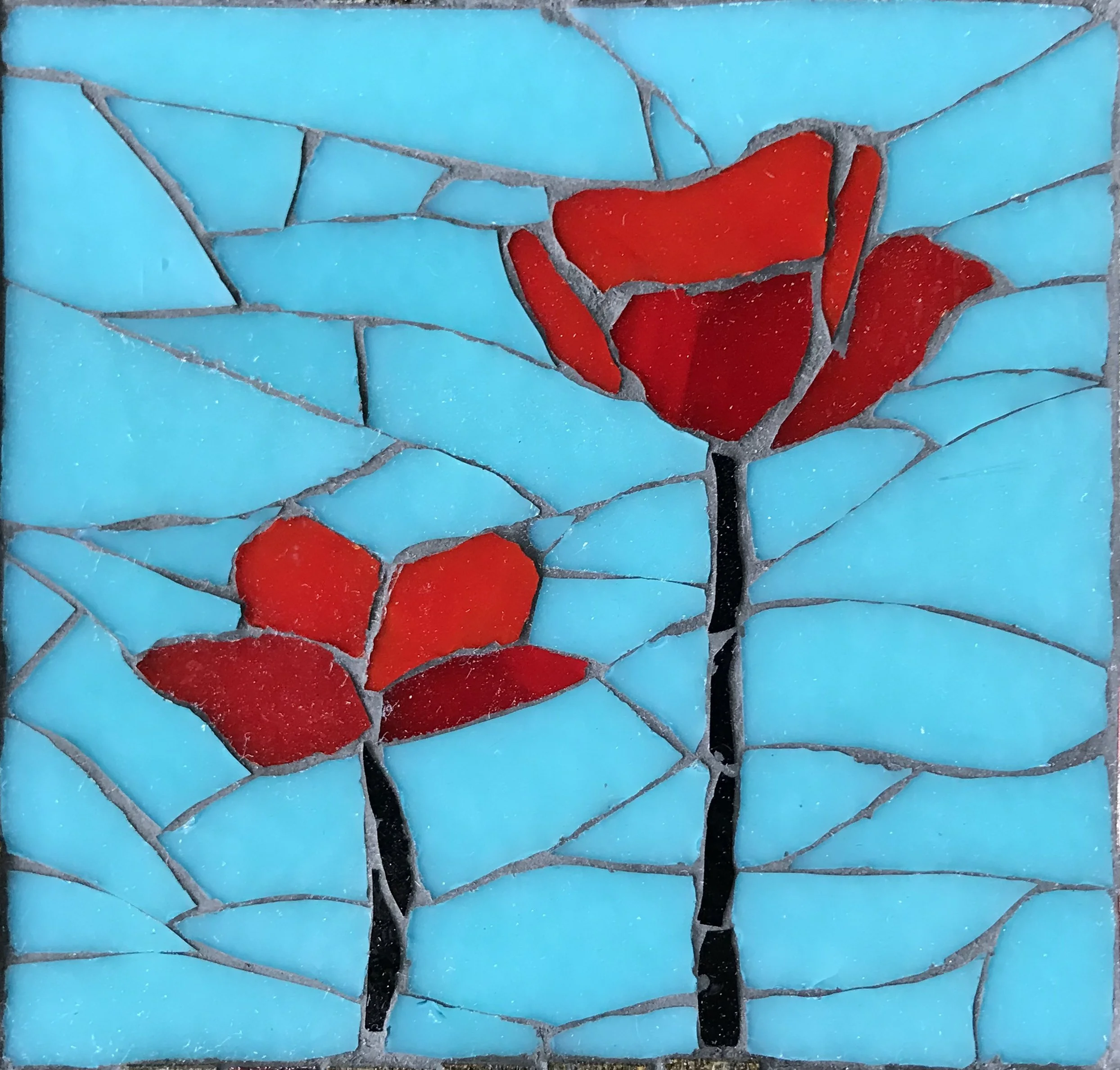
I even tried making some mosaics with a poppy theme.

Some students that came to my studio saw them sitting around and suggested to just sell them as regular hanging artwork. I did that, but they still didn’t sell. Oh well, it either wasn’t a good idea or not good in execution, but people do like my cherry blossoms mosaic and so do I, so it was worth the experiment.

VIDEO: Pathway Key to Success Mosaic: WIP #1

The first of two videos showing the making the Pathway Key to Success mosaic. This was a mosaic artwork I helped kids in a foster care program make as a thank you gift to one of their donors.

Video transcript for deaf or hard of hearing:

Hi Mosaic Fans! This mosaic begins when I had only a day to design a project for kids from a foster care organization to create as a gift for their largest donor.

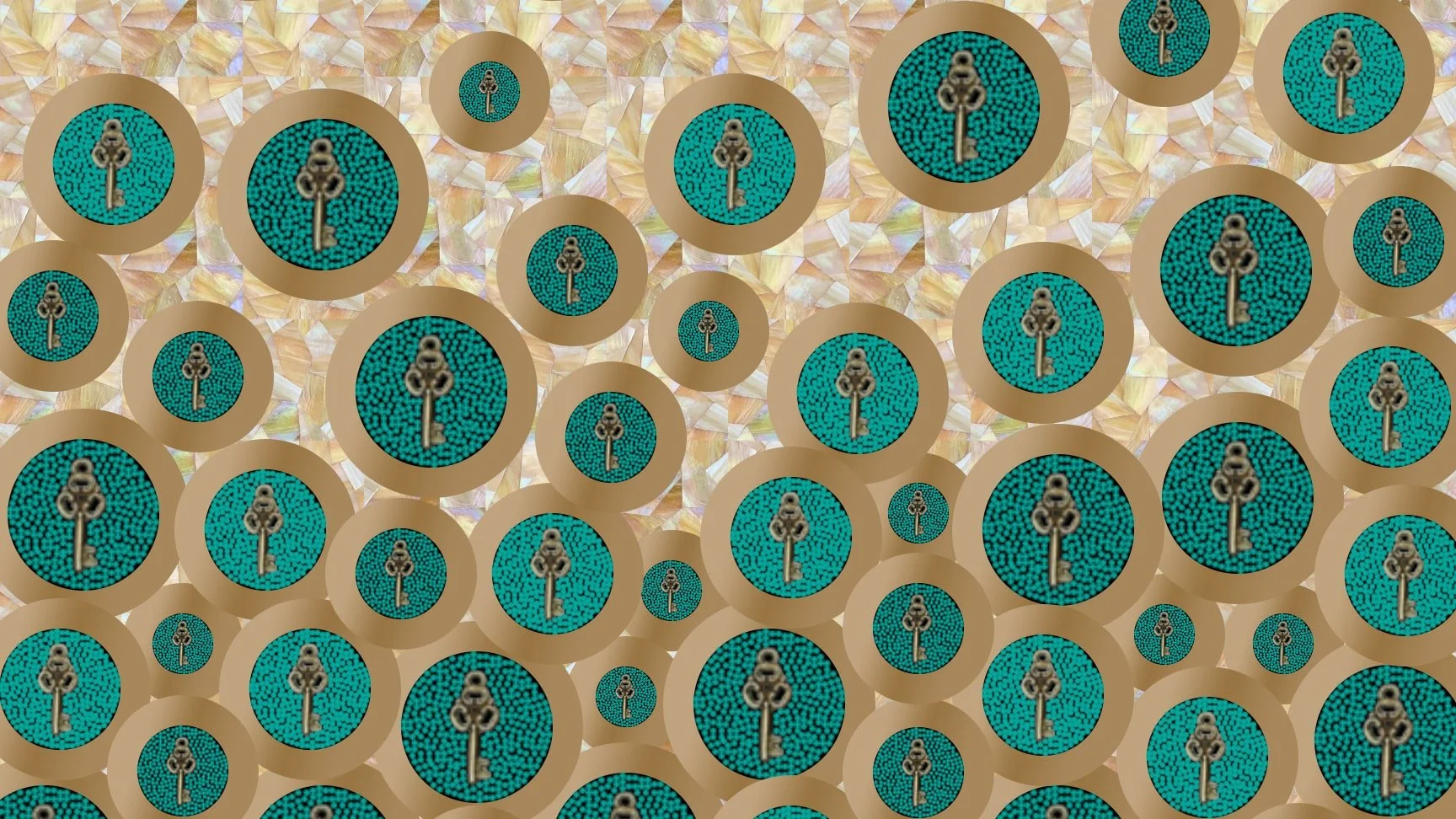
Fortunately, I woke up at 4am and found myself looking on Etsy before I was even conscious and came across these antique bronze key replicas that range in size from ½” to 2- 1/2”.

 I immediately had an idea of how to use the keys in a mosaic, so I jumped out of bed and went straight to the computer to make a mockup. The theme is to thank their donor for giving them the “Key to Success”.

 Mango, on the other hand stayed in bed until sunrise.

 I’m going to use bronze colored Van Gogh glass to create mosaic rings. Inside the rings, the kids will choose & place a key, then fill up the circle with tiny beads. They will also mosaic the background with my favorite iridescent amber/white glass from Wissmach.

I am using a 2’x3’, ¾” birch panel for the substrate.

I started by printing templates for the inner and outer circles, the inner circles on white cardstock and the outer on yellow cardstock so I can trace them onto the wood.

Then I traced the circles onto vellum so that I have a template I can see through to help make adjustments.

I wanted to keep the circles whole, except for those that come slightly off the edge, though even with those I had to make sure the keys would fit wholly onto the panel because I don’t want to have to cut the keys.

To make sure the circles all remain circles, I carefully interlinked the borders. This will mean making a lot of adjustments as I work, but will pay off in making the circles look very clean and crisp.

With the initial sketch completed, I primed the board. You can do this before or after sketching. I chose after because it’s harder to erase once the board has been primed.

The reason for priming is to help adhesion and to cut down on moisture later getting in and warping the wood. I’m priming using watered down Weldbond, which is the adhesive that will be used for the glass. We’ll be using Apoxie Sculpt for the beads, but I’ll get to that in the next video.

So that I can do this all at once, I use cups to place the mosaic on when I flip it over to prime the other side.

I wait only a few minutes until most of the primer has been absorbed, then flip it over and prime the back. I also make sure to prime the edges.

Now it’s time to cut the Van Gogh glass.

 I’m cutting it into ½” strips using the Morton grid. From there I’ll just cut wedge-shaped tessera as needed.

I started with the simple, straight forward rings on top to get a feel for the angles needed for each of the four sizes of rings.

Then I moved to the bottom to get the hard work of the interlocking rings over with. The glass size may not exactly match my templates, so I may need to adjust some of the free floating rings in the center. Doing the bottom first will allow me to size up how things will look best aesthetically.

As I move into the middle section, I’m just adjusting from the original sketch into what will look best once all the rings and beads are in place.

While the tedious nature of mosaics is often enough to drive someone crazy, it is good in instances when I’m preparing to work with kids because it gives me the opportunity to think through the best way to have them work without too much chaos.

In part two we’ll finish up the mosaic and I’ll show the kids working on it. Spoiler alert: They did awesome! Thank you!

TBT! Mirror Feather Mosaic Cabinet Collab

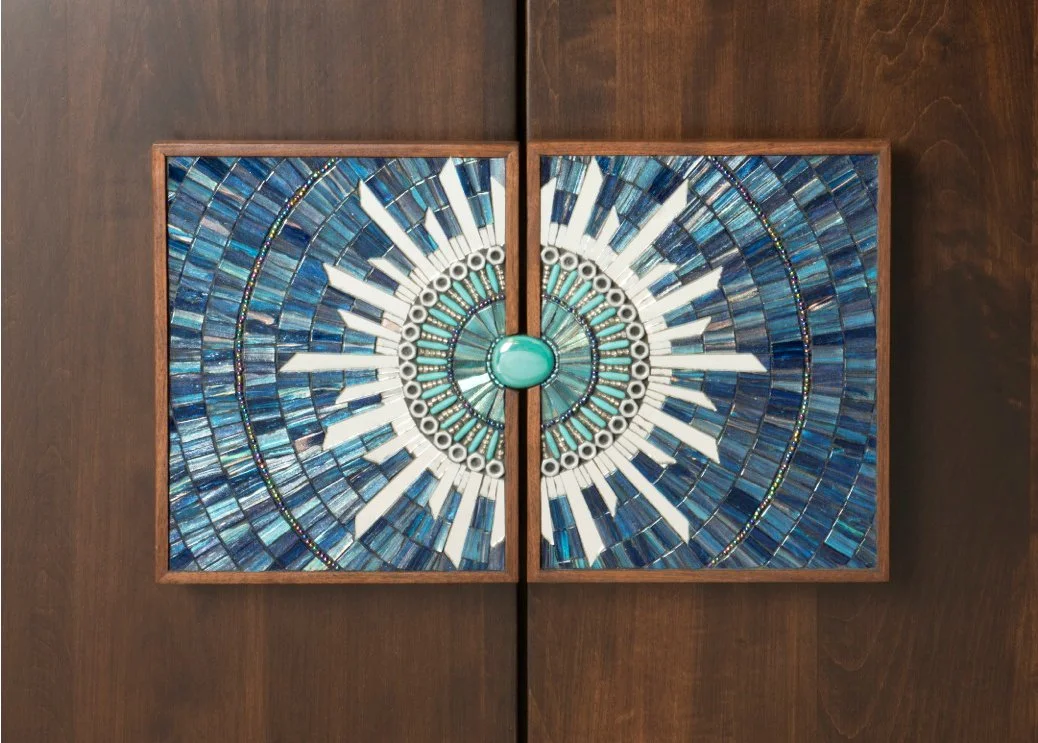
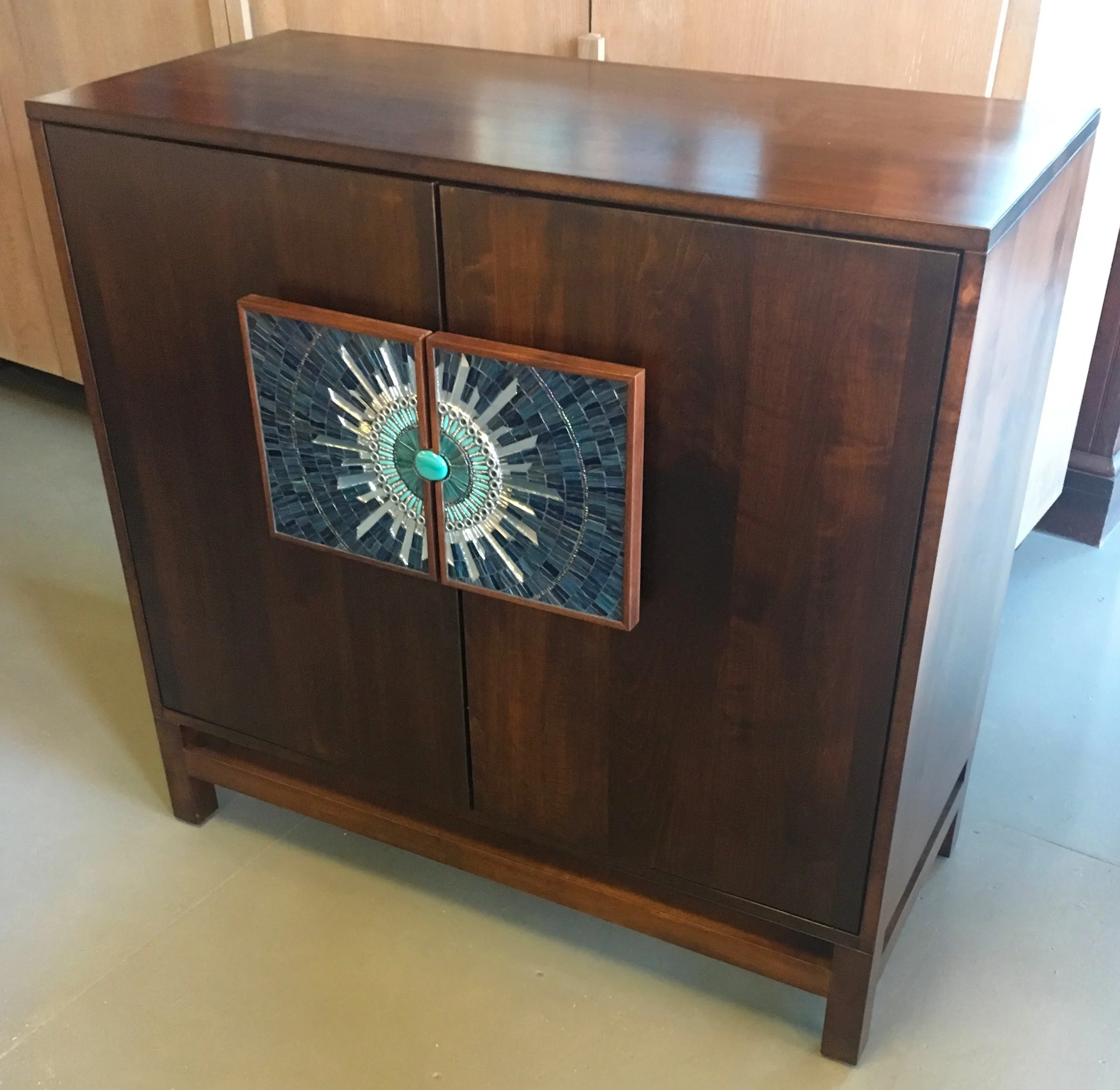
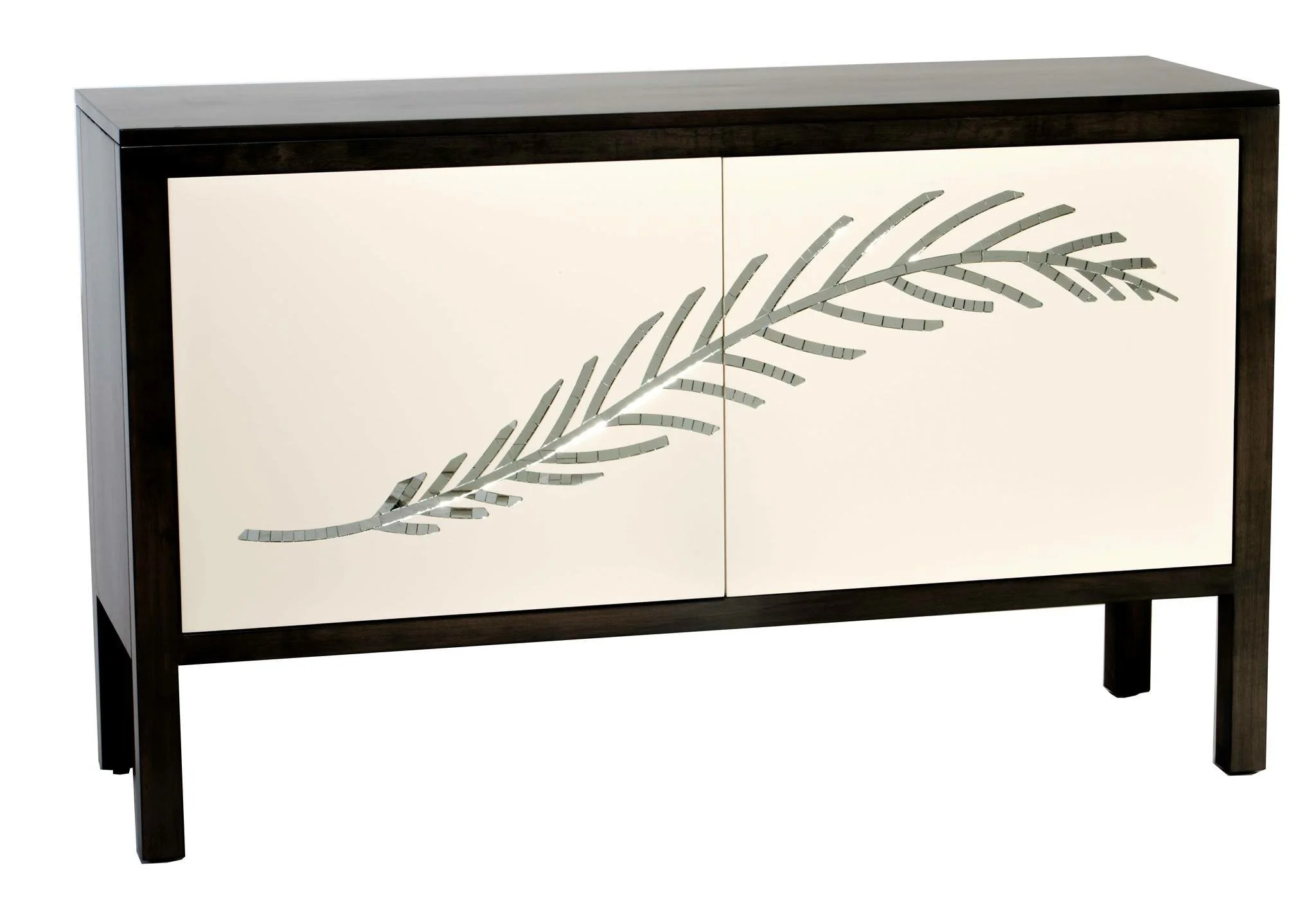
Here’s a gorgeous collaboration I had the opportunity to work on with John Strauss Furniture a few years ago. John created this beautiful cabinet to house this beautiful inset mosaic mirror feather that is inset within the doors. It was so fun to collaborate with John & Carisa on this and so many other furniture/mosaic works!